






By Aggrey Baba
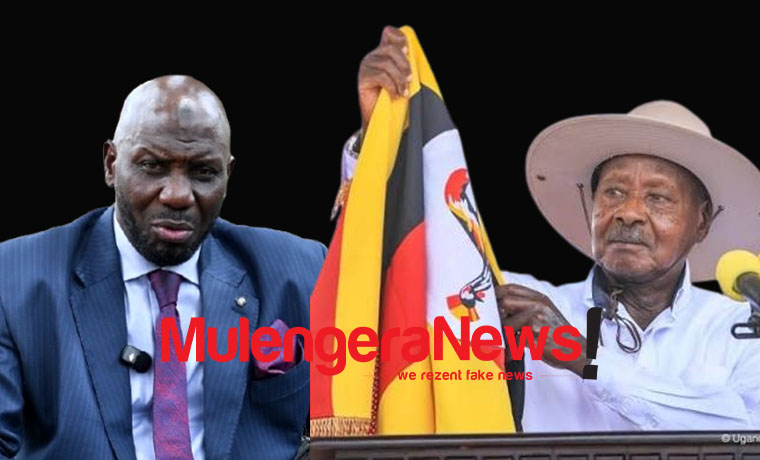
Answering tough questions about his dramatic political realignment on Tuesday, former Kawempe North MP Hajji Latif Ssebagala Ssengendo offered to Mulengera News an explanation for his decision to walk away from the Opposition side and openly support President Yoweri Museveni, whom he had spent over 30 years criticizing, arguing that Uganda’s political realities require politicians to constantly reassess their methods, alliances and objectives.
Ssebagala, who has recently made it clear that he intends to support Museveni in the 2031 presidential election if the President appears on the ballot, has also said he would back whoever Museveni endorses as his successor should he decide not to contest. His position has placed him among a growing number of former Opposition figures whose political relationship with the ruling NRM has changed significantly over time.
But for Ssebagala, the shift should not be interpreted simply as a sudden political conversion. He presents it as an extension of the moderate politics he says he has practised throughout his career, insisting that he has never subscribed to the kind of confrontational politics in which political disagreements are allowed to spill into riots and violence.
He argues that such confrontations ultimately impose their greatest cost on ordinary supporters, many of whom have little to gain from political battles between leaders. In his view, Uganda’s experience of armed rebellion belongs to an earlier chapter of the country’s history, while the current political contest should principally be fought through organization, persuasion, dialogue and elections.
“I don’t believe in the politics of rioting because it mostly affects the people who follow politicians. I have always tried to sell that idea to my fellow Opposition leaders whenever I got the opportunity,” Ssebagala said.
That position also explains why he has increasingly placed emphasis on dialogue and political engagement rather than permanent confrontation with the government. His Dialogue for Peace Initiative has become part of that approach, with Ssebagala arguing that politicians should look beyond the immediate excitement of rallies and demonstrations and ask whether their strategies are actually moving them closer to the political objectives they claim to pursue.
His assessment of the Opposition is heavily influenced by what he considers the continuing organizational strength of the NRM at the grassroots. The July 2026 LC1 elections, which followed the January general elections, provided another reminder of how deeply established the NRM remains in many communities. The Electoral Commission said voting was completed in 70,079 of 71,214 villages during the LC1 exercise, while NRM officials separately highlighted strong performance in several regions.
Ssebagala’s argument is that Opposition parties cannot build a credible national challenge merely by assuming that dissatisfaction with government automatically translates into votes for them. They must first establish themselves in villages, mobilize communities and maintain structures capable of remaining active long before election campaigns begin.
That challenge is particularly important because the 2026 parliamentary results again left the NRM with a substantial majority. According to Inter-Parliamentary Union data, the NRM secured 371 of the 529 parliamentary seats, compared with 50 for NUP, while other parties won considerably fewer seats.
For Ssebagala, those figures should encourage Opposition politicians to examine their own political strategy rather than simply blame electoral outcomes on external factors.
“I have never believed in extreme politics. My politics have always been moderate. Like it or not, Uganda is heading for a political transition, and everyone should prepare themselves for it,” he said.
His current position therefore goes beyond his personal decision to support Museveni. It represents a broader argument that Ugandan politicians should remain flexible as the political landscape changes, while recognizing that political parties and alliances are not necessarily permanent homes.
Ssebagala’s journey itself illustrates that point. He has moved through different political formations, including DP and NUP, before ultimately declaring himself independent and announcing support for Museveni. His latest position has consequently reopened debate about the future of Opposition politics and whether its parties can rebuild the grassroots structures required to mount a serious national challenge ahead of 2031. (For comments on this story, get back to us on 0705579994 [WhatsApp line], 0779411734 & 041 4674611 or email us at mulengeranews@gmail.com).