






By Ben Musanje
Experts have raised concern over the quality of life jackets being used on Uganda’s water bodies, warning that substandard equipment could undermine efforts to prevent drowning.
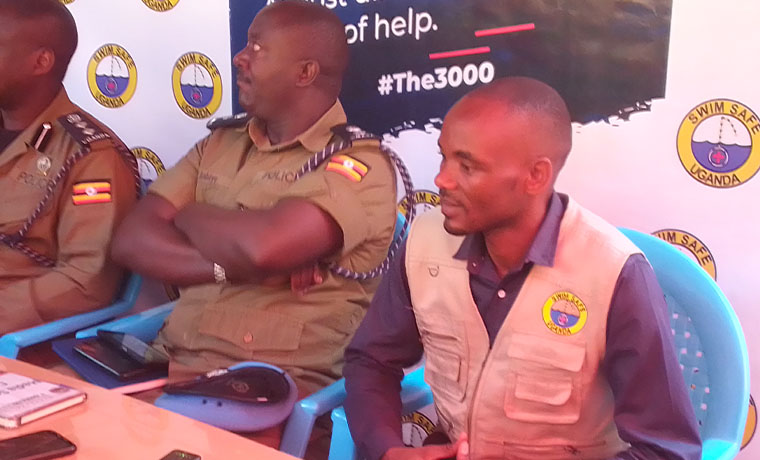
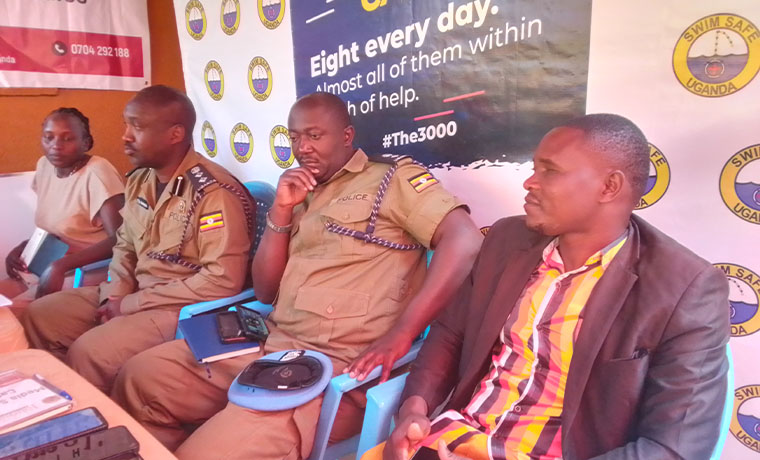
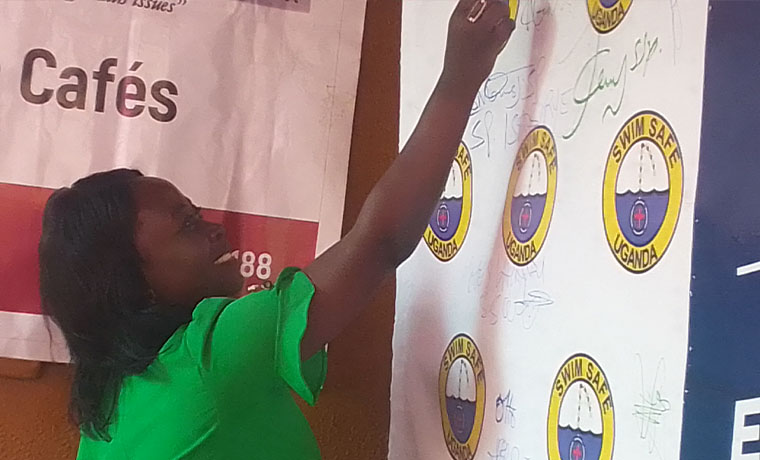
The concerns were raised during the Anti-Drowning Media Café held on Friday at the Health Journalists Network in Uganda (HEJNU) offices in Kamwokya, where stakeholders discussed measures to reduce drowning deaths under the “The 3000” campaign spearheaded by Swim Safe Uganda.
Uganda is estimated to lose about 3,000 people to drowning every year, prompting calls for stronger enforcement, better safety equipment, community preparedness and improved monitoring of activities on the country’s lakes and other water bodies.

SP Manisul Isabirye, Safety Officer with the Marine Police, said the increasing production of life jackets by different manufacturers has created challenges in ensuring that water users are adequately protected.

“People have mushroomed the manufacturing of these life jackets, and indeed, they have not helped in one way or the other,” Isabirye said.
He said water users should pay attention to several features when acquiring life jackets, including the buoyancy material, secure straps, visibility, approval markings and appropriate size ratings.
According to Isabirye, highly visible colours are important because they make it easier for rescuers to locate people floating in the water, while proper sizing ensures that the jacket can adequately support the user’s weight.

He urged members of the public to verify that life jackets have the required approval markings and meet the applicable standards before using them.
Otto Busingye, a Research Associate at Makerere University School of Public Health, said researchers had engaged the Uganda National Bureau of Standards (UNBS) on the specifications required for life jackets.
He said preliminary engagements had raised concerns about the equipment being used around water bodies, although he stressed that the findings had not yet been published and should not be treated as a formal study.
Busingye said stronger enforcement of life-jacket standards is necessary because a life jacket can provide critical additional time for a drowning victim to survive until rescuers arrive.
Police expand monitoring
The Marine Police says it is also looking at technology to improve surveillance of Uganda’s water bodies.
Isabirye said police management was working on plans to establish a radar system capable of monitoring water bodies across the country, following an assurance from the Inspector General of Police.
He said the proposed system would strengthen the monitoring of marine activities and complement the modern high-technology boats recently acquired by the police.
The system, however, is yet to be operationalised, with Isabirye calling for follow-up on the implementation of the commitment.
SSP Bashir Siriba, Coordinator of the National Drowning Prevention Programme and a senior officer in the Marine Police, said the force’s jurisdiction covers the entire country and includes major lakeside areas.
He said Marine Police units conduct patrols, surveillance, community sensitisation and emergency search-and-rescue operations, while also working with Beach Management Units, UPDF Marine detachments, local governments and fisheries officers.
“We cannot reach each individual point, but at least we deploy in most of the lakeside,” Siriba said.
He added that the police also use radio and television programmes that provide free airtime to reach communities with water-safety messages.
Community remains the first line of rescue
Siriba cautioned water users against depending entirely on emergency services, saying rescue teams cannot always reach a drowning victim within the critical first moments of an incident.
He urged passengers to wear life jackets before departing from landing sites and called for greater emphasis on survival swimming skills.
He also warned against allowing drunk or intoxicated boat operators, commonly known as coxswains or navigators, to take passengers onto the water.
“A navigator is responsible for all your lives,” Siriba said, urging the public to ensure that boat operators do not consume alcohol while on duty.
He said people should also avoid unnecessary night travel on lakes, heed weather warnings and avoid using unseaworthy boats.
Siriba said government agencies were working with the Uganda National Meteorological Authority and the Ministry of Water and Environment to strengthen early-warning systems so that people on the water can receive information about dangerous weather conditions.
Police call for first responders
Siriba said the time between a drowning incident and the arrival of professional rescuers can be the difference between life and death, making community-based first responders critical.
He called for a consortium of government agencies, civil society organisations and communities to expand drowning prevention and first-aid training around water bodies.
“Marine Police cannot do it alone,” Siriba said, stressing that people who are already at the scene must be equipped to respond while professional rescuers are still on their way.
He said government must also strengthen enforcement to prevent unseaworthy boats from operating, discourage alcohol use among boat operators and reduce risky travel practices.
Data gaps complicate the fight
Busingye said poor and incomplete data remains another challenge in Uganda’s fight against drowning.
He said researchers are working with the Ministry of Health to strengthen routine drowning surveillance through the District Health Information System (DHIS), with Village Health Teams collecting information from communities.
However, some drowning cases are missed, particularly when bodies are never recovered.
“When a body is not recovered, it never enters into the system,” Busingye said, noting that this creates gaps in understanding the true burden of drowning.
He said accurate data is essential because authorities cannot effectively regulate or respond to a problem whose magnitude is not fully known.
Researchers are continuing to work with the Ministry of Health and other stakeholders to improve reporting and generate evidence that can guide national drowning prevention interventions.
The stakeholders said Uganda’s fight against drowning will require more than rescue operations, calling for a combination of stronger safety standards, enforcement, community training, reliable data, early-warning systems and improved surveillance.
The interventions form part of the wider The 3000 campaign, which seeks to mobilise Ugandans and resources to reduce the thousands of preventable drowning deaths recorded across the country each year. (For comments on this story, get back to us on 0705579994 [WhatsApp line], 0779411734 & 041 4674611 or email us at mulengeranews@gmail.com).