





By Aggrey Baba
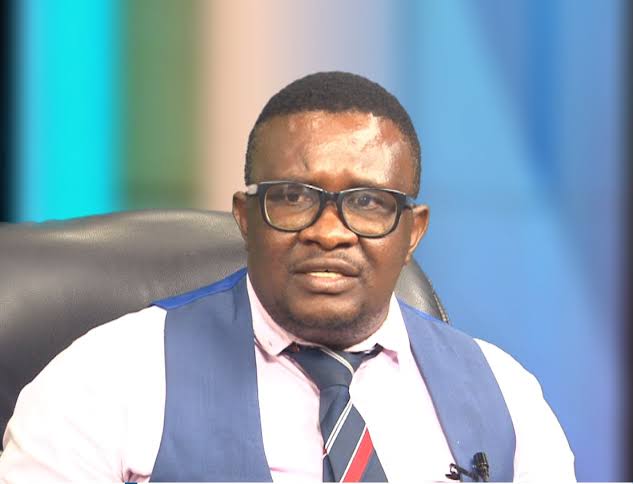
The death of Omukama Oyo Nyimba Kabamba Iguru Rukidi IV has plunged Tooro Kingdom into mourning, but according to outspoken Mutoro journalist Andrew Irumba, the bigger battle for the Batooro is only beginning, with the succession question now threatening to expose deeper cracks within the Tooro Kingdom.
In an exclusive interview with Mulengera News’ Aggrey Baba, Irumba, who has for years spoken passionately and sometimes controversially about the affairs of Tooro Kingdom, said the death of Oyo presents the Batooro with a rare opportunity to reorganize their kingdom before rushing into another coronation. Video content of detailed Andrew Irumba interview can be accessed via this link: https://www.youtube.com/watch?v=yNNRpr3m2Xw&t=435s.
“The Prince may automatically inherit King Oyo’s private property and family, but he may not automatically inherit the throne,” Irumba said, pointing the gun at the heart of the announcement made by the Tooro Kingdom leadership on Thursday night after Oyo’s death.
The kingdom’s Prime Minister, while announcing the death of the King, moved to calm fears about what happens next, saying there should be no anxiety about succession because Oyo had left behind a son who would succeed him. However, Irumba says that declaration can’t simply settle the matter.
According to him, Tooro Kingdom is much bigger than Oyo, and the institution can’t be treated as though the late King personally owned the kingdom and could simply pass it on like private property.
“Toro Kingdom is not Oyo. Toro Kingdom is an institution,” he said.
Irumba points to the Babiito, the royal clan from which the Omukama is traditionally chosen, as well as the wider royal establishment and other royal families, arguing that the question of who succeeds Oyo deserves a proper conversation among the Batooro.
And he says history itself should make the kingdom cautious. When Oyo’s father, Omukama Patrick Matthew Kaboyo Olimi III, died in 1995, the succession was not simply a matter of picking the next person and moving on, but there was a debate.
There were competing considerations about who should occupy the throne, with the young Oyo, then only about three years old, eventually emerging as the successor.
Oyo was subsequently enthroned in September 1995 and went on to spend virtually his entire life as the Omukama of Tooro.
For Irumba, that history makes it dangerous for the kingdom to assume that the mere existence of a Prince automatically closes the succession debate.
But it is his accusations against Queen Mother Best Kemigisha that give the emerging succession dispute its sharpest edge.
Irumba says the Queen Mother has for years wielded enormous influence over the affairs of the kingdom and accuses her of wanting to keep control of the institution by ensuring that the next King comes from the family she controls.
He argues that the Queen Mother effectively took charge of the kingdom when Oyo’s father died, with Oyo being too young to exercise authority himself.
Although Oyo was the officially recognized Omukama, Irumba says the Queen Mother remained the power behind many of the decisions affecting the kingdom until the young King reached adulthood.
Oyo was installed on the throne as a child and spent his early years under the guidance of a regency before assuming the full responsibilities of the monarchy as an adult. But Irumba says the influence of his mother did not end even when Oyo grew up.
It is against that background that he now views the sudden emergence of the Prince as the heir apparent with suspicion.
He says information reaching him from people close to the royal establishment and from the Babiito royal clan has raised questions about the Prince’s background.
The question they are asking, according to Irumba, is simple but potentially explosive: if the Prince was always destined to succeed Oyo, why was his birth never publicly announced?
“If it’s really true, then why wasn’t the Prince announced when he was born?” Irumba asks.
He says people familiar with the royal establishment have also raised questions about whether the alleged Prince is actually Oyo’s biological son.
That claim, if it becomes a central issue in the succession battle, could turn the current mourning moment into a major controversy for the kingdom.
Irumba says the answer would have to come from science, not palace statements. He believes the Batooro could eventually have to resort to DNA testing, including tests conducted in different countries, to establish the child’s biological connection to the late King.
And he links the entire controversy to, according to him, the Queen Mother’s determination to retain control of the Tooro monarchy. According to Irumba, the succession question is therefore much bigger than the identity of one child.It is about who controls the institution, and whether Tooro remains an institution of the Batooro or becomes increasingly concentrated around one family.
And it is about whether the Batooro will simply accept decisions made within the palace or demand a broader conversation about the future of their kingdom.
Irumba says the Batooro should seize this moment to reorganize the kingdom, insisting that his intervention should not be interpreted as a personal attack on the royal family.
He says he has no personal problem with the royal establishment and that his position is informed by his work as a journalist and by his long-standing interest in Tooro affairs.
His connection to the kingdom, however, goes deeper than journalism. Irumba says his late father was a close friend of Oyo’s father, King Olimi III, and that their relationship was so close that during the turbulent period when the late King was attacked at his palace, Irumba’s father had helped his friend escape before the attackers arrived.
It is this background, Irumba says, that gives him confidence to speak about issues affecting Tooro even when his views are uncomfortable for those in authority.
Irumba was the first journalist to break the news that the Omugabe was seriously ill and later became the first to announce that the King had died on Thursday.
His death announcement initially triggered a storm. Tooro Kingdom officials came out to dismiss the report as false, telling Ugandans that the King was still alive but in critical condition and asking the public to continue praying for him.
But hours later, the kingdom itself announced through its official X platform that Oyo had died.
The development effectively vindicated Irumba, who had by then faced accusations of circulating false information.
Now, with the King confirmed dead, the story he is telling has shifted from Oyo’s health to what comes after Oyo.
Oyo’s death marks the end of one of the most remarkable reigns in the history of Uganda’s traditional institutions. Born on April 16, 1992, he became Omukama at about three years old following the death of his father in 1995.
His childhood reign attracted international attention, making him one of the world’s youngest cultural leaders, but Oyo eventually grew into the responsibilities of the throne and became the face of Tooro for nearly three decades. (For comments on this story, get back to us on 0705579994 [WhatsApp line], 0779411734 & 041 4674611 or email us at mulengeranews@gmail.com).