







BEYOND BRAVERY: Towards a Constitutional and Strategic Audit of Uganda’s Foreign Military Missions
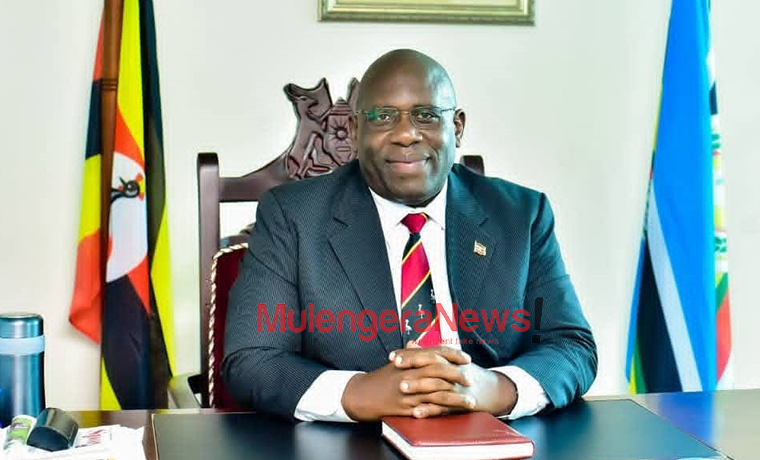
By Asuman Kiyingi
In recent weeks, debate over Uganda’s proposed deployment of the Uganda People’s Defence Forces (UPDF) to Gaza has been framed by some as a binary choice between NRA revolutionary patriotism and political obstructionism. Proponents argue that sending Ugandan troops abroad keeps the “revolution candle burning” and serves the national interest, while constitutional, legal, and strategic questions are dismissed as mere technicalities.
That framing turns a vital question of national interest into a narrow test of loyalty.

Respect for the UPDF does not require issuing blank cheques for foreign deployments. The courage, discipline, and professionalism of Ugandan soldiers in numerous regional theatres are beyond serious dispute. But military bravery is not itself a foreign-policy doctrine.

Parliament has now approved Uganda’s participation in the proposed Gaza International Stabilization Force. That parliamentary approval is constitutionally significant, but it does not eliminate the operational, legal, and strategic questions that must be answered before troops actually enter a complex theatre: What precisely is their mandate? Who commands them? What are their rules of engagement? What legal protections will they have under a Status of Forces Agreement? How long will they remain? What are the exit conditions? And what core national strategic interest does Uganda expect to advance?
Parliament approved the deployment pursuant to Section 38 of the Uganda Peoples’ Defence Forces Act, the statutory provision governing the deployment of troops outside Uganda. The Government has indicated that operational arrangements, including a Status of Forces Agreement (SOFA) provided for under Section 39, will govern the contingent.
Parliamentary approval does not, however, by itself answer the questions that the eventual operational and legal arrangements must address, including jurisdiction, immunities, command arrangements, rules of engagement and the legal status of Ugandan personnel.

Uganda therefore needs a disciplined, institutionalised audit of every foreign military mission: Is it constitutionally and legally authorised? Is it operationally and diplomatically defensible? And does it advance a clearly defined, integrated Ugandan strategic interest?
Parliament Is Not a Technicality
Article 210(d) of the Constitution requires Parliament to make laws regulating the deployment of troops outside Uganda. Section 38 of the UPDF Act provides the statutory framework governing such deployments, while Section 39 provides for a Status of Forces Agreement where troops operate under bilateral or multilateral arrangements.
These constitutional and statutory safeguards exist for a fundamental reason.
Parliament need not be micro-managed with tactical secrets, troop movements, or sensitive weapons inventories. Its constitutional responsibility is to scrutinise the overarching strategic and legal framework: what legal authority underpins the mission; what Ugandan troops are being deployed to accomplish; under what specific circumstances they may use force; who holds ultimate operational command; what legal protections apply to individual soldiers; how long the mission is intended to last; what financial burden Uganda assumes; and what measurable conditions will determine withdrawal.
Professor Jamil Ddamulira Mujuzi’s examination of the constitutional drafting history is instructive in this regard. His research shows that parliamentary involvement in overseas troop deployment was deliberately contemplated as a crucial civilian oversight safeguard in Uganda’s constitutional settlement.
These checks are therefore not procedural technicalities. They are the minimum constitutional requirements of responsible civilian control over the military in a democratic state.
The distinction is especially important now that Parliament has granted statutory approval for the Gaza deployment. The issue is no longer whether Parliament should be consulted; it is whether the mandate Parliament approved will be executed within clear, enforceable legal, operational, and strategic parameters.
Somalia Was Not a Blank Cheque
The argument that Uganda’s long-standing Somalia experience establishes a precedent where Parliament should simply trust Executive discretion is historically misplaced.
When Parliament considered Uganda’s initial participation in the African Union Mission in Somalia (AMISOM) in February 2007, the proposed deployment was subjected to parliamentary scrutiny. Uganda initially committed a contingent of 1,500 troops. Parliament’s consideration of the deployment was accompanied by a defined initial six-month framework and specified operational objectives, including securing strategic locations, promoting cessation of hostilities, building confidence among the parties and creating conditions for post-conflict reconstruction.
The parliamentary record also demonstrates that the deployment was contested. A minority report opposing the mission was presented, underscoring that the decision was subjected to substantive parliamentary disagreement rather than treated as an automatic executive prerogative.
The true significance of the Somalia intervention lies not merely in what Parliament approved in 2007, but in what transpired during the nearly two decades that followed.
A mission initially conceived within a defined framework evolved through AMISOM, the AU Transition Mission in Somalia (ATMIS), and into the AU Support and Stabilization Mission in Somalia (AUSSOM)—resulting in an extraordinarily prolonged Ugandan military commitment.
The lesson is not that the original decision to intervene in Somalia was incorrect. It is that foreign military engagements naturally acquire an internal momentum and a life of their own once boots hit the ground.
That is precisely why exit conditions, operational milestones, and periodic strategic reviews must be designed into the architecture of a mission at the beginning, rather than improvised when political and security circumstances deteriorate.
The DRC: When Military Missions Become Legal Liabilities
Uganda’s historical military interventions in the Democratic Republic of Congo (DRC) offer a stark caution regarding the long-term legal and financial liabilities of foreign operations.
In Armed Activities on the Territory of the Congo (Democratic Republic of the Congo v. Uganda), the International Court of Justice (ICJ) found Uganda internationally responsible for violations of international law arising from its military activities on Congolese territory, including breaches of the principles of non-use of force and non-intervention.
In its 2022 reparations judgment, the ICJ ordered Uganda to pay the DRC US$325 million in damages: US$225 million for loss of human life and personal injury, US$40 million for damage to property, and US$60 million for the looting of natural resources. The Court ordered this sum to be paid in five annual instalments of US$65 million from 2022 through 2026.
The core takeaway is not that the UPDF should never operate beyond Uganda’s international borders when national security demands it. The takeaway is that foreign military operations must maintain unambiguous political objectives and strict adherence to international legal boundaries.
When those operational and legal boundaries are breached, the resulting liabilities do not vanish with time. They eventually translate into massive financial claims against the National Treasury—and are ultimately borne by the Ugandan taxpayer.
The DRC experience should make Uganda more, not less, determined to establish the precise legal framework, international authorisation, and strategic parameters of any military deployment before sending soldiers into harm’s way.
Gaza: Legality Is Only the Beginning
Gaza presents an exceptionally complex and volatile strategic environment.
It is not a conventional peacekeeping theatre or a standard counter-insurgency operation. It is deeply embedded in a dense geopolitical conflict involving Palestinian self-determination, Israeli security imperatives, military occupation, illegal settlement expansion, territorial sovereignty, disarmament, and the long-term political status of the Palestinian territories.
Uganda must therefore establish precisely what the proposed international force is expected to accomplish on the ground, what political authority ultimately governs the force, how that authority relates to the proposed broader political framework, and toward what ultimate political end-state the mission is directed.
Furthermore, as global economic analyses demonstrate, conflicts in the Middle East carry immense, cascading macro-economic risk. Broader regional escalation frequently generates severe global inflationary pressures, energy price spikes, and trillions of dollars in extra economic burdens that strain developing nations. Unilateral military actions by major powers routinely externalise these severe economic liabilities onto the rest of the international community.
By inserting the UPDF into this volatile theatre under a foreign-led stabilisation framework, Uganda risks absorbing the physical risks, logistical liabilities, and diplomatic fallout of an asymmetric conflict whose overarching strategic drivers and rules of engagement may remain beyond Kampala’s control.
This concern cannot be divorced from Uganda’s explicit diplomatic commitments. Through its chairmanship and active leadership of the Non-Aligned Movement (NAM), Uganda has consistently reaffirmed its commitment to international law, Palestinian self-determination, Palestinian statehood, and a viable two-state solution. The January 2024 Kampala Declaration explicitly called for an end to the Israeli occupation and condemned settlement expansion and annexation policies.
These risks are far from theoretical.
Authoritative documentation from the United Nations Office for the Coordination of Humanitarian Affairs (OCHA) and major human rights organisations like Human Rights Watch have extensively detailed the human rights environment in the occupied territories. Reporting has documented systematic attacks by armed settlers against Palestinian communities, land confiscations, and repeated instances where security forces either failed to intervene or actively shielded illegal settler activity.
This goes directly to the political purpose of any international stabilisation force.
If an international force is deployed into an environment where land confiscations continue, settlements expand, and the framework for Palestinian self-determination remains contested, Uganda must know exactly what order it is being asked to stabilise. Uganda cannot credibly champion Palestinian self-determination within international forums while placing its soldiers in a mission whose structural effect could be to entrench a status quo inconsistent with that very principle.
The strategic question is therefore not simply whether Uganda supports international peace. The question is what political order it would be helping to enforce, under whose authority, and toward what long-term political outcome.
“Why Now?”
A predictable line of response to critique from former government officials is: If these principles are so vital, why raise them now? Why were they not fully implemented when you served in government?
Having served both in government and in Parliament, I fully recognise that executive decisions regarding national security are rarely as straightforward from the inside as they may appear from the outside.
However, national policy and constitutional doctrine cannot remain permanently tethered to the individual judgments of those who temporarily occupy public office. Governments evolve, geopolitical contexts shift, and national experience provides valuable lessons over time.
The relevant question is not: “Why are you speaking now?”
The relevant question is: “Is the core argument correct, and would adopting an institutionalised strategic audit make Uganda’s foreign-policy decisions more robust?”
Four decades of executive experience in regional security affairs should yield more than reliance on individual presidential discretion; it should yield a codified, institutional doctrine capable of translating military capability into consistent, long-term national strategic advantage.
A mature constitutional state should not rely principally on uncritical trust where it can require rigorous evidence, statutory procedure, and public accountability.
Beyond Bravery: Uganda’s Upstaging Problem
There is an overarching strategic vulnerability that Uganda’s foreign military policy has yet to resolve:
What happens to Uganda’s national interest after our soldiers have secured the battlefield?
Uganda has repeatedly demonstrated an extraordinary willingness to deploy military capability to stabilise fragile regional environments. Yet in several major theatres, other nations have proven far more adept at converting the resulting security environment into commercial, infrastructural, financial, and geopolitical influence.
This represents Uganda’s persistent upstaging problem.
Uganda regularly supplies substantial “security capital”—bearing the initial human, physical, and financial costs of intervention. Other regional and international actors subsequently arrive with financial, diplomatic, and commercial capital, embedding themselves directly into the economic and institutional architecture that follows stabilisation.
This dynamic is particularly pronounced in high-stakes interventions: while contributing nations absorb operational hazards and local economic spillovers, external architects of these interventions frequently capture the diplomatic and economic dividends.
This is not an indictment of the brave officers and soldiers of the UPDF. It is an indictment of the absence of an integrated national strategy that systematically links military sacrifice to diplomacy, trade, investment, and economic statecraft.
Somalia and the Strategic Dividend
Somalia offers the clearest illustration of this structural imbalance.
Uganda served as the pioneer and primary military contributor to AMISOM and remained a central pillar of ATMIS. As a result, the UPDF bore a heavy share of frontline combat, operational strain, and casualties over nearly two decades.
Concurrently, nations like Turkey deployed a comprehensive, multi-dimensional statecraft strategy in Somalia. Turkey combined diplomatic representation, humanitarian assistance, direct bilateral trade, infrastructure development, and military training. This integrated approach subsequently positioned Turkish firms strongly within Somalia’s critical maritime, aviation and emerging energy sectors.
Turkey was not wrong to pursue its national interests; on the contrary, it provided a masterclass in integrated statecraft.
The strategic question for Uganda is why its massive military contribution was not accompanied by a parallel, institutional strategy to secure long-term diplomatic, commercial, and economic dividends for the nation.
That strategic disconnect surfaced publicly in April 2026, when Gen. Muhoozi Kainerugaba publicly raised the issue of a US$1 billion “security dividend” from foreign partners in relation to Uganda’s extensive military sacrifices in Somalia.
While Turkey or other external actors do not legally owe Uganda a transactional sum simply because Ugandan troops stabilised the region, the underlying strategic point is valid: Why was Uganda attempting to negotiate for a strategic dividend after the fact?
If Uganda’s military intervention created the secure environment necessary for economic activity and foreign investment to flourish, why was that security capital not leveraged within an integrated national strategy from the very beginning?
The episode underscores a systemic weakness in Uganda’s strategic planning: the nation has proven far more effective at deploying military power than at translating that power into enduring economic and geopolitical leverage.
South Sudan: Trade versus Economic Architecture
A similar pattern is visible in South Sudan.
Uganda has successfully built a major commercial export relationship with South Sudan. Official trade data reflects that exports to South Sudan represent a vital revenue stream for Ugandan traders and agricultural producers, making South Sudan one of Uganda’s largest regional export destinations.
That trade volume represents a real and tangible benefit.
However, Uganda must ask whether informal trade alone represents the maximum strategic dividend achievable from its substantial political, military, and financial investments in South Sudan’s stability over the past two decades.
By comparison, Kenya moved strategically to position its corporate and state sector within the foundational infrastructure and financial architecture of South Sudan. Through regional transit corridors, civil aviation links, infrastructure integration, and the deep market penetration of Kenyan commercial banks, Kenya embedded itself within South Sudan’s economic architecture.
While Uganda excels at supplying goods to the consumer market, Kenya focused on embedding itself within the economic and financial systems that govern the market itself.
That is the upstaging problem in another form: supplying immediate commercial goods while others build the long-term institutional architecture.
The Strategic Audit Uganda Now Needs
To break this cycle, Uganda must rethink how it conceptualises and executes foreign military deployments.
Before committing troops to any foreign theatre, the Executive and Parliament should subject the proposed intervention to a comprehensive strategic audit that answers the following imperative questions:
Legal Framework: What specific domestic constitutional provisions, statutory authorities under Sections 38 and 39 of the UPDF Act, and international legal mandates authorise the deployment?
Political & Military Mandate: What precisely is the mission’s political objective, and how does the military strategy directly serve that objective?
Command & Rules of Engagement: Who holds ultimate operational command over Ugandan troops, and what specific rules of engagement govern the use of force?
Legal Protections: What specific immunities, operational guarantees, and legal protections are secured under the Status of Forces Agreement (SOFA)?
Timeframe & Exit Strategy: What is the intended duration of the mission, what measurable operational milestones define success, and what explicit conditions trigger withdrawal?
Financial & Macro Liabilities: What direct financial costs fall upon the Ugandan Treasury, and how will the state insulate itself from broader logistical cost overruns and global economic liabilities?
Asymmetric Risk Mitigation: How does the deployment prevent Uganda from becoming an operational pawn in a broader, asymmetric foreign conflict controlled by external powers?
Integrated National Dividend: What specific diplomatic leverage, trade access, or economic opportunities will be pursued in parallel with the military deployment, and what mechanism ensures that Ugandan enterprises and citizens participate in those opportunities?
This strategic audit must include an explicit National Dividend Test.
If Uganda is asking its soldiers to assume extraordinary physical risks abroad, the political leadership must identify in advance what diplomatic, commercial, infrastructural, or strategic returns the nation intends to pursue.
This does not mean transforming military forces into commercial mercenaries. It means that statesmanship requires the simultaneous deployment of Uganda’s diplomatic, trade, and economic capabilities alongside its military power. Military force must be one coordinated instrument of national statecraft—not a substitute for a comprehensive national strategy.
Without this integrated framework, Uganda risks repeating an unsustainable cycle:
Uganda deploys. Uganda sacrifices. Uganda pays. Others consolidate the structural dividend.
Conclusion: Beyond Bravery
The debate over the proposed Gaza deployment must not be reduced to superficial tests of revolutionary loyalty or military patriotism.
The UPDF can be entirely brave and professional while the political mandate governing a mission still requires intense public and parliamentary scrutiny. A deployment can be legally authorised by Parliament and still fail to advance Uganda’s broader national interest if it lacks clear strategic boundaries and an integrated statecraft plan.
Uganda’s historical experiences in Somalia, the DRC, and South Sudan should compel a mature national conversation.
After decades of extensive regional military engagements, Uganda must establish a durable constitutional doctrine and institutional framework that ensures military sacrifice translates into national strategic power, diplomatic influence, and economic security.
That is the fundamental issue Gaza raises—not whether Ugandan soldiers possess the bravery to undertake another dangerous mission.
The ultimate purpose of military power in a sovereign republic is not merely to demonstrate that its armed forces can fight. Military power is an instrument of national policy. It must serve clearly defined political ends and be integrated with diplomacy, trade, investment, and statecraft.
Demanding these answers before troops are committed to foreign soil is neither disloyalty nor political obstructionism.
It is constitutional accountability.
It is strategic statecraft.
And above all, it is the highest form of respect for the Ugandan soldier.
Patriotism demands bravery on the battlefield. Statesmanship demands that we know what the battle is for—and who benefits when the fighting is over. The writer is a senior advocate, former Member of Parliament, and former State Minister for Foreign Affairs. (For comments on this story, get back to us on 0705579994 [WhatsApp line], 0779411734 & 041 4674611 or email us at mulengeranews@gmail.com).