








By Ben Musanje
The Ministry of Health has intensified its campaign for proper waste segregation, warning Ugandans against burning plastics as Kampala Capital City Authority (KCCA) rolls out new garbage collection charges.
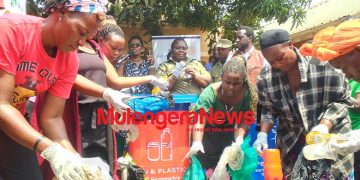
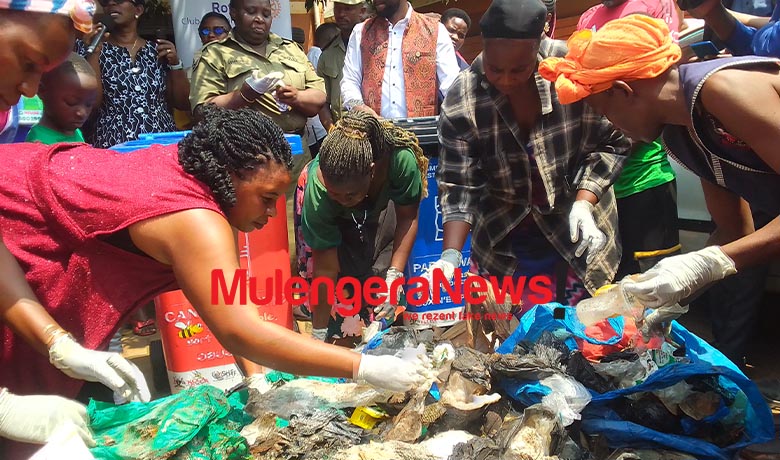
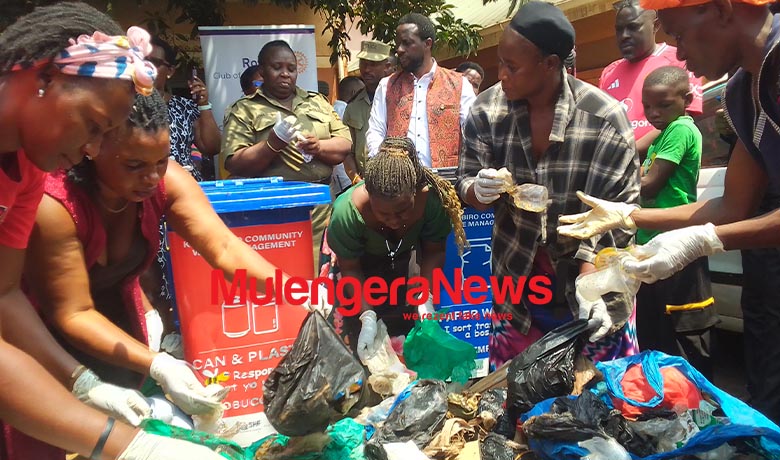
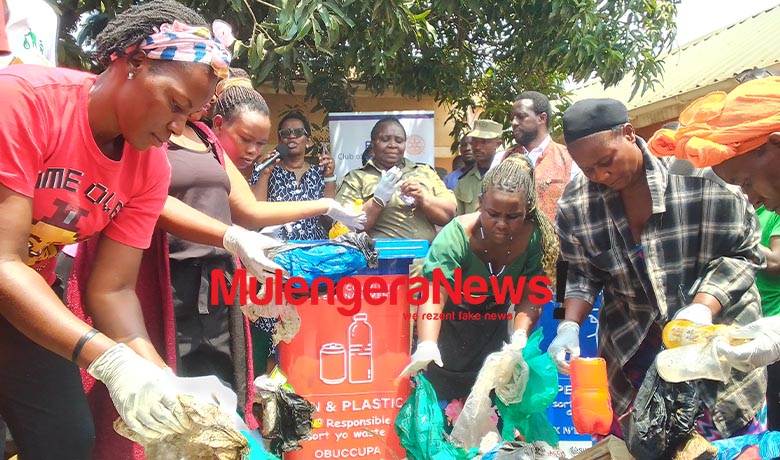
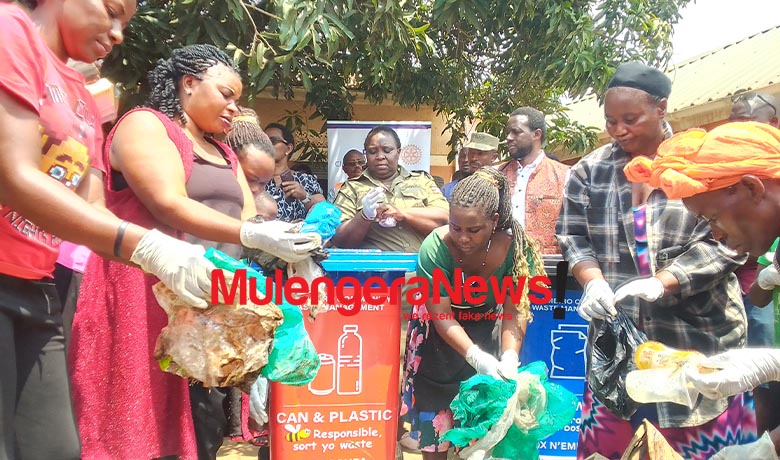
The call was made during a waste-management demonstration in Kulambiro, Nakawa Division, ahead of this month’s National Cleaning Days scheduled for Saturday, August 29.
Ministry of Health Permanent Secretary Dr. Diana Atwine urged households and workplaces to move beyond simply removing rubbish from their premises and instead adopt waste sorting at source.

“We want to now learn how to sort garbage,” Atwine said, explaining that waste generated at homes and workplaces can broadly be divided into plastics, paper and other non-biodegradable materials, as well as biodegradable waste such as food remains, banana peels, rotten fruits and leaves.

She particularly cautioned the public against burning plastics, saying the practice poses risks to human health and the environment.
“Burning plastics is very dangerous to our health,” Atwine said, urging residents to separate plastics from other waste and channel them to recyclers. She noted that recyclable materials can also provide an opportunity for households to earn income.
Atwine said biodegradable waste should be managed differently. Households with compounds can create compost pits for food waste and other materials that naturally decompose. Residents in apartments without space for composting can work with collectors who take biodegradable waste for other uses, including animal feeds.

She also encouraged residents to separate paper, glass and metals, noting that such materials can be collected and sold instead of being mixed with general rubbish.
The campaign comes as KCCA moves to enforce a “polluter pays” approach to waste management, requiring residents and businesses to pay for the waste they generate.
Dr. Sarah Zalwango, the Acting Director of Public Health and Environment at KCCA, said illegal dumping of waste on the ground would not be tolerated.
She urged residents to at least separate waste into two streams — organic and inorganic — with the latter capable of being further divided into plastics, electrical materials and glass.
According to Zalwango, the initiative is intended to reduce the volume of waste transported to disposal sites while encouraging residents to take responsibility for the waste they produce.
Under rates approved by the council, residents in informal settlements will pay Shs1,000 per 50-kilogramme bag, while those in other settlements will pay Shs3,000. The charge for a full load was put at Shs40,000.
In Nakawa West, Ecoserv Limited has been contracted by KCCA to collect waste and support waste sorting at source.
Ecoserv Project Manager Adson Arinaitwe said Nakawa West, which has 13 parishes, generates about 187 tonnes of garbage each month, with individual parishes producing between 17 and 18 tonnes.
He said the division has 13 garbage trucks, which he described as sufficient to collect and transport waste to Buyera dumping site.
Arinaitwe also announced additional measures aimed at improving waste collection, including software designed to help the company locate garbage and a system of placing QR codes at individual homes to facilitate identification and collection.
Under the company’s proposed charges, bags weighing more than 15 kilogrammes will cost Shs3,000, while those below 15 kilogrammes will cost Shs2,000. A black “kavera” bag will attract a Shs1,000 charge.
Arinaitwe appealed to residents to hand over their waste to Ecoserv and ensure it is properly sorted before collection.
Meanwhile, community leaders in Kulambiro have been promoting waste segregation among residents.
Eddie Rush Ntumwa, President of the Rotary Club of Kulambiro and a pioneer of waste segregation initiatives in the area, said residents had been sensitised for the past three months.
He pledged that community mobilisers would continue visiting households weekly to educate residents about separating rotting waste from non-rotting materials.
The waste-management demonstration brought together the Ministry of Health, KCCA, community leaders and waste collectors at Kisaasi Market, Kulambiro Police Post and Kulambiro Market.
Atwine also thanked members of the public for their participation in previous National Cleaning Days, saying the large amounts of waste collected reflected the enthusiasm with which communities embraced the initiative.
She urged Ugandans to use the August 29 cleaning exercise as an opportunity to adopt lasting waste-management practices, rather than treating cleaning as a one-day activity.
The Ministry’s message is that cleaner communities will require households to take responsibility for what they generate — by sorting, recycling, composting and avoiding harmful practices such as burning plastics. (For comments on this story, get back to us on 0705579994 [WhatsApp line], 0779411734 & 041 4674611 or email us at mulengeranews@gmail.com).