







Government has ordered a sweeping crackdown on taxis in dangerous mechanical condition, with Works and Transport Minister Fred Byamukama directing Police to remove unsafe commuter vehicles from the Greater Kampala Metropolitan Area.
“Starting Monday, August 24, no taxi classified as being in a Dangerous Mechanical Condition (DMC) will be allowed to operate within the Greater Kampala Metropolitan Area,” Byabakama declared.
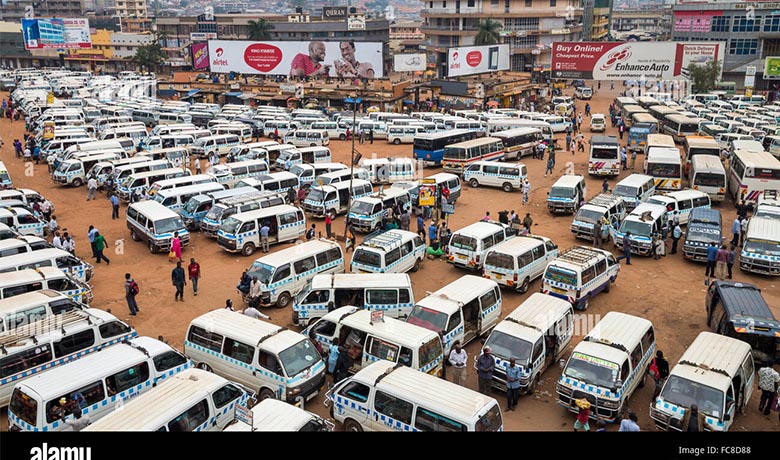
He has directed Uganda Police to conduct a 100-day operation targeting commuter taxis found to be mechanically unsafe, with particular focus on the ageing 14-seater taxis which he described as “Ganyegenya”.
“Our roads must not become death traps because of poorly maintained vehicles,” Byamukama said.
The minister added that public transport must be “safe, roadworthy and fit for purpose”, stressing that Ugandans deserve nothing less.
The directive represents one of his clearest early interventions since he became the substantive Minister of Works and Transport, having previously served as Minister of State for Transport under Gen Edward Katumba Wamala in the previous term.
Since taking over the full ministerial office, Byamukama has increasingly turned his attention to stalled infrastructure projects, road maintenance and enforcement of standards in the transport sector.
He has been inspecting road projects and pressing contractors to speed up works, while also raising concerns over delays and poor workmanship on some projects.
His latest directive shifts the focus directly to public transport operators, particularly taxi owners whose vehicles have remained on the roads despite being visibly worn out.
The Ganyegenya taxis are a familiar sight on Kampala roads and have for years provided affordable transport to thousands of passengers. However, their advanced age and poor mechanical condition have also raised concerns about passenger safety.
Under the new operation, Police will be expected to identify and take action against vehicles that fail to meet the required roadworthiness standards.
The government move comes as Kampala continues to struggle with traffic congestion, road accidents and an ageing public transport fleet.
Byamukama’s decision also puts the responsibility on taxi owners and operators to ensure that vehicles carrying passengers are properly maintained before putting them back on the road.
The minister’s tough warning suggests that his tenure could combine infrastructure development with stricter enforcement of safety standards.
For taxi operators, the 100-day operation could mean repairing vehicles, withdrawing unsafe ones or investing in new ones.
For passengers, however, the government position is that affordability should not be allowed to come at the expense of people’s lives.