








By Ben Musanje
Boda boda riders who spend prolonged periods riding motorcycles could experience temporary reductions in sperm count due to heat exposure, a university lecturer has warned.
Dr. Godfrey Shichenje Mutakha, a lecturer at Masinde Muliro University of Science and Technology in Kakamega, Kenya, said prolonged exposure to heat while riding motorcycles could affect sperm production, particularly among riders who spend several continuous hours on their motorcycles.
Mutakha, however, cautioned against assuming that motorcycle riding automatically causes infertility among boda boda operators, noting that the effects can be temporary and may vary depending on the duration and frequency of heat exposure.
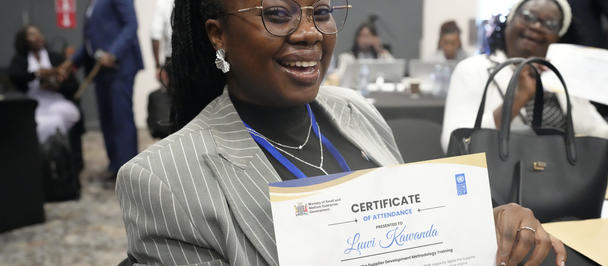
Speaking during the Merck Foundation Health Media Training conducted in partnership with the Health Journalists Network Uganda (HEJNU) for Ugandan journalists and media students, Mutakha said riders could take measures to reduce prolonged heat exposure.

“Sometimes we tell them to use a pad so that the heat reduces,” he said, adding that riders could also take breaks to allow sperm production to return to normal.

He said the issue was more likely to arise among riders who spend long periods continuously on motorcycles.
“If you are doing it in four hours, of course now the sperm count can reduce,” Mutakha said.
Despite the potential effect, Mutakha said there are not many boda boda riders presenting to health facilities specifically with sperm-count problems.

He attributed this partly to the working patterns of many riders, who operate during the day and rest at night, meaning their exposure to motorcycle-related heat is not necessarily constant.
His remarks came amid wider discussions on infertility, its causes and its social and psychological impact, with health experts stressing that fertility problems should not be viewed as a condition affecting women alone.
Dr. Francisca Bwalya, the Zambia’s Ministry of Health National Mental Health Coordinator, said infertility affects about 186 million people worldwide, translating to approximately 8.5 million couples globally.
She said a significant proportion of those affected are in sub-Saharan Africa, where infertility affects about 10 million people, while access to fertility care remains a challenge in many low- and middle-income countries.
Bwalya said the figures highlight the need to strengthen advocacy and improve access to fertility care, particularly in regions where infertility carries significant social and psychological consequences.
According to Bwalya, infertility can arise from factors affecting either women or men. On the male side, these may include reproductive tract obstruction, infections, injuries, hormonal disorders and failure of the testes to produce sperm.
She also pointed to lifestyle and environmental factors, including smoking, alcohol use, pollution and weight management, as issues that can influence fertility.
For women, Bwalya said infertility can also be associated with a range of reproductive and hormonal conditions.
But beyond the medical causes, she said infertility can have serious social and psychological consequences, particularly in societies where having children is strongly connected to an individual’s identity and expectations around marriage and family.
Bwalya said infertility can cause significant social and psychological distress, affecting both women and men, although women may experience particularly severe social pressure.
She said voluntary child-free status is more culturally accepted in some Western societies, but this is often not the case in African communities and other developing countries.
As a result, people experiencing infertility may face significant emotional distress, marital conflicts, external pressure and degrading comments from members of society.
Bwalya said infertility can also contribute to conflicts within marriages and relationships, external interference and, in some cases, remarriages.
She warned that women may also face an increased risk of gender-based violence, including emotional and economic abuse, because of infertility.
“Gender-based violence is about one in three women experience gender-based violence,” Bwalya said, noting that the problem extends beyond physical and sexual violence to include emotional and economic harm.
She further linked reproductive health concerns to child marriage, saying the practice remains common in East and Southern Africa.
Bwalya said 27 per cent of women in East and Southern Africa have given birth by the age of 18, exposing young girls to early pregnancies, sexually transmitted infections and other health risks while limiting their educational opportunities.
She also highlighted female genital mutilation, saying an estimated 200 million women alive today have experienced the practice, with the majority living in sub-Saharan Africa and the Arab states.
At the current rate, she said about 68 million girls could experience female genital mutilation between 2015 and 2030, describing the projected figure as alarming.
Bwalya urged communities to speak out against practices that can harm reproductive health while promoting access to appropriate care and support.
She also urged the media to help challenge the stigma surrounding infertility by providing accurate, evidence-based information.
She said journalists should explain the causes, possible treatments and available support services while avoiding headlines, images and language that portray infertility negatively or create unnecessary fear.
“The idea is not to give too much hope or make the situation seem very hopeless, but to give accurate, objective information,” she said.
She also called on journalists to consult medical professionals when reporting on sensitive health issues and to direct audiences to appropriate sources of care.
According to Bwalya, the media has a significant role to play in advocacy and lobbying for better infertility services, including influencing health policies and encouraging greater investment in fertility care.
She said responsible reporting could help communities understand that infertility can be treated in some cases and that people experiencing it need support rather than blame or stigma.
Dr. Mohsin Sidat, Vice-Rector of Eduardo Mondlane University in Mozambique, meanwhile highlighted the role of the media in preventing and controlling non-communicable diseases, particularly hypertension and diabetes.
Sidat said uncontrolled high blood pressure and diabetes can damage vital organs and lead to serious complications, including stroke, heart attacks and kidney failure.
He urged the public to reduce salt consumption, eat more fruits and vegetables, avoid highly processed foods, stop tobacco use and control alcohol consumption.
He cautioned that salt is not only added during cooking or at the dining table, but is also present in many processed foods, making it important for people to consider their overall daily intake.
Sidat said journalists have a responsibility to make health information accessible, particularly to rural communities and populations that may not regularly visit health facilities.
He encouraged the use of community radio and local languages to communicate health messages and urged journalists to rely on credible, science-based sources.
The Merck Foundation Health Media Training brought together journalists and media students to strengthen reporting on health issues, with experts emphasising the media’s role in public education, disease prevention and reducing stigma.
The discussions highlighted the need for health reporting that is accurate, responsible and solution-oriented, enabling communities to recognise health risks early, seek appropriate care and make informed decisions about their wellbeing.