






By Ben Musanje
The fatal road crash at Bobi Trading Centre along the Kampala–Gulu Highway that claimed 14 lives has sparked fresh scrutiny of Uganda’s road safety record, with the Uganda Law Society (ULS) blaming decades of government neglect while Members of Parliament called for practical measures to curb the growing number of fatalities on the country’s roads.
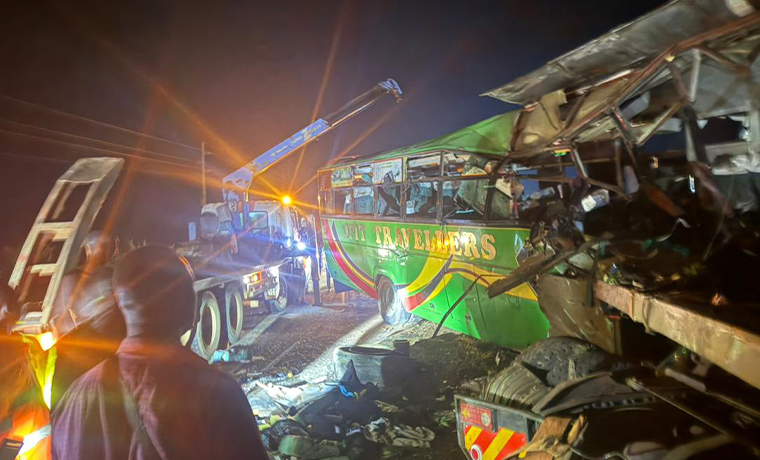
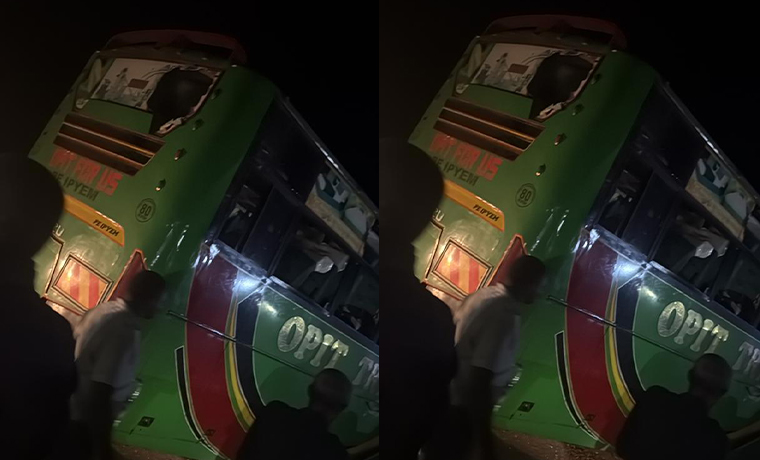
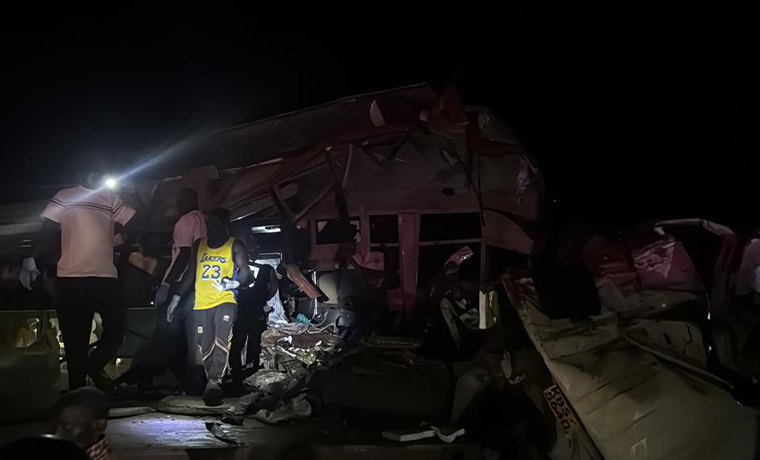
The crash occurred at around 9:34pm on Tuesday at Bobi Trading Centre and involved an Opit Travellers Company Isuzu bus, registration number UBE 110H, and a Mercedes-Benz Actros trailer, registration numbers KBS 564D/ZE 7948.
In a statement issued on Wednesday, Traffic Police Spokesperson SP Michael Kananura said preliminary investigations indicated that the bus driver, who was allegedly speeding, attempted to avoid a pedestrian crossing the road before losing control and colliding head-on with the oncoming trailer.

He said 14 people had been confirmed dead while 28 others sustained injuries and were rushed to various medical facilities for treatment. He added that investigations into the crash were ongoing.

SP Kananura appealed to motorists to observe speed limits, particularly during the night when visibility is reduced. He also urged drivers to remain vigilant in trading centres where pedestrians frequently cross roads and to drive at speeds that would enable them to stop safely whenever necessary.
The tragedy immediately attracted reactions from the Uganda Law Society and Parliament, with both expressing concern over the continued loss of lives on Uganda’s roads but differing in their emphasis on the causes and solutions.
The Uganda Law Society extended condolences to the families that lost loved ones and wished a speedy recovery to those injured in the crash.

In a statement signed by its President, Senior Counsel Isaac K. Ssemakadde, the Society described the Bobi tragedy as another preventable loss of life resulting from years of government neglect of road safety.
The lawyers’ body argued that Ugandans continued to pay with their lives because of decades of inadequate investment in road safety, noting that thousands of people die annually in crashes that could be prevented through better planning, stronger enforcement and improved infrastructure. It added that major highways, including the Kampala–Gulu Highway, had increasingly become scenes of recurring fatal accidents.
The Society cited figures released by the Uganda Police Traffic Directorate on March 30, 2026, indicating that 5,383 people died in road crashes during 2025, representing an average of about 15 deaths every day.
It noted that the number of road fatalities had continued to rise over the past four years, increasing from 4,534 deaths in 2022 to 4,806 in 2023, 5,144 in 2024 and 5,383 in 2025.
According to the Society, the increasing number of road deaths reflected policy failures rather than unavoidable accidents. It attributed the trend to budget corruption, weak enforcement of traffic laws, deteriorating road infrastructure and inadequate emergency response services.
The ULS further argued that after four decades under President Yoweri Museveni’s administration, persistent failures in road safety management had devastated families, impoverished communities and undermined the promise of protecting citizens’ lives.
The Society also criticised what it described as the government’s reliance on presidential donations to bereaved families following major road crashes, arguing that such interventions did little to prevent future accidents or provide long-term support for victims.
It maintained that Uganda had failed for decades to establish a meaningful Road Accident Fund or a comprehensive compensation framework for road crash victims despite countries such as Kenya and South Africa having functional victim compensation schemes.
As part of its response to the Bobi tragedy, the Uganda Law Society announced that its legal aid clinics in Gulu and Masindi would provide free legal assistance to survivors and bereaved families. It also encouraged affected members of the public to seek support through its dedicated toll-free legal assistance line.
The Society further announced that, as part of activities marking its 70th anniversary, it would establish a national pro bono scheme dedicated to supporting road accident victims through partnerships with other professional bodies, describing the initiative as an effort to demonstrate civic solidarity where the State had fallen short.
The ULS also criticized the military’s involvement in public infrastructure procurement, including what it described as Chief of Defence Forces Gen Muhoozi Kainerugaba’s efforts to take control of Kampala roads funding. It argued that public infrastructure projects should remain under transparent civilian institutions rather than military control.
The lawyers’ body called on Parliament to make road safety a national priority by reducing wasteful expenditure across government, including allocations to State House and the military, auditing road funds, improving highway infrastructure, strengthening ambulance and trauma care services, and passing laws that are effectively enforced.
It further argued that the recurring road tragedies demonstrated the need for leadership committed to accountability, evidence-based public investment and the protection of every citizen’s right to safe travel.
Meanwhile, Parliament paid tribute to the victims by observing a moment of silence during Wednesday’s plenary sitting.
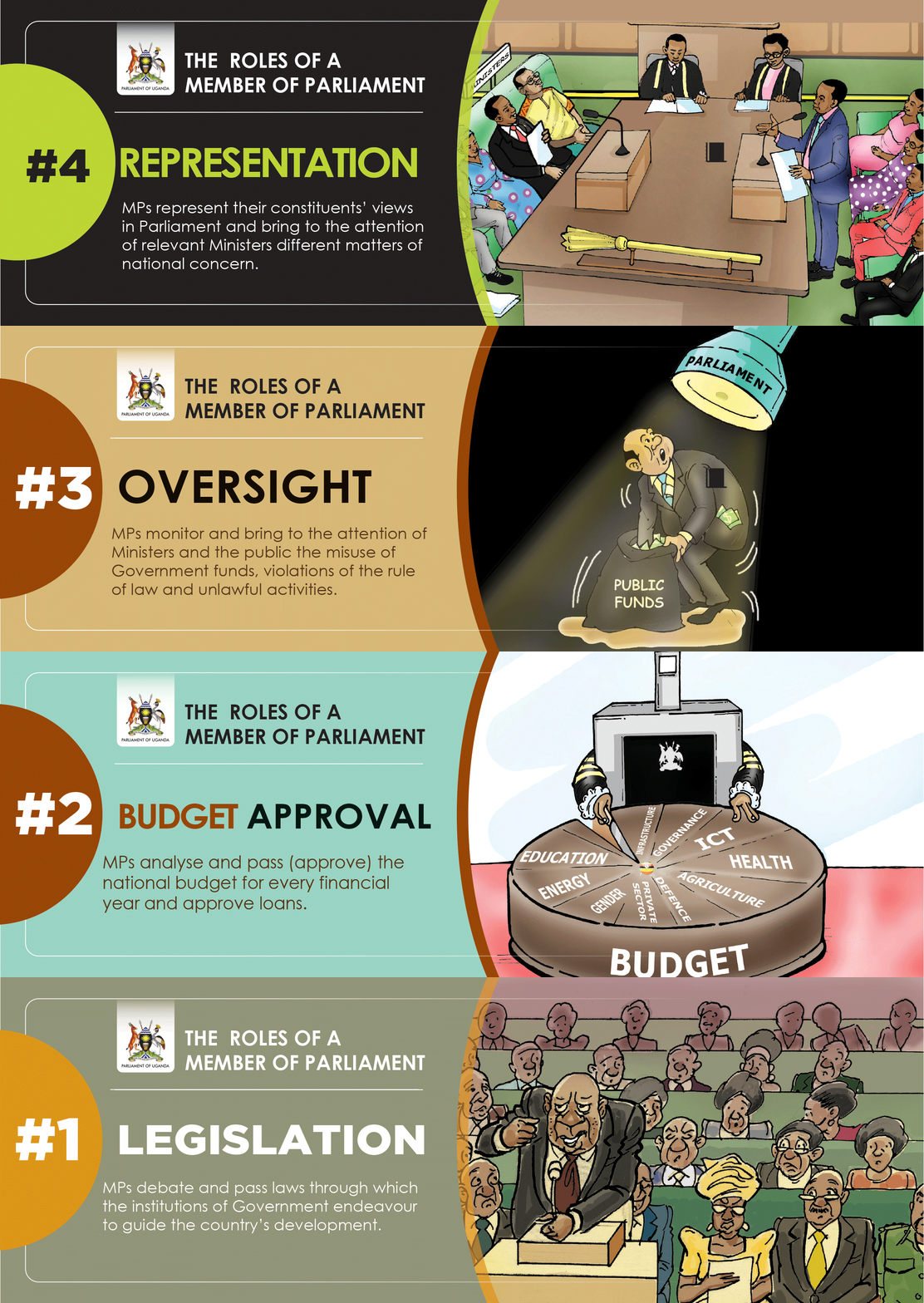
Deputy Speaker Thomas Tayebwa described road safety as a national concern requiring a collective response from government institutions, motorists and the general public to reduce the increasing number of road crashes.
During the debate, Kalungu West MP Joseph Gonzaga Ssewungu urged the Ministry of Works and Transport to improve road infrastructure by installing additional traffic signs, road markings and other safety features on highways. He argued that better road furniture would significantly reduce accidents, particularly in busy trading centres located along major roads.
Pakwach District Woman MP Jane Pacuto attributed many road crashes to stationary vehicles left on highways after mechanical breakdowns. She proposed the establishment of designated parking bays where disabled vehicles could be towed to minimise the risk of collisions involving stranded vehicles.
Responding to the concerns raised by legislators, Works and Transport Minister Fred Byamukama said preliminary investigations had indicated that overspeeding was the primary cause of the Bobi Trading Centre crash.
He told Parliament that the Ministry, in consultation with the Police Traffic Directorate and other stakeholders, was finalising a comprehensive national road safety plan, which would soon be presented to Parliament for consideration.
Although investigations into Tuesday night’s crash are still ongoing, the Bobi tragedy has once again highlighted the heavy human cost of road crashes in Uganda.
While police investigations have so far pointed to alleged overspeeding as the immediate cause of the collision, the Uganda Law Society has argued that the disaster reflects deeper institutional and governance failures, whereas legislators have focused on improving road infrastructure, strengthening enforcement and implementing practical safety measures.
For the families mourning those who lost their lives and the 28 survivors receiving treatment, the Bobi crash has become the latest reminder of the urgent need for sustained action to reverse Uganda’s rising road death toll.(For comments on this story, get back to us on 0705579994 [WhatsApp line], 0779411734 & 041 4674611 or email us at mulengeranews@gmail.com).