






By Ben Musanje
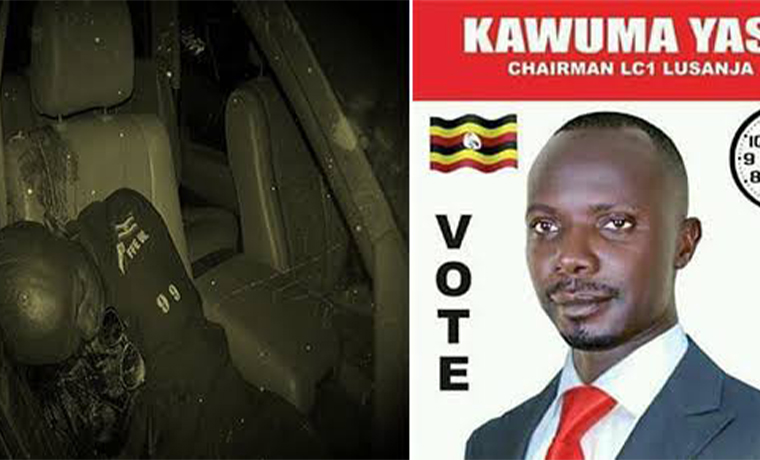
The High Court in Arua has ordered a judicial inquest into the 2018 fatal shooting of Yasin Kawuma, the driver of opposition leader Robert Kyagulanyi, popularly known as Bobi Wine, ruling that the circumstances surrounding his death warrant an independent fact-finding inquiry in the interests of justice.
In a judgment delivered on July 6, 2026, Justice Harriet Grace Magala directed that an inquest be conducted by the Chief Magistrate of Arua Chief Magistrate’s Court into Kawuma’s death, which occurred during the Arua Municipality parliamentary by-election campaigns nearly eight years ago.
The ruling followed an application filed by Kawuma’s widow, Alice Mwesigwa, who sought court orders compelling the Minister of Internal Affairs to appoint a coroner to investigate the killing.

Kawuma was shot on the evening of August 13, 2018, during a tense political campaign in Arua. According to medical records presented before court, he died from a brain injury caused by gunshot wounds. His death occurred amid violence that erupted during the by-election campaigns and drew widespread national and international attention.

Represented by lawyer Erias Lukwago? Actually provided: Mr. Kwemara Kafuuzi of Rwakafuuzi & Co. Advocates, Mwesigwa argued that the violent nature of her husband’s death required a formal inquest under Uganda’s Inquests Act. She maintained that Kawuma’s death was neither natural nor the result of a lawful court sentence and therefore fell within the category of deaths requiring judicial inquiry.
Her lawyers relied on Article 22 of the Constitution, which protects the right to life, as well as provisions of the Inquests Act empowering the High Court to order an inquest where it is necessary or desirable in the interests of justice.
The respondents, the Minister of Internal Affairs and the Attorney General, opposed the application. Through the Attorney General’s Chambers, they argued that while the High Court has powers under the Inquests Act, it cannot compel the minister to appoint a coroner because that appointment is an executive function exercised at the minister’s discretion.

Government lawyers further contended that the application had been filed prematurely because the applicant had not first petitioned the minister or sought redress before a magistrate within the jurisdiction where the death occurred. They also argued that the applicant had failed to exhaust available remedies before turning to the High Court.
The respondents additionally challenged portions of Mwesigwa’s supporting affidavit, arguing that she had not witnessed the shooting because she was in Wakiso District at the time and had not disclosed the source of her information regarding the events leading to her husband’s death.
Justice Magala, however, found that those objections did not affect the central issue before the court. She noted that both parties agreed Kawuma had died and that the medical certificate produced in court confirmed that his death resulted from gunshot wounds.
The judge held that the undisputed medical evidence established that Kawuma died an unnatural death, making the circumstances appropriate for an inquest.
In her judgment, Justice Magala explained that the purpose of an inquest is not to determine criminal liability but to establish the facts surrounding a person’s death. She observed that an inquest is a judicial fact-finding process intended to answer key questions, including who died, where and when the death occurred, and, most importantly, how the deceased came by their death.
The court cited both Ugandan law and comparative jurisprudence, including a recent decision of the High Court of England and Wales, emphasizing that an inquest serves the public interest by establishing reliable facts whenever a person dies under suspicious, violent or unexplained circumstances.
Justice Magala also referred to Article 22(1) of the Constitution, which guarantees every person’s right to life except where death results from the execution of a lawful sentence imposed by a competent court and confirmed on final appeal.
She ruled that where a person’s life is taken away in circumstances that are violent or unexplained, justice requires an independent inquiry to establish what happened.
The judge observed that such an inquiry benefits not only the deceased’s family but also the wider public by promoting accountability and confidence in the administration of justice.
While agreeing that an inquest should be conducted, the court declined to grant the specific order sought by the applicant directing the Minister of Internal Affairs to appoint a coroner.
Justice Magala held that Section 27(a) of the Inquests Act empowers the High Court to order that an inquest be held but does not authorize it to compel the minister to appoint a coroner.
Instead, she noted that magistrates are recognized under the law as coroners capable of conducting inquests. Exercising the court’s powers under the Inquests Act and the Judicature Act, she ordered that the inquest be conducted by the Chief Magistrate of Arua Chief Magistrate’s Court.
The court made no order as to costs.
The ruling revives official judicial scrutiny of one of Uganda’s most politically significant killings in recent years.
Kawuma’s death occurred during the highly contested Arua Municipality by-election in August 2018, a campaign marked by violence that also led to the arrest of Bobi Wine and several opposition politicians. The incident attracted widespread condemnation from human rights organizations and prompted repeated calls for an independent investigation into the circumstances surrounding the fatal shooting.
Although several investigations have been conducted since the incident, the High Court’s decision establishes a formal judicial process specifically intended to determine the circumstances of Kawuma’s death through an independent fact-finding inquiry.
Legal observers say the forthcoming inquest could provide long-awaited answers for Kawuma’s family and the public while clarifying the sequence of events surrounding one of Uganda’s most controversial political incidents. The proceedings are expected to focus on establishing the facts of the case rather than assigning criminal responsibility, leaving any future prosecutions to the appropriate investigative and prosecutorial authorities should evidence emerge. (For comments on this story, get back to us on 0705579994 [WhatsApp line], 0779411734 & 041 4674611 or email us at mulengeranews@gmail.com).