







By Ben Musanje
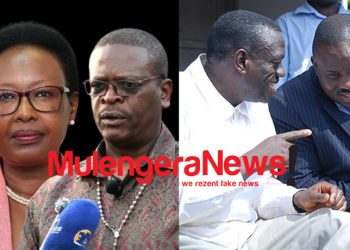
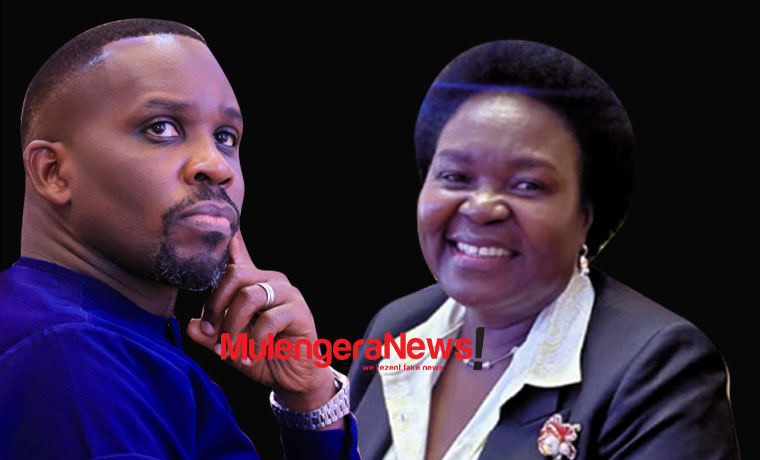
Former Minister of Energy and Mineral Development Dr. Canon Ruth Nankabirwa Ssentamu has urged the Leader of the Opposition in Parliament, Joel Ssenyonyi, to allow National Unity Platform (NUP) legislators greater freedom to express dissenting opinions during caucus meetings, arguing that internal debate is essential for building consensus and avoiding embarrassing divisions on the floor of Parliament.
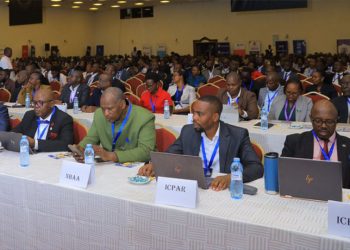
Addressing Members of Parliament during the induction seminar for the 12th Parliament at Speke Resort Munyonyo, the Senior Presidential Advisor- designate and former Government Chief Whip Nankabirwa said parliamentary caucuses should serve as safe spaces where legislators openly challenge leadership, scrutinize proposed positions and settle disagreements before entering the House. She maintained that suppressing alternative views only breeds frustration and eventually results in uncoordinated conduct during parliamentary proceedings.
Without directly criticizing the Opposition, the veteran legislator appealed to Ssenyonyi and other parliamentary leaders to embrace democratic engagement within their political parties. She said it was unfortunate when a Leader of the Opposition was making a presentation in Parliament only to be contradicted by members from his own side because they had not been given an opportunity to express themselves earlier in caucus meetings. According to the former Kiboga district Woman Member of Parliament, disagreements should be exhausted internally rather than being displayed publicly in the chamber.

Drawing from her years as chairperson of the NRM Parliamentary Caucus, Nankabirwa said she always encouraged regular caucus meetings where members freely questioned ministers, debated government policies and even quarreled where necessary. She emphasized that such disagreements were healthy because they enabled legislators to understand government positions before business reached the floor of Parliament. She noted that caucuses should not wait for President Yoweri Museveni to convene meetings at State House Entebbe, but should instead meet routinely, preferably every month, to discuss emerging issues affecting Parliament and the country.

She explained that ministers presenting government Bills should first defend their proposals before party caucuses, giving Members of Parliament sufficient time to ask questions and seek clarification. Once concerns have been addressed internally, she said, members are better prepared to debate constructively in the House instead of exposing divisions before the public. Conversely, she warned that silencing legislators because of party loyalty often results in what she described as “uncoordinated troop movements” during parliamentary business, with members unexpectedly voting or speaking against agreed positions.
Nankabirwa also used the occasion to explain that the responsibilities of Government and Opposition Chief Whips are largely similar despite serving different political interests. She said both offices are tasked with mobilizing members, coordinating attendance, managing voting patterns and ensuring effective communication between parliamentary leadership and legislators. The whips, she added, are supported by assistant and regional whips who help relay information to Members of Parliament across the political divide.
The former State Minister for Microfinance further stressed that successful parliamentary leadership depends on strong interpersonal skills rather than authority alone. She observed that some whips fail because they lack sound public relations, noting that leaders must persuade colleagues with humility and respect instead of relying on coercion. According to her, a whip who does not respect opposition leaders or alternative opinions risks alienating members whose support is necessary for effective parliamentary coordination.

Beyond managing debate, Nankabirwa reminded legislators that parliamentary lobbying remains an important component of lawmaking. She encouraged MPs to use the East and West lobbies of Parliament to build consensus across party lines before matters are formally debated, saying negotiation and consultation often produce better legislative outcomes than confrontation in the chamber.
She concluded by reminding members that parliamentary whipping is a globally recognized governance tool that strengthens representation, legislation and oversight. She urged both the ruling party and the Opposition to use their caucuses effectively so that Parliament remains united in serving Ugandans despite political differences. Nankabirwa said every legislator carries a public trust and must place national interest above partisan disagreements, emphasizing that constructive internal dialogue ultimately strengthens Uganda’s democratic institutions. (For comments on this story, get back to us on 0705579994 [WhatsApp line], 0779411734 & 041 4674611 or email us at mulengeranews@gmail.com).