







By Mulengera Reporters
For decades, cocoa cultivation was considered impossible in Lira and the wider Lango sub-region. Farmers believed the area’s rainfall patterns, heat, and soil conditions could not support a crop traditionally associated with wetter regions such as Bundibugyo and West Africa.
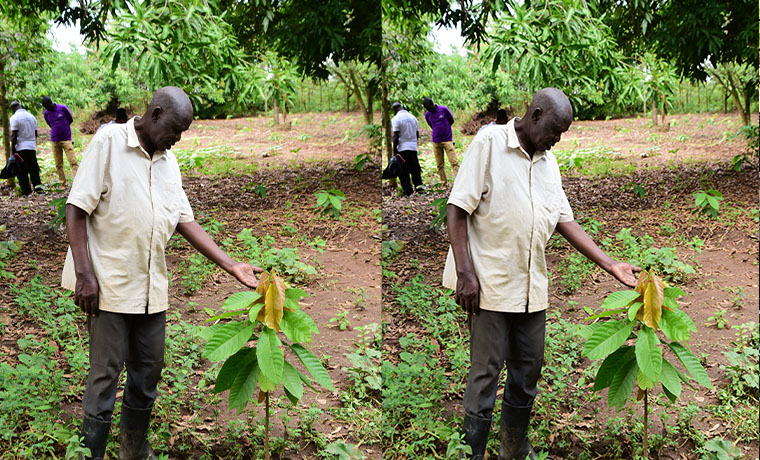
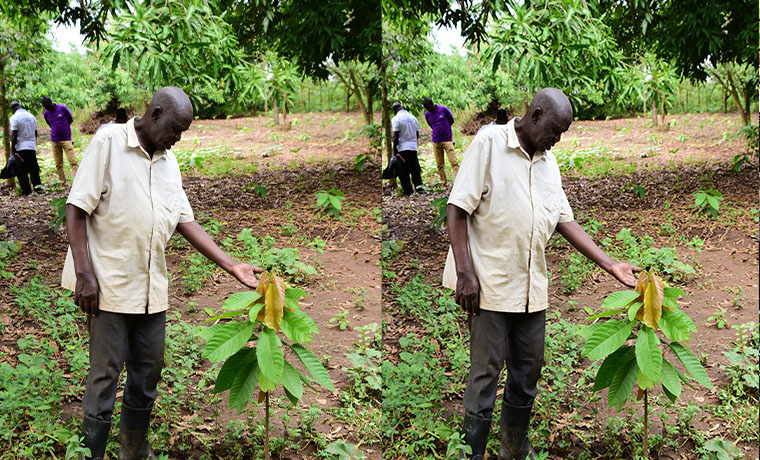
Today, that assumption is being steadily dismantled by Joseph Ogwal Oyuk, a farmer in Lira City West and Director of Acanga Farm Estates, whose adoption of solar-powered irrigation through Equity Bank Uganda’s Results-Based Financing programme is helping to demonstrate that cocoa can thrive in the region.
Historically, Lango has depended on seasonal cash crops such as cotton and oilseeds. While these crops provide quick returns, they often keep farmers trapped in low-value production cycles. Cocoa, by contrast, is a perennial crop that requires patience, long-term investment and technical knowledge, taking between 18 months and five years to mature.

“There was a belief that our climate was too dry for cocoa,” Ogwal explains. “But with proper irrigation and shade, the temperatures here are actually suitable.”

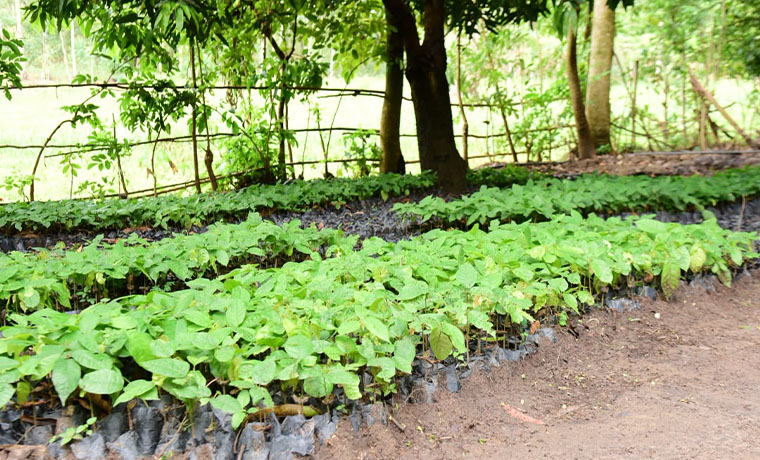
At his 10-acre Acanga Farm Estates, one acre is dedicated to cocoa production, supported by a nursery with more than 30,000 seedlings ready for distribution to farmers across the region.
The farm’s journey began in 1988 with mango production before expanding into coffee in 2000. Ogwal first ventured into cocoa in 2003, raising more than 45,000 seedlings. However, the project faced significant setbacks due to limited access to water.
“When I started, I used a watering can, then a treadle pump, then a petrol pump,” he recalls. “We carried water manually from the source. Workers got exhausted, the process was slow and costs were high. That limited how many seedlings I could produce.”

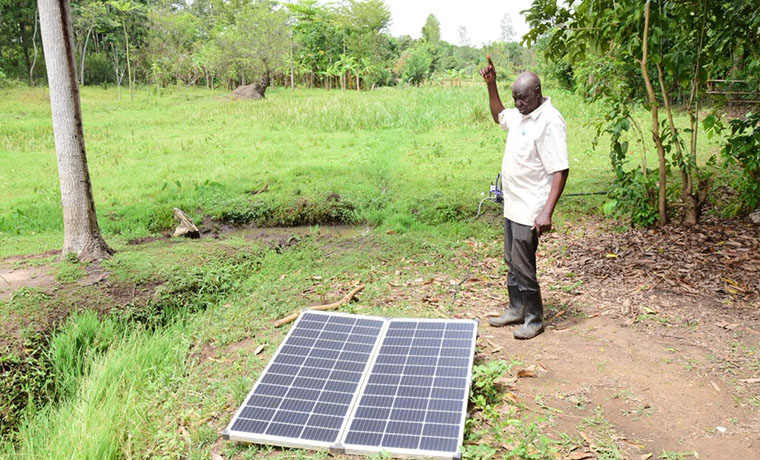
The breakthrough came when Ogwal acquired a solar-powered irrigation system from Tulima Solar through a partnership with Equity Bank Uganda under its Results-Based Financing programme. The system pumps water directly from the source to the nursery and fields, reducing labour requirements while ensuring a reliable water supply throughout the year.
“With solar irrigation, water is always available. What used to take hours now takes about 15 minutes,” he says.
The impact has been immediate. Nursery capacity has doubled from 15,000 to more than 30,000 seedlings, enabling Ogwal to meet growing demand from farmers interested in cocoa cultivation.
As a founding member of the Uganda National Farmers’ Association, Ogwal has long championed improved farming practices. His decision to focus on cocoa was informed by strong market prospects and increasing demand.
“I always look at market value before investing,” he says. “When I saw the demand for cocoa and its rising prices, I decided to focus on seedlings.”
With wet cocoa beans currently fetching about Shs14,000 per kilogram, the crop is emerging as an attractive alternative for farmers seeking to improve household incomes and diversify production.
Agricultural experts note that cocoa can perform well in Lira’s moderate to high temperatures when supported by adequate moisture and shade. Solar irrigation is helping farmers harness the region’s abundant sunshine to power water pumps, turning what was once viewed as a climatic limitation into a productive advantage.
To address knowledge gaps, Ogwal operates a field farm school at Acanga Farm Estates, where he trains farmers in sustainable cocoa production techniques. Through the initiative, he has already supplied seedlings to more than 200 farmers across the region.
“People come here to learn how to grow cocoa profitably,” he says. “I show them the right methods so they can succeed.”
The farm has become a demonstration site for agricultural diversification in northern Uganda, attracting farmers eager to explore new opportunities beyond traditional cash crops.
Looking ahead, Ogwal plans to expand both his cocoa plantation and nursery. Building on the success of his current one-acre cocoa plot, he intends to dedicate an additional acre to cocoa production and increase nursery output to 300,000 seedlings.
For Equity Bank Uganda, the success of farmers such as Ogwal underscores the transformative potential of clean energy financing in agriculture.
“Our vision is a Uganda where every household and business can access clean energy without taking on unmanageable debt,” says Virginia Semakula, Manager for the Energy, Environment and Climate Change Pillar at Equity Bank Uganda. “We want renewable energy financing to become as common and accessible as school fees loans or boda boda financing. Results-Based Financing and Pay-As-You-Go models will play an important role in scaling access. Ultimately, clean energy is not only about climate change; it is about improving livelihoods, reducing household expenses, supporting businesses, improving education outcomes and creating healthier communities.”
As solar technology, farmer training and growing market demand converge, cocoa farming in Lira is no longer a distant possibility. It is becoming a viable enterprise, driven by innovation, resilience and strategic financing that is helping farmers turn a once-dismissed idea into a profitable reality. (For comments on this story, get back to us on 0705579994 [WhatsApp line], 0779411734 & 041 4674611 or email us at mulengeranews@gmail.com).