


![NO ONE HAS THE POWER TO FIRE HIM! Ex-Omuhikirwa [Who Fought M7 in 2016] Dares Tooro Clan Leaders Over Rwomiire Sacking, Says Only King Oyo Could Fire Him](https://mulengeranews.com/wp-content/uploads/2026/09/Steven-Kaliba-Ateenyi-75x75.jpg)







By Ben Musanje
The Uganda Law Society (ULS) leadership has reaffirmed its commitment to Alternative Dispute Resolution (ADR), expressing optimism that an ongoing mediation process led by former Chief Justice Bart Katureebe could help resolve a series of legal disputes that have paralyzed the society’s operations and delayed key governance activities.
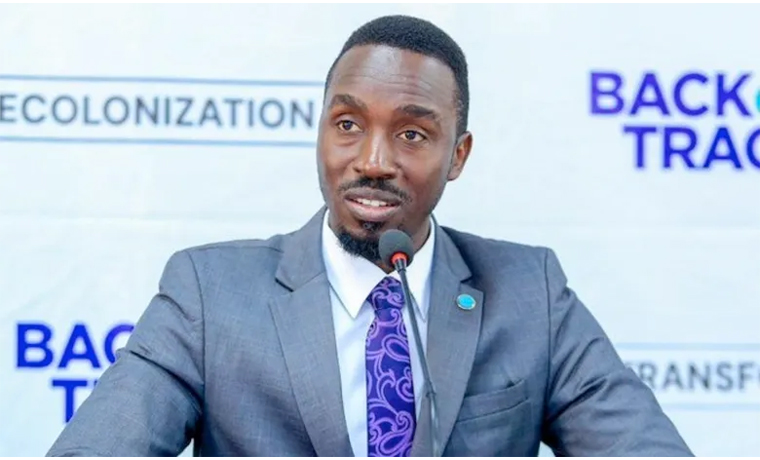
Speaking during the 19th Radical New Bar Live session on Thursday, ULS Vice President Anthony Asiimwe said the society was actively participating in mediation efforts aimed at resolving all outstanding disputes involving the society, its leadership and other stakeholders.
According to Asiimwe, an important mediation session involving all Uganda Law Society matters was scheduled for Thursday before former Chief Justice Bart Katureebe, marking the third meeting in four weeks under the process.

He described the mediation as critical to the future of the legal profession and said the current ULS leadership remained committed to pursuing dialogue and reconciliation despite facing numerous legal battles since assuming office in October 2024.

“As a Council, we fully support this process and are working earnestly towards an honourable out-of-court settlement with all parties,” Asiimwe said.
The vice president rejected claims that the Radical New Bar leadership was opposed to Alternative Dispute Resolution, insisting that mediation has consistently been their preferred approach.
He noted that since taking office, the Uganda Law Society had not instituted legal proceedings against any individual, except in matters involving the Attorney General undertaken in pursuit of the society’s statutory public interest mandate.

According to Asiimwe, however, the society and members of its governing council have faced more than 40 lawsuits filed in both the High Court and magistrates’ courts since October 2024.
He argued that several court decisions issued during the disputes had adversely affected the society’s operations, including blocking annual general meetings, freezing elections and disrupting statutory representations to key institutions such as the Judicial Service Commission, Law Council and National Environment Management Authority.
The ULS vice president said efforts to resolve the disputes through mediation first gained traction at the Court of Appeal, where Justices Christopher Gashirabake Kiryabwire and Eva Luswata Musisi encouraged parties to explore alternative settlement mechanisms.
He noted that after those efforts, four consolidated appeals involving the society, including an appeal filed by ULS President Isaac Ssemakadde challenging a contempt ruling, had been scheduled for hearing on July 10, 2025.
However, the process took a different direction after Deputy Chief Justice Richard Buteera Zeija, then serving as Deputy Chief Justice, reportedly removed all ULS-related matters from the cause list on July 7, 2025, citing the need for further mediation.
According to Asiimwe, the matters remain unresolved and have yet to return to active hearing despite continued efforts to secure a comprehensive settlement.
He nevertheless welcomed what he described as a more mediation-friendly approach by the current leadership of the Civil Division of the High Court.
The vice president revealed that all ULS-related matters before the division were recently adjourned until September 24, 2026, specifically to allow mediation efforts to proceed.
He further disclosed that the Uganda Law Society had formally proposed a consolidated mediation framework covering disputes pending before both the High Court and Court of Appeal, and was awaiting feedback from the respective courts.
Asiimwe credited senior members of the legal profession, including Prof. Fredrick Ssempebwa, Senior Counsel Francis Gimara, Advocate Robert Rutaro and Advocate Zubeda Namutebi, for spearheading the latest mediation initiative.
He also praised former Chief Justice Bart Katureebe for volunteering his time to facilitate the process and revealed that additional retired judges could be brought on board as co-mediators.
The ULS leadership believes the mediation presents an opportunity not only to resolve immediate disputes but also to reset relations between the Bench and the Bar.
According to Asiimwe, the society’s objective is not to prolong legal battles but to transform institutional relations within Uganda’s justice sector through dialogue anchored on constitutional principles and mutual respect.
He called upon judicial officers, senior advocates, mediators and other stakeholders within the legal fraternity to support the ongoing process, arguing that a successful resolution would strengthen both the independence of the Bar and the Judiciary.
The mediation comes at a crucial time for the Uganda Law Society as it seeks to clear longstanding disputes that have affected its governance structures and delayed key activities, including preparations linked to the society’s annual general meeting.
With another round of talks scheduled under Katureebe’s stewardship, the legal fraternity will be watching closely to see whether mediation succeeds where litigation has struggled, potentially opening a new chapter in relations between the Uganda Law Society and other justice sector actors. (For comments on this story, get back to us on 0705579994 [WhatsApp line], 0779411734 & 041 4674611 or email us at mulengeranews@gmail.com).

![NO ONE HAS THE POWER TO FIRE HIM! Ex-Omuhikirwa [Who Fought M7 in 2016] Dares Tooro Clan Leaders Over Rwomiire Sacking, Says Only King Oyo Could Fire Him](https://mulengeranews.com/wp-content/uploads/2026/09/Steven-Kaliba-Ateenyi-350x250.jpg)