

![NO ONE HAS THE POWER TO FIRE HIM! Ex-Omuhikirwa [Who Fought M7 in 2016] Dares Tooro Clan Leaders Over Rwomiire Sacking, Says Only King Oyo Could Fire Him](https://mulengeranews.com/wp-content/uploads/2026/09/Steven-Kaliba-Ateenyi-75x75.jpg)







By Ben Musanje
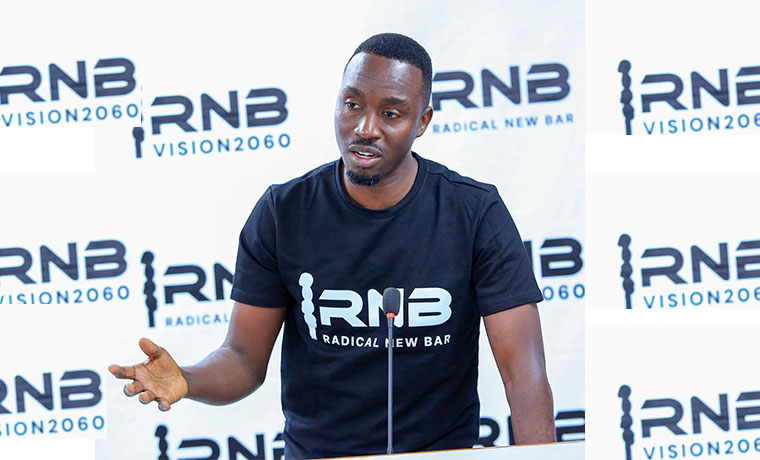
Uganda Law Society (ULS) has rejected claims that the Radical New Bar (RNB) leadership is opposed to Alternative Dispute Resolution (ADR), arguing instead that the legal body’s recent actions demonstrate a sustained commitment to dialogue, mediation, and reconciliation despite prolonged legal battles.
Speaking at an ADR Awareness Conference organized by M/s Butagira & Co. Advocates in conjunction with the Mbarara High Court at Hotel Triangle in Mbarara on Friday, ULS Vice President Anthony Asiimwe used his address to defend the ULS leadership’s record while criticizing sections of the Judiciary for what he described as missed opportunities to embrace mediation in disputes involving the Society.
Addressing judges, lawyers, members of the public, and the media, Asiimwe conveyed greetings from the ULS Governing Council and its president, Isaac Ssemakadde, who he said remains in exile following legal disputes involving the Judiciary.
The Vice President reflected on tensions that have characterized relations between the Bench and the Bar over the past year, particularly events dating back to February 2025. He argued that decisions taken by judicial leaders at the time undermined principles of natural justice and Bench-Bar cooperation, while also contradicting the Judiciary’s long-standing promotion of ADR mechanisms.

Asiimwe recalled the events of February 7, 2025, describing them as a low point in relations between the legal profession and the Judiciary. He contended that actions taken against the Uganda Law Society and its elected leadership following disagreements with judicial authorities appeared to isolate the organization and weaken prospects for dialogue and mediation.

He also criticized remarks allegedly made by the current head of the Judiciary at the beginning of the current law year, stating that the ULS leadership viewed them as threats against critics of the institution and had publicly condemned them.
Despite the tensions, Asiimwe emphasized that the ULS under the Radical New Bar leadership has consistently favored dialogue over litigation. He maintained that the organization had deliberately pursued reconciliation and mediation even in situations where litigation may have appeared to be the easier course of action.
According to Asiimwe, the Uganda Law Society has not initiated court proceedings against private individuals during the current administration, except in public interest matters filed against the Government through the Attorney General under the Society’s statutory mandate.

At the same time, he said, the Society and members of its leadership have been named in more than 40 separate cases before the High Court and subordinate courts since assuming office in October 2024.
He alleged that many of the cases resulted in decisions unfavorable to the Society, with court orders affecting internal meetings, elections, and the Society’s ability to participate in statutory bodies such as the Judicial Service Commission, the Law Council Committee on Continuing Legal Education and Training, and the National Environment Management Authority.
Asiimwe said meaningful attempts at ADR emerged primarily at the appellate level, where judges of the Court of Appeal encouraged mediation between the parties. He specifically cited efforts by Geoffrey Kiryabwire and Christopher Gashirabake Musisi, who directed litigants toward negotiated settlements.
However, he noted that those mediation efforts eventually stalled, prompting the Court of Appeal to schedule consolidated appeals involving the Society for hearing in July 2025.
Before the appeals could proceed, Asiimwe said, then Deputy Chief Justice Richard Buteera Zeija intervened by indefinitely removing ULS-related matters from the cause list and directing parties to pursue further mediation.
He told conference participants that the disputes remained in a state of appellate mediation and that no mediator had yet been appointed to move the process forward.
The Vice President nevertheless praised recent developments in the Civil Division of the High Court, which he said had demonstrated a stronger commitment to ADR by postponing all ULS-related matters until September 2026 to allow mediation efforts to continue.
He disclosed that the Society had formally proposed a consolidated mediation framework involving both the High Court and Court of Appeal processes and was awaiting feedback from the Judiciary.
A significant portion of his speech focused on an ongoing mediation initiative being facilitated by former Chief Justice Bart Katureebe. Asiimwe revealed that he had sought permission from the ULS Governing Council to attend the Mbarara conference because he had originally been scheduled to lead a mediation session involving ULS matters before Justice Katureebe on the same day.
The process, he explained, was initiated and driven by members of the legal profession rather than by court order.
He credited several senior members of the Bar, including Fredrick Ssempebwa, Francis Gimara, Robert Rutaro, and Zubeda Namutebi with conceptualizing and coordinating the initiative, while praising Katureebe for volunteering his time and expertise to facilitate discussions.
According to Asiimwe, the mediation process may eventually include other retired judges serving as co-facilitators.
He stated that both the ULS Governing Council and its president fully supported the initiative and were working toward achieving an out-of-court settlement acceptable to all parties involved.
Throughout the address, Asiimwe sought to counter what he described as persistent misconceptions regarding the Radical New Bar’s position on mediation. He maintained that claims portraying the group as hostile to ADR were inaccurate and inconsistent with its actions over the past two years.
He further argued that the legal profession and Judiciary share a common responsibility to rebuild trust and improve working relationships in the interest of the public and the administration of justice.
In his closing remarks, Asiimwe called on judges, senior advocates, mediators, and other stakeholders to support ongoing efforts aimed at resolving disputes through dialogue rather than confrontation.
He expressed hope that the Mbarara conference would serve as the beginning of a new phase in relations between the Bench and the Bar, characterized by mutual respect, professional solidarity, and collaborative service.
Asiimwe also urged that once mediation processes are exhausted and matters return before the courts, they should be determined strictly on their merits and without procedural obstacles or institutional bias, in order to reinforce public confidence in the rule of law.
The ADR Awareness Conference brought together judicial officers, legal practitioners, and members of the public to promote alternative dispute resolution mechanisms as a means of improving access to justice and reducing reliance on litigation. (For comments on this story, get back to us on 0705579994 [WhatsApp line], 0779411734 & 041 4674611 or email us at mulengeranews@gmail.com).



![NO ONE HAS THE POWER TO FIRE HIM! Ex-Omuhikirwa [Who Fought M7 in 2016] Dares Tooro Clan Leaders Over Rwomiire Sacking, Says Only King Oyo Could Fire Him](https://mulengeranews.com/wp-content/uploads/2026/09/Steven-Kaliba-Ateenyi-350x250.jpg)