

![NO ONE HAS THE POWER TO FIRE HIM! Ex-Omuhikirwa [Who Fought M7 in 2016] Dares Tooro Clan Leaders Over Rwomiire Sacking, Says Only King Oyo Could Fire Him](https://mulengeranews.com/wp-content/uploads/2026/09/Steven-Kaliba-Ateenyi-75x75.jpg)





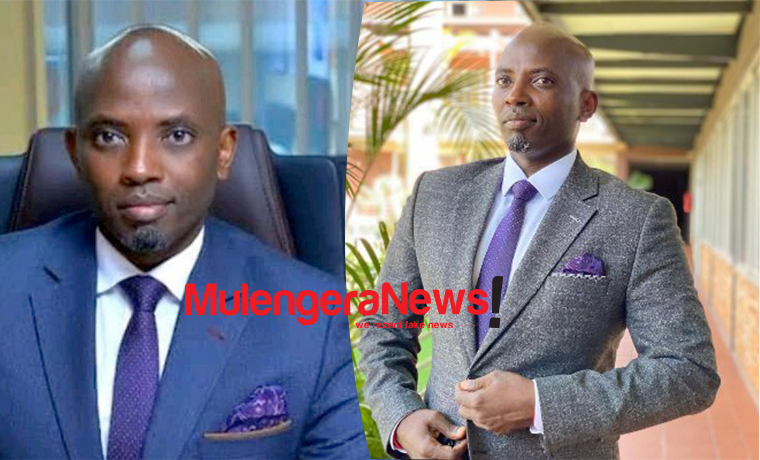
By Geoffrey Omaset
The recent noticeable appointment of Prof. Lawrence Muganga to a cabinet post has drawn public disquiet in equal measure prompting the appointing authority to hastily write to the Ministry of Internal Affairs to verify the citizenship status of a couple of other appointees for Cabinet posts that now hangs in balance.
This move has by itself created profound anxiety in the public as to the legal ramifications of the proposed appointments by the President of persons who are alleged to be citizens of other countries in addition to Uganda and hence “ineligible” to hold such state office.

Dual citizenship is the legal status of being a citizen of two or more countries at the same time. The dual status therefore grants the individual rights and responsibilities of both nations at the same time, for instance ability to work, vote, own property or live in either country.

Dual citizenship also called plural citizenship is currently tolerated worldwide by over 70% countries and was enacted in Italy as early as 1912 under Article 7 of Law 555 of 1912 and Uganda is not peddling a novel legislation in regard to dual citizenship.
Looking at the various municipal laws of several states, plural citizenship is explicitly permitted under certain conditions and exceptions.

Some countries like Australia do not allow dual citizens to hold elective offices.
In Uganda, the constitution under Article 15(1) & (2) provides for how a Ugandan or non-Ugandan can acquire Dual Citizenship.
Under Article 15(7) the constitution commands parliament to enact a legislation that shall prescribe which offices of state a Dual citizen is restricted from occupying or holding.
It is therefore in compliance to this constitutional command that the Uganda Citizenship and Immigration Control (Amendment) Act, 2009 was enacted.
S.19(1) & (2) of the Act provides for Dual Citizenship by both citizens and non-citizens of Uganda.
S.19 D explicitly restricts dual citizens from occupying offices listed under the 5th schedule.
The 5th schedule of the Act under paragraph 4 categorically lists one exempt office as that of Minister and other Ministers. Therefore, given the current position of the law as encapsulated above and considering that no resolution has ever been passed by the parliament of Uganda in compliance to S.19D of the Citizenship and Immigration control Act, any appointment by the President of Uganda of any person with a standing dual citizenship would be null and void and contrary to Uganda’s legal regime.
There have been divided opinions that the proviso of the Uganda legal regime can be challenged as offending entrenched fundamental rights under chapter four of the constitution particularly the one on non-derogable right of non-discrimination.
The provisions on Dual Citizenship above are a command of the supreme law and are the extreme cases of derogation of a fundamental right allowed under Article 21(1) 4(b) and 5 of the Constitution.
The limitations under the Citizenship and Immigration Control (amendment) Act 2009 is therefore a legitment limitation consistent with the command of the constitution itself and demonstrably acceptable practice across nations.
It can be safely argued that the limitations under S.19D passes the test of the constitution the intended the ringfencing of only such key state offices to exclusively only to single status Ugandan citizens.
I would therefore opine that the impugned appointees do not enjoy any non derogable rights status under Article 21 or any other proviso of the constitution an should the appointments be approved under the existing legal dispensation of Uganda the it would be ultravires. The Geoffrey Omaset is An Advocate of the High court of Uganda and all Subordinate courts. (For comments on this story, get back to us on 0705579994 [WhatsApp line], 0779411734 & 041 4674611 or email us at mulengeranews@gmail.com).