

![NO ONE HAS THE POWER TO FIRE HIM! Ex-Omuhikirwa [Who Fought M7 in 2016] Dares Tooro Clan Leaders Over Rwomiire Sacking, Says Only King Oyo Could Fire Him](https://mulengeranews.com/wp-content/uploads/2026/09/Steven-Kaliba-Ateenyi-75x75.jpg)





By Ben Musanje
Most learners enrolled in Uganda’s secondary schools are within the official school-going age bracket, while Buganda sub-region continues to dominate the country in the number of secondary schools and student enrolment, according to new findings from the Baseline Education Census 2025 Report.
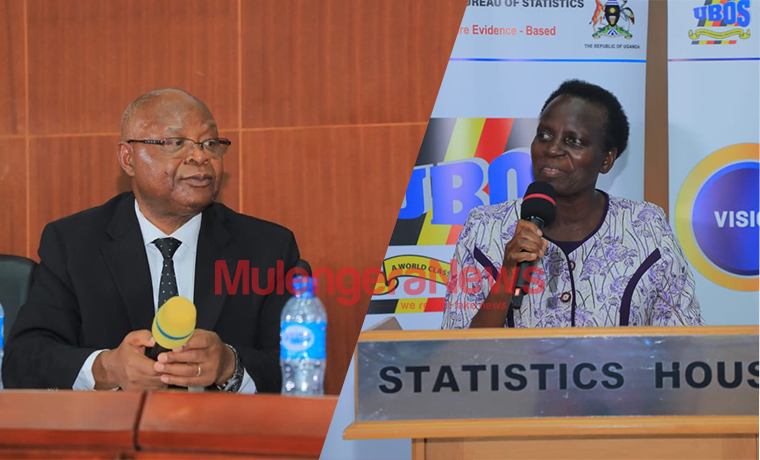
The findings were presented on Thursday at Statistics House in Kampala by Diana Byanjeru Kakonge, Principal Statistician at the Uganda Bureau of Statistics (UBOS) before the presence of the Executive Director Dr. Chris Mukiza and Dr. Kendrace Turyagyenda, Permanent Secretary Ministry of Education and Sports, during the release of the national education census report.
The report shows that Uganda currently has 5,498 secondary schools, with Buganda taking the largest share of 2,065 school while Karamoja has the fewest schools (40) in the country.

Of the total schools, 4,014 are privately owned while only 1,484 are public schools, highlighting the heavy dependence on private investors in the country’s secondary education sector.

“We found 5,498 secondary schools in the country from the census,” Byanjeru said.
Breaking down the distribution by sub-region, the census established that Buganda has the highest concentration of both public and private secondary schools, cementing its position as the country’s leading education hub.
In contrast, Karamoja registered the lowest number of secondary schools overall, particularly private schools.

The report also found that Uganda has 2,008,133 learners enrolled in secondary schools across the country.
Of these, 1,069,855 are female learners while 938,278 are male, meaning girls account for 53.3 percent of the total secondary school population.
UBOS further established that the majority of learners are within the official secondary school-going age bracket of 13 to 18 years.
According to the findings, 76.4 percent of students enrolled in secondary schools fall within the recommended age range, although some learners were found to be either below or above the official age category.
“But overall, 76.4 percent of learners in secondary school are within the official school-going age group,” Kakonge explained.
The report noted that while females dominate across most age categories, the trend changes slightly among learners aged 19 years and above, where males become more numerous.
Regionally, Buganda again emerged as the leading sub-region in learner enrolment, accounting for 750,673 students — the highest in the country.
Karamoja recorded the lowest number of secondary school learners nationwide.
The findings also expose major differences in enrolment patterns between public and private schools depending on the region.
In Buganda, private schools accommodate the majority of learners, reflecting the strong presence of privately owned institutions in the region.
However, in Karamoja, public schools carry most of the enrolment burden due to the limited number of private schools.
The census further revealed challenges affecting quality of education in Uganda’s secondary schools.
Nationally, the student-teacher ratio stands at 40 learners per teacher, exceeding the recommended standard of 25 to 30 learners per teacher.
In government schools, one teacher handles an average of 41 students, while private schools average 40 learners per teacher.
The report also highlighted overcrowding in classrooms, particularly in public schools.
On average, one classroom accommodates 45 students nationally. In government schools, however, classroom congestion is more severe, with up to 60 learners sharing a single classroom.
Sanitation facilities remain under pressure as well.
According to the findings, one toilet stance serves an average of 40 students nationally, while in public schools the ratio rises to 58 learners per stance.
Despite government efforts to expand access through Universal Secondary Education, the report shows that many parts of the country still lack secondary schools.
UBOS found that 1,208 sub-counties out of the country’s 2,209 sub-counties and town councils do not have a single secondary school.
Bugisu sub-region emerged as the most affected, with 87 sub-counties lacking any secondary school.
The shortage is equally evident in public secondary education.
The census found that 1,007 sub-counties do not have a government secondary school, representing 45.5 percent of all sub-counties in Uganda.
Again, Bugisu was identified as the hardest-hit region, with 110 sub-counties lacking public secondary schools.
The report also assessed non-tertiary institutions, including technical and vocational training centres.
Uganda has 830 non-tertiary institutions, of which 693 are privately owned and only 137 are public.
These institutions enroll a combined 74,024 learners, with males outnumbering females. The census recorded 38,906 male learners compared to 35,118 female learners in non-tertiary education.
Byanjeru said the findings offer a critical snapshot of Uganda’s education sector and will guide planning and policy decisions aimed at improving access and quality across all levels of learning.
The Baseline Education Census 2025 Report is expected to shape future government interventions, especially in underserved regions where access to secondary education remains limited. (For comments on this story, get back to us on 0705579994 [WhatsApp line], 0779411734 & 041 4674611 or email us at mulengeranews@gmail.com).