


![NO ONE HAS THE POWER TO FIRE HIM! Ex-Omuhikirwa [Who Fought M7 in 2016] Dares Tooro Clan Leaders Over Rwomiire Sacking, Says Only King Oyo Could Fire Him](https://mulengeranews.com/wp-content/uploads/2026/09/Steven-Kaliba-Ateenyi-75x75.jpg)







By Ben Musanje
Uganda’s telecommunications regulator has unveiled an ambitious countrywide framework aimed at cleaning up chaotic internet and telecom infrastructure, promising a more coordinated, less disruptive and nationally harmonized system that goes far beyond Kampala’s metropolitan boundaries.
The Uganda Communications Commission (UCC) says a new infrastructure-sharing framework currently under implementation is not designed solely for Kampala but is intended to reshape how telecom infrastructure is deployed across the entire country.
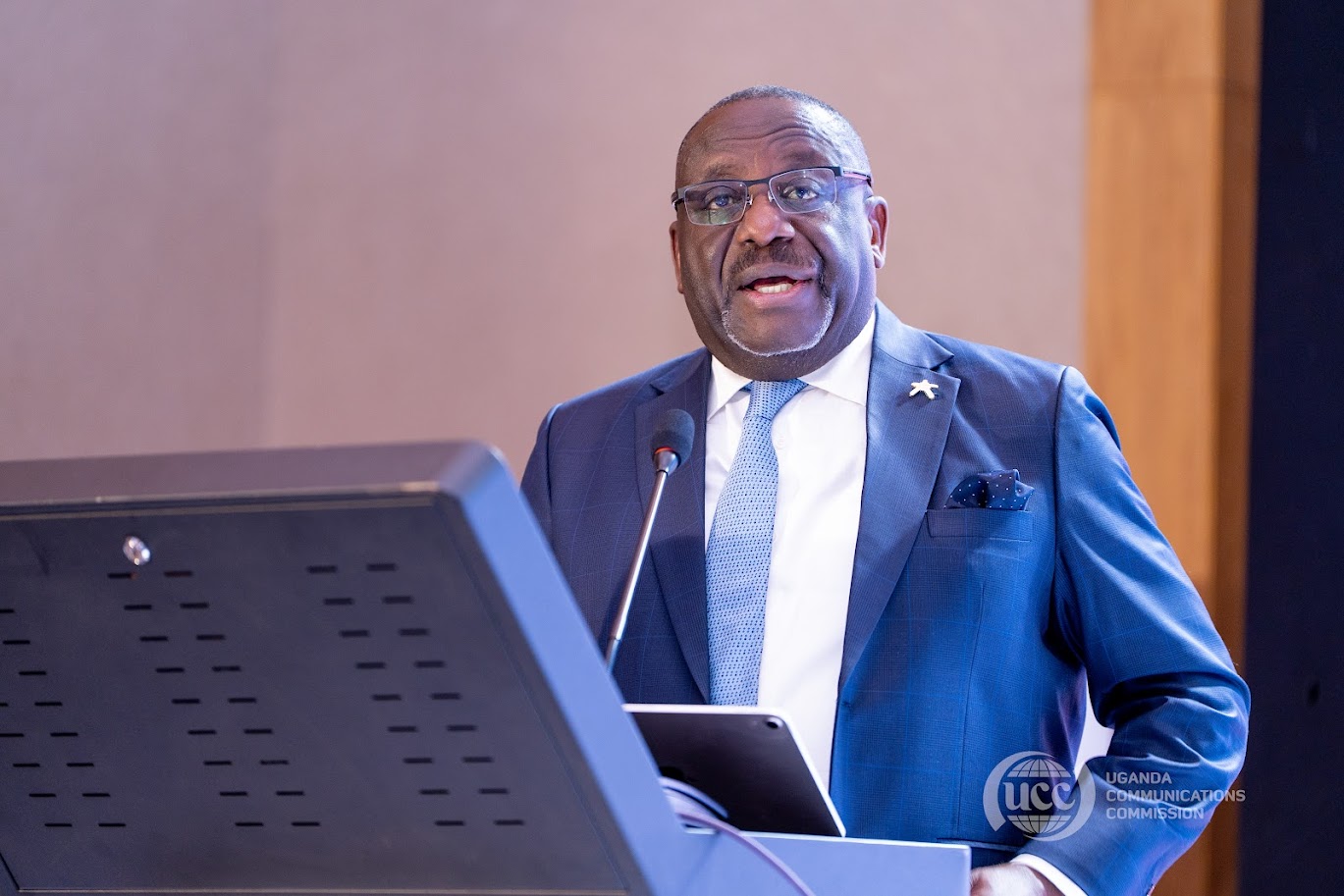
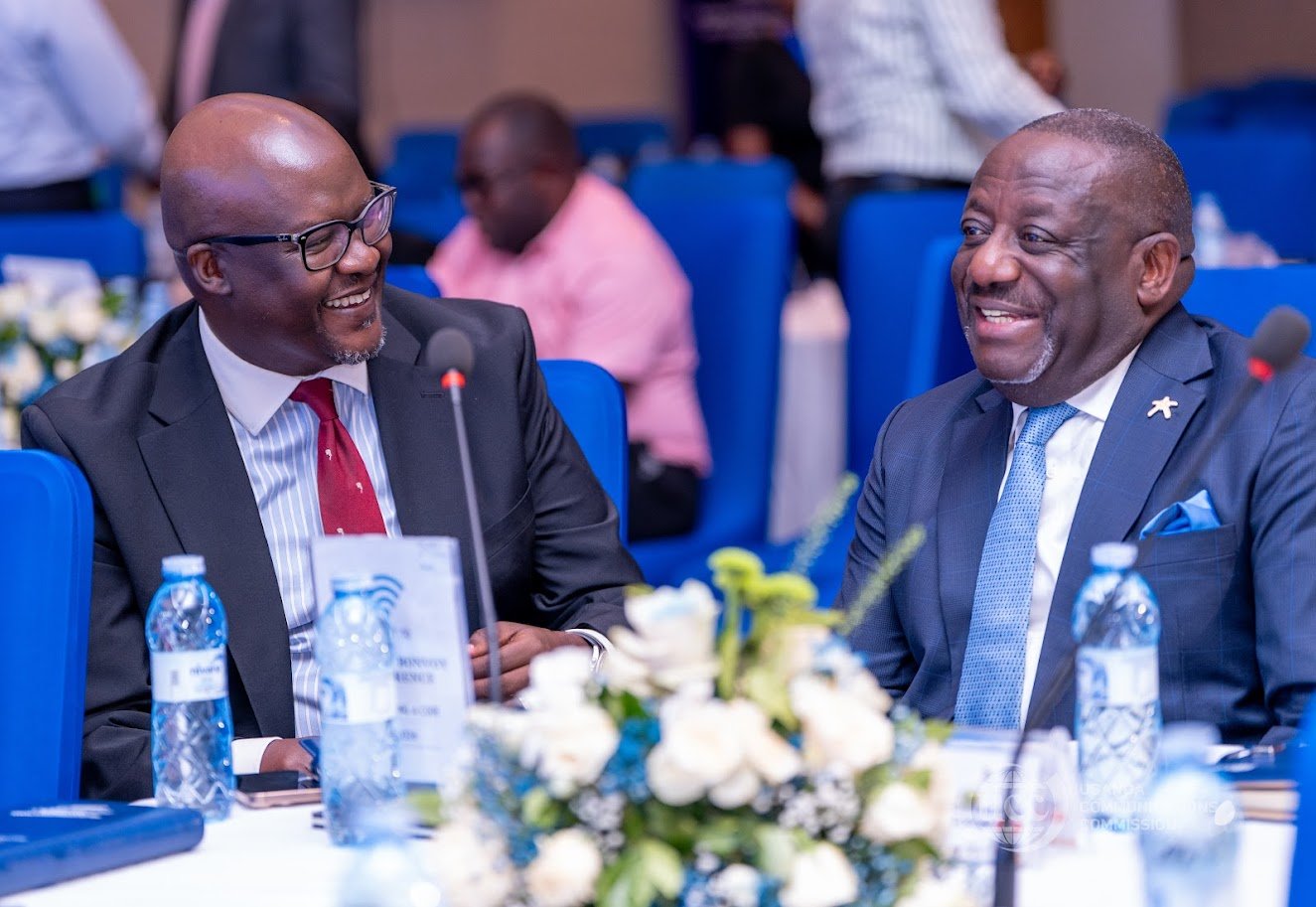
Speaking at the Second Telecommunications CEO Forum in Kampala, UCC Executive Director Nyombi Thembo said the regulator, telecom operators and government agencies have spent the last three years developing solutions to the growing challenge of uncoordinated telecom infrastructure deployment, including the clutter of poles and fibre cables increasingly dominating urban landscapes.

“Yes, the issue of infrastructure sharing is something on which we have put our minds so much in the past three or so years,” Thembo said.

“From a regulatory point of view, this is something we are really focusing on.”
While the visible cleanup of overhead cables and poles has started in parts of Kampala, UCC Boss stressed that the broader objective is to establish national standards that can be implemented in districts and municipalities across Uganda.
A countrywide telecom cleanup

According to Thembo, Uganda is transitioning from a period where rapid connectivity expansion was prioritized over aesthetics and coordinated planning, to one where telecom growth must now align with organized infrastructure deployment.
He pointed to visible improvements already taking shape along roads such as Acacia Avenue and sections of Bunga, where regulators and telecom operators have begun reducing the visual clutter caused by multiple overlapping telecom lines.
“If you went to some of the roads now which had this clutter, like Acacia Avenue, you would be surprised to see the cleaning,” he said.
But Thembo was quick to clarify that the current efforts should not be interpreted as a Kampala-only intervention.
Instead, he described the initiative as the early phase of a long-term national transition that will eventually guide infrastructure deployment countrywide.
“This is a framework we are putting up to see how to solve this,” he said.
Why the clutter happened in the first place
Thembo defended the earlier telecom deployment model that resulted in what many residents now describe as “cable chaos,” arguing that Uganda’s urgent need for connectivity initially outweighed concerns about urban aesthetics.
He rejected suggestions that regulators or telecom operators had failed in their responsibilities.
“Was somebody sleeping on their job when this happened? The answer is no,” Thembo said.
“Public policy follows problems.”
According to him, the priority in earlier years was to quickly expand internet and communication access to growing communities, even if it meant telecom providers independently erecting poles and laying fibre infrastructure.
“There was a problem of connectivity. The market reacted. The operators reacted,” he explained.
At the time, ensuring Ugandans had communication services took precedence over concerns about visual order in neighbourhoods.
“The poles are not there for cosmetics. The poles are there to deliver service,” Thembo said.
Now that connectivity has improved, policymakers are increasingly turning attention toward making telecom infrastructure cleaner, more efficient and less disruptive.
“Beauty is now taking precedence,” he said.
A complex problem without easy fixes
UCC officials acknowledged that infrastructure sharing — where telecom companies jointly use poles, ducts or fibre pathways — is more complicated than simply ordering telecom providers to merge systems.
Thembo said cost-sharing, maintenance responsibilities and service quality concerns have made implementation technically challenging.
“When people say infrastructure sharing, it is like we just tell one operator to share with another,” he said.
“But there are a lot of cost dynamics.”
Questions such as who pays for maintenance, who bears operational costs and how service quality is guaranteed when one provider depends on another’s infrastructure remain key concerns regulators are still navigating.
To address these complexities, UCC has developed a consultative approach involving telecom operators and infrastructure companies.
National framework, local implementation
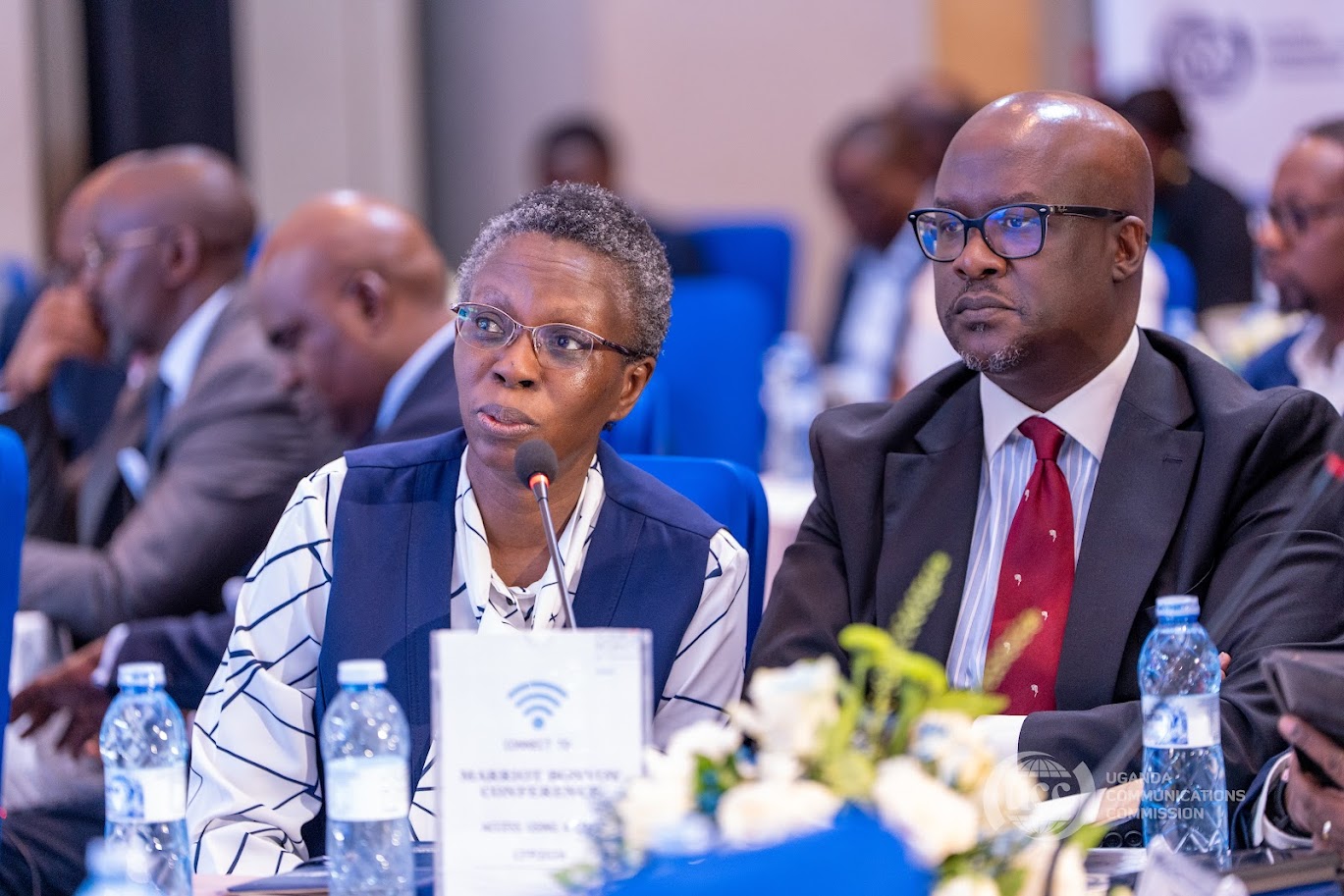
Engineer Rebecca Mukite, UCC’s Head of Communications Infrastructure Services, said the newly developed framework is explicitly designed as a national policy instrument rather than a Kampala Metropolitan solution.
“The framework is a national instrument. It is not for the Greater Kampala Metropolitan Area,” Mukite said.
“It should be applicable countrywide.”
However, she noted that implementation will not happen uniformly because different parts of Uganda face different infrastructure realities.
Some areas already have roads built with underground ducts that can accommodate telecom cables, while others still depend on wooden or concrete poles.
As a result, UCC plans to implement the framework gradually and adaptively depending on local conditions.
“Some areas have roads with ducts. Some areas don’t have roads with ducts,” Mukite explained.
“The framework stipulates standards depending on the infrastructure available.”
For areas using underground ducts, UCC has set standards on how cables should be laid and shared. For communities dependent on wooden or concrete poles, separate standards will apply.
No one-size-fits-all approach
Eng. Mukite emphasized that telecom providers will not all be subjected to identical timelines or obligations.
Instead, UCC plans to negotiate customized transition plans depending on the scale and age of an operator’s infrastructure footprint.
“The person who entered the market last year and someone who has been in the market for the last 10 years cannot have the same footprint,” she said.
“Their actions or milestones have to be negotiated in a differentiated manner.”
This approach, regulators argue, is necessary to avoid disruptions to telecom services during the transition.
“There is no magic bullet,” Mukite said.
“The roadmap is really to ensure that we solve this problem without causing disruption to service.”
Five-year transition envisioned
Although visible improvements are already emerging in parts of Kampala, UCC says the broader national transition will take time.
Officials estimate that within five years, significant progress could be visible across many parts of the country as infrastructure-sharing agreements mature and deployment standards become more widely adopted.
But the regulator insists the effort should be understood as a national transformation rather than an urban beautification campaign concentrated in Kampala.
For communities outside the capital — from emerging municipalities to rural trading centers — the framework could eventually shape how internet infrastructure is deployed, shared and regulated.
As Uganda pushes toward wider digital connectivity, the challenge ahead may not only be expanding access, but ensuring the infrastructure supporting that access grows in a cleaner, smarter and more coordinated way nationwide. (For comments on this story, get back to us on 0705579994 [WhatsApp line], 0779411734 & 041 4674611 or email us at mulengeranews@gmail.com).