

![NO ONE HAS THE POWER TO FIRE HIM! Ex-Omuhikirwa [Who Fought M7 in 2016] Dares Tooro Clan Leaders Over Rwomiire Sacking, Says Only King Oyo Could Fire Him](https://mulengeranews.com/wp-content/uploads/2026/09/Steven-Kaliba-Ateenyi-75x75.jpg)





By Mulengera Reporters
Uganda’s telecommunications sector has recorded explosive growth over the last two decades, expanding from just 30,000 phone lines to more than 47 million active mobile subscribers. But despite the impressive numbers, millions of Ugandans remain digitally excluded, burdened by expensive internet, costly smartphones and poor network quality, the Executive Director of the Uganda Communications Commission (UCC), Nyombi Thembo, has warned.
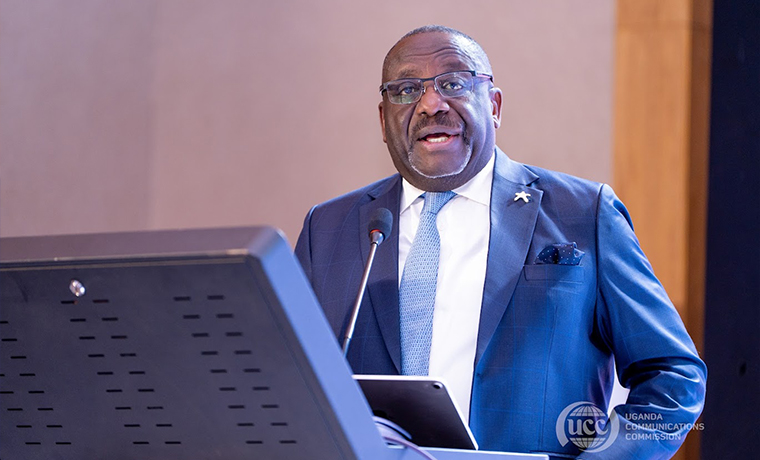
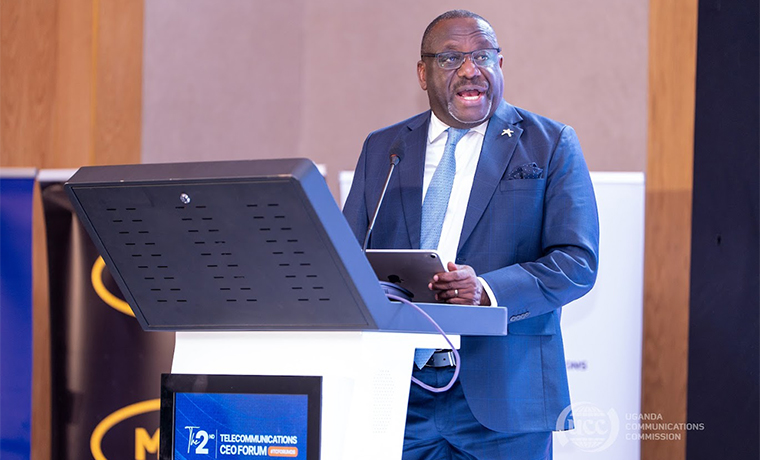
Delivering a keynote address at the Second Telecommunications CEO Forum in Kampala, Thembo challenged telecom operators, regulators and consumers to work together to close Uganda’s widening digital gap and improve service delivery.
Speaking at Four Points by Sheraton in Kololo, Thembo described the country’s digital journey as both remarkable and unfinished, cautioning that telecom growth means little if millions remain disconnected.

“Impressive as this growth might sound, the journey is still long and difficult,” he said.

“Far too many people remain without connectivity, and yet our vision is to see a digitally inclusive economy that leaves no one behind.”
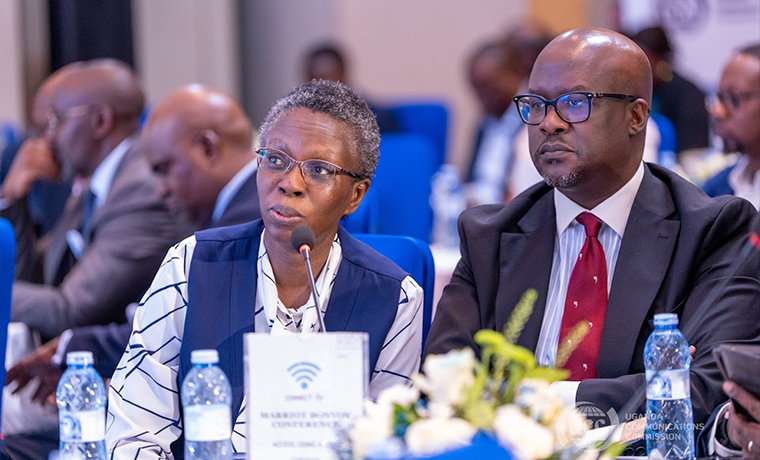
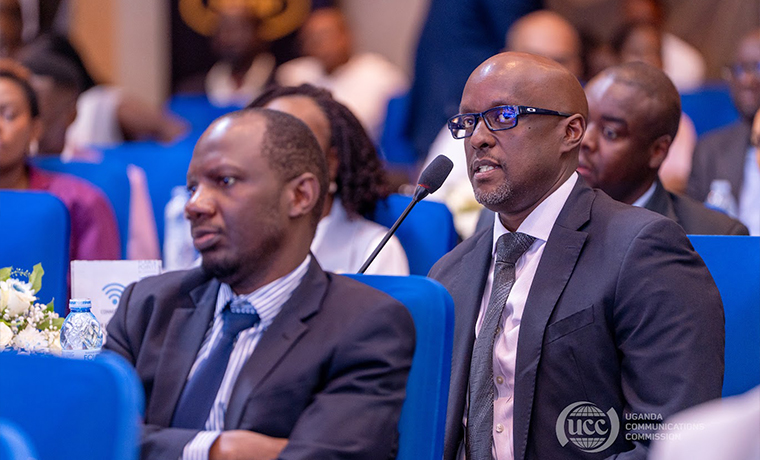
The forum, which brought together telecom chief executives, consumer groups and government stakeholders, sought to build on conversations initiated during the inaugural Telecom CEO Forum held in 2025.
This year’s event was convened under the theme “Partnerships Powering Progress: From Coverage Expansion and Meaningful Access to Digital Government Excellence,” a theme Thembo said reflected the growing realization that Uganda’s digital transformation cannot be achieved by telecom companies or regulators acting alone.

“It reminds us that expanding connectivity, deepening meaningful access and advancing digital government cannot be achieved in isolation,” he said.
“It requires strong partnerships and shared commitment among regulators, operators, consumers and other stakeholders.”
A telecom revolution — but uneven progress
Thembo used the occasion to reflect on how far Uganda’s communications sector has come since the government liberalized telecommunications over two decades ago.
At the time, Uganda had only about 30,000 active phone lines serving an estimated population of 20 million people.
Today, with the population having more than doubled to approximately 46 million, the telecom sector has expanded dramatically.
Uganda now has 47.1 million active mobile subscribers and nearly 18 million mobile internet subscriptions — figures that illustrate the growing importance of telecommunications in everyday life.
The growth has transformed how Ugandans communicate, access financial services, do business and receive information.
Yet Thembo cautioned that beneath the success story lies a difficult reality.
Many Ugandans, especially in rural areas, still struggle to access reliable connectivity, while affordability concerns continue to lock millions out of digital services.
“Many others have affordability concerns for both data and smart devices,” Thembo said.
“The quality of service also remains an issue of concern in some areas.”
For many low-income households, smartphones remain unaffordable, effectively excluding them from opportunities increasingly dependent on internet access — from online education and digital jobs to e-government services and mobile banking.
Telecom key to Uganda’s economic future
Thembo emphasized that affordable and reliable telecommunications are no longer a luxury but a necessity for Uganda’s broader economic ambitions.
As the country seeks to accelerate industrialization and modernize service delivery, ICT infrastructure has become central to achieving economic transformation.
“With reliable and affordable telecom services, we can transform our communities through improved communication, job creation, better social service delivery, modern agriculture and industrialization,” he said.
Uganda, like many developing economies, increasingly views digital technology as a tool to leapfrog traditional development bottlenecks.
However, Thembo argued that this vision will remain unattainable unless telecom companies significantly expand infrastructure investment to meet growing demand.
“Our challenge, therefore, is to ensure greater investment in infrastructure to attain greater capacity and wider coverage so as to meet this ever-increasing demand for communication services of high quality,” he said.
He urged telecom operators to step up efforts to improve network quality and expand access, particularly in underserved communities.
“I urge all our telecom operators to rise to this challenge,” he added.
UCC seeks balance between profit and consumer welfare
At the heart of Thembo’s message was a call for greater accountability within the telecommunications sector.
He said the UCC’s mandate extends beyond simply regulating industry growth to also safeguarding consumer rights — responsibilities he insisted are complementary rather than contradictory.
“UCC has a dual mandate of promoting growth in the communications sector while safeguarding consumer interest,” he said.
“We do not view these responsibilities as contradictory.”
Rather than treating telecom companies and consumers as opposing sides, Thembo argued that long-term industry growth depends on stronger consumer trust and better service delivery.
“Sector growth and consumer protection are mutually reinforcing goals, not zero-sum games in which one side must lose for another to gain,” he noted.
This, he explained, informed UCC’s decision to establish platforms such as the Telecom CEO Consumer Forum, where top telecom executives engage directly with the consumers they serve.
According to Thembo, the forum is designed to strengthen transparency and accountability while securing commitments from telecom companies on critical concerns such as service quality, affordability, privacy, safety, inclusivity and innovation.
“Our overriding goal is to ensure that every voice is heard and every concern is addressed at the highest level of the industry,” he said.
Consumers brought closer to decision makers
One of the recurring frustrations among telecom users has been the perception that major industry decisions are made without consumer input.
Thembo said UCC recognized the need to create more inclusive engagement platforms that bring together decision makers and ordinary consumers.
“We are taking a decisive step towards accountability, transparency and improved service delivery,” he said.
The forum, he added, creates an opportunity for difficult but necessary conversations between telecom executives and consumers, helping bridge longstanding trust deficits.
“As regulators, we acknowledge the challenges operators face and the concerns consumers express in equal measure,” Thembo noted.
“To align the two, there is need for dialogue between service providers and consumers, ultimately paving the way for a more transparent and accountable industry.”
A defining moment for Uganda’s digital future
As Uganda pushes deeper into the digital age, Thembo framed the forum as more than just another industry gathering.
He described it as a critical opportunity to shape the future of Uganda’s ICT ecosystem and ensure consumer protection becomes a lived reality rather than a policy promise.
“Our shared objective is clear — to build an ICT ecosystem where decision makers and consumers work hand in hand,” he said.
“Let this dialogue serve as a catalyst for positive change.”
For a country betting heavily on digital transformation, the challenge now may not simply be connecting more Ugandans — but ensuring no one is left behind. (For comments on this story, get back to us on 0705579994 [WhatsApp line], 0779411734 & 041 4674611 or email us at mulengeranews@gmail.com).