







By Byayesu Agrippa Musinguzi
[“Constitutionalism, accountability and the Speakership question in Uganda”]. On April 21, 2026, at the Democratic Party headquarters Press conference at Balintuma Rd, Hon. Norbert Mao made a statement that deserves more than passing attention: “The House belongs to the people.”
In a political climate increasingly defined by allegations of corruption, patronage, and the centralisation of power within Parliament, this remark speaks directly to the constitutional foundation of Uganda’s democracy.
It is not merely a political opinion. It is a constitutional reminder.
The Constitution of the Republic of Uganda is explicit. Article 1 provides that all power belongs to the people and that this power shall be exercised through regular, free, and fair elections. Parliament, therefore, is not an independent power centre. It is a delegated institution—its authority flows from the electorate.
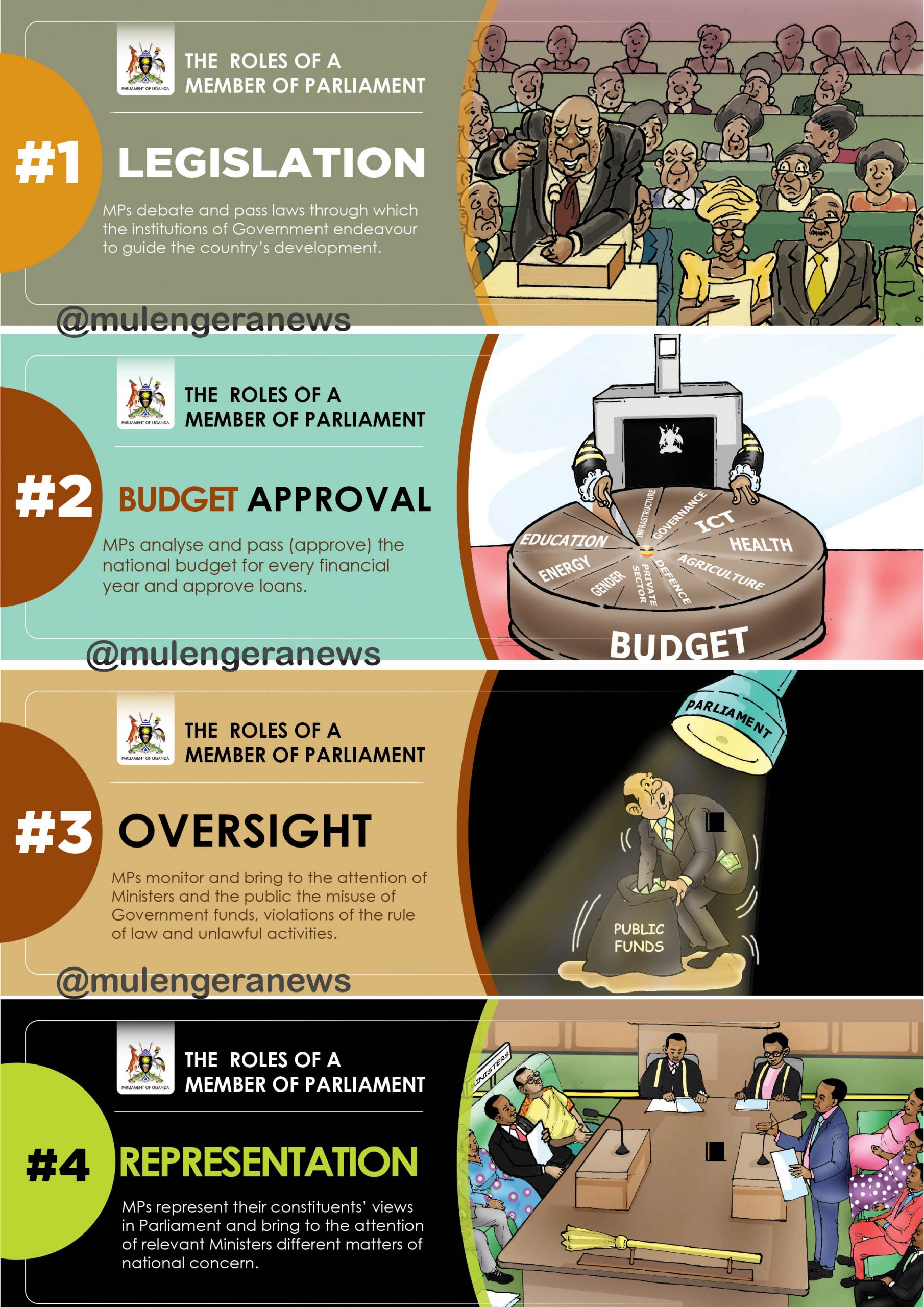
This means that Members of Parliament are not beholden to internal hierarchies or individuals within the House. Under Articles 77 and 78, MPs are elected to represent constituencies and special interest groups. Their mandate is to legislate, represent, and hold the Executive accountable. In essence, they are agents of the people.
Any system that compromises this relationship—whether through inducements, coercion, or undue influence—undermines the very idea of representation. It replaces accountability with allegiance and reduces Parliament to an instrument of control rather than a forum of the people.
The role of the Speaker must also be understood within this constitutional framework. Article 82 provides for the election of the Speaker, whose duty is to preside over proceedings and ensure order. The office is designed to serve the House, not to dominate it.
Comparative practice offers useful guidance. In the United Kingdom, the Speaker of the House of Commons is strictly non-partisan, abandoning party affiliation upon election. In the United States, the Speaker of the House is openly political but operates within strong institutional checks that prevent unilateral control over legislators.
Uganda’s constitutional design leans toward neutrality. Where the Speaker is perceived to influence parliamentary decisions through inducements or centralised authority, the office risks straying from its intended purpose.
It is in this context that Mao’s statement gains significance.
Hon. Norbert Mao is not new to Uganda’s political and legal landscape. A lawyer by profession and current Minister of Justice and Constitutional Affairs, he has spent decades in public service. He served as Member of Parliament for Gulu Municipality for ten years and later as Chairman of Gulu District during one of the most difficult periods in Northern Uganda’s history.
At the height of the conflict involving the Lord’s Resistance Army, Mao was actively engaged in peacebuilding efforts, including participation in processes linked to Joseph Kony. His career has consistently reflected a commitment to dialogue, constitutionalism, and the rule of law.
His political philosophy is rooted in moderation and institutional integrity. He has long argued that Uganda’s future depends not on strong individuals, but on strong institutions anchored in the will of the people.
Seen in this light, his declaration that “the House belongs to the people” is not rhetorical flourish. It is a statement of principle—and perhaps a critique of current practice.
It also frames his prospective interest in the Speakership as something more than a political contest. It is, in effect, an argument for restoring Parliament to its constitutional role.
The implications are straightforward. Parliament derives its legitimacy from the people. MPs owe their loyalty to their constituents. And the Speaker exists to facilitate legislative business—not to command it.
These are not abstract ideals. They are constitutional imperatives.
Uganda’s democratic health depends on how faithfully these principles are upheld. If Parliament becomes a marketplace of inducements or a platform for centralised authority, it risks losing its character as the people’s House.
That is the real danger—not merely who occupies the office of Speaker, but whether the institution itself remains accountable to the sovereignty from which it derives its power.

Mao’s words, therefore, should not be dismissed or politicised. They should be interrogated. Because in the end, the question is not about personalities. It is about principle. And the principle is clear: the House belongs to the People. (For comments on this story, get back to us on 0705579994 [WhatsApp line], 0779411734 & 041 4674611 or email us at mulengeranews@gmail.com).