






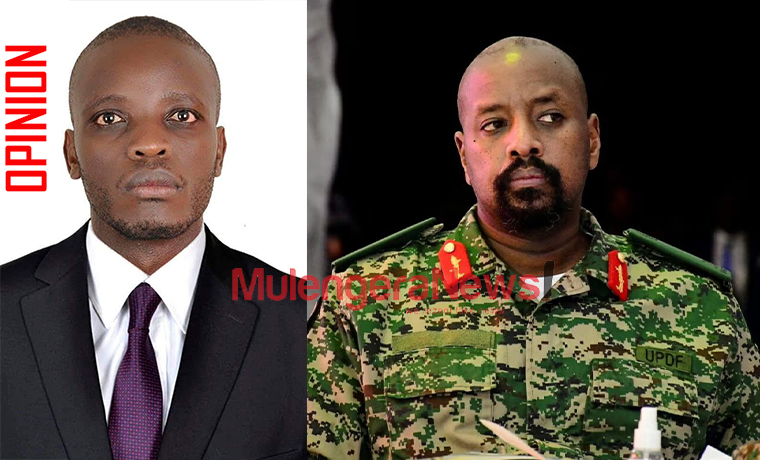
By Atwemereireho Alex (alexatweme@gmail.com)
“History does not whisper to the inattentive; it reveals itself to those who can read the movement beneath the moment.”
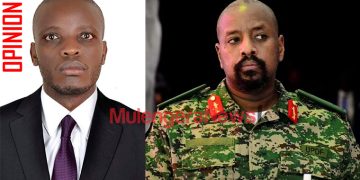
As General Muhoozi Kainerugaba celebrates his 52nd birthday, Uganda stands at a threshold that is both understated and profound. To the casual observer, it is merely the passing of another year in the life of a soldier. But to the serious student of power, statecraft, and political evolution, it is a symbolic marker, an inflection point in the quiet but undeniable transition of a nation. Political epochs are rarely declared; they accumulate. They gather force beneath institutions, personalities, and public consciousness until they become impossible to ignore. Uganda is in such a moment, and at its center stands a figure whose relevance is no longer speculative but structural: General Muhoozi Kainerugaba.
In Uganda’s complex political terrain, the emergence of his emergence as a political force has triggered debates about dynastic succession, military influence, and the future of leadership. While critics may hastily dismiss his rise as a mere extrapolation of his father’s enduring grip on power, such a view is not only pedestrian; it is analytically insufficient. It overlooks the deeper architecture of what can only be described as the Muhoozi phenomenon. Beyond the veneer of familial continuity lies a convergence of disciplined military formation, generational resonance, strategic communication, and regional awareness that few actors in Uganda’s contemporary history have embodied with such clarity and timing.

Muhoozi’s ascent within the military hierarchy cannot be reduced to proximity to power. Commissioned into the Uganda People’s Defence Forces (UPDF), his career reflects deliberate cultivation within both national and international frameworks. His training at the Royal Military Academy Sandhurst in the United Kingdom an institution synonymous with elite officer formation and further development at the Egyptian Military Academy positioned him within a global tradition of military professionalism. These experiences are not ornamental; they are foundational, shaping a command philosophy grounded in discipline, strategy, and adaptability.

His tenure as Commander of the Special Forces Command (SFC) placed him at the nerve center of Uganda’s security architecture. The SFC is entrusted with the protection of critical national assets, including emerging oil infrastructure in the Albertine Graben, as well as presidential security. Under his stewardship, the unit maintained operational efficiency and strategic relevance in a region characterized by volatility. Uganda’s sustained contribution to peacekeeping missions under the African Union Transition Mission in Somalia (ATMIS) with deployments exceeding 6,000 troops at various intervals since 2007 remains one of the most consistent in Africa. Additionally, Uganda’s role in weakening the Lord’s Resistance Army (LRA) reflects a broader security doctrine in which Muhoozi has been an active participant.
Beyond command, his appointment as Senior Presidential Advisor on Special Operations further embedded him within Uganda’s strategic decision-making ecosystem. His promotion to full General in 2022 formalized a trajectory that had long been evident: he is not merely a participant in Uganda’s security architecture; he is one of its defining figures.
Yet, if his military credentials establish authority, it is his engagement with the evolving nature of political communication that signals transformation. In a country where over 75% of the population is below the age of 30 (Uganda Bureau of Statistics, 2023), legitimacy is increasingly negotiated in the public sphere, particularly through digital platforms. Muhoozi’s deliberate and consistent engagement on X (formerly Twitter) represents a recalibration of leadership communication from hierarchical pronouncement to conversational immediacy.

His tone often informal, occasionally provocative, yet unmistakably intentional has disrupted the rigid grammar of traditional political discourse in Uganda. This is not a trivial shift. It reflects an understanding that political authority in the 21st century must be both visible and accessible. By speaking directly to Uganda’s youthful demographic, he has positioned himself as a figure distinct from the formalism of the established political order. This generational bridge is not merely stylistic; it is strategic.
Globally, leadership transitions have increasingly been shaped by figures who understand this dynamic. The ability to engage, mobilize, and resonate with a digitally connected electorate is no longer optional; it is essential. In this regard, Muhoozi is not trailing the curve; he is ahead of many of his contemporaries within the Ugandan political space.
The critique of dynastic continuity remains one of the most persistent themes in discussions about his rise. It is a critique that cannot be dismissed outright, yet it must be contextualized. Political legacies have historically functioned as both constraint and catalyst. From the Kennedys in the United States to the Gandhis in India and the Lees in Singapore, lineage has often intersected with leadership. The critical question is not whether inheritance exists; it does but whether it constrains innovation or enables calibrated continuity.
Uganda’s 1995 Constitution is unequivocal in its neutrality. Eligibility for the presidency is grounded in citizenship, age, and legal qualification not lineage. This shifts the debate from entitlement to capability. Within this framework, Muhoozi’s candidacy, present or future must ultimately be assessed on merit, competence, and vision.
His intellectual orientation further complicates simplistic narratives. In Battles of the Ugandan Resistance: A Tradition of Maneuver (2022), he articulates a philosophy that transcends battlefield tactics. His assertion that “victory belongs not merely to strength, but to the side that best understands the terrain; physical, political, and psychological” reflects an awareness that leadership is as much about perception and adaptability as it is about authority. This synthesis of strategic thinking and contextual awareness is a critical asset in navigating the complexities of modern governance.
Regionally, Uganda’s strategic position within East Africa continues to expand. Its involvement in the East African Community (EAC), its contributions to peace enforcement efforts in eastern Democratic Republic of Congo, and its historical engagement in South Sudan underscore its role as a regional stabilizer. Leadership that understands this geopolitical matrix; its risks, alliances, and opportunities will inevitably shape Uganda’s external posture. Muhoozi’s military background and diplomatic interactions position him within this regional equation in ways that are both practical and consequential.
Economically, Uganda stands on the cusp of transformation. With a GDP estimated at approximately $50 billion (World Bank, 2025) and oil production in the Albertine Graben expected to commence, the country faces both opportunity and risk. The management of these resources will determine whether Uganda escapes or succumbs to the resource curse paradox. This moment demands technocratic precision, transparency, and long-term planning.
Muhoozi’s evolving public engagements suggest an increasing awareness of economic imperatives-industrialization, infrastructure development, and regional trade integration. However, the transition from military leadership to civilian governance will require a broader policy architecture, one that prioritizes inclusive growth, institutional strengthening, and economic diversification.
No serious analysis can ignore the criticisms that accompany his trajectory. Questions around rapid advancement and perceptions of privilege are part of the broader discourse. These concerns, rather than being dismissed, must be engaged with intellectual honesty. Leadership in the modern state is not sustained by authority alone; it is anchored in accountability, institutional respect, and the ability to inspire trust across diverse constituencies.
The way forward, therefore, lies in synthesis. For Muhoozi, the challenge is not merely to inherit a system but to refine it. This requires articulating a clear governance philosophy anchored in constitutionalism, economic transformation, and national unity. It demands strengthening civilian institutions, fostering political inclusivity, and ensuring that the discipline of military command translates into the restraint required for democratic leadership.
A credible roadmap would rest on three pillars: institutional consolidation, economic modernization, and generational inclusion. Institutional consolidation involves reinforcing the independence and efficiency of state organs. Economic modernization requires leveraging oil revenues for infrastructure, manufacturing, and human capital development. Generational inclusion demands moving beyond rhetoric to meaningful youth participation in governance and economic opportunity.
Uganda’s history is one of transitions shaped not by abrupt ruptures but by gradual realignments. The Muhoozi phenomenon is one such realignment subtle yet significant, contested yet undeniable. It represents both continuity and possibility, stability and evolution.
History does not announce its protagonists in advance; it reveals them through accumulation of experience, perception, and influence. Uganda is in such a moment. To ignore the Muhoozi phenomenon is to misread the signals of transition. To engage it critically, yet fairly, is to participate in shaping the country’s future.
As Uganda advances, what is at stake is not merely succession, but the redefinition of leadership itself, where authority meets accountability, where continuity meets change, and where the past engages the future with intelligence and purpose. In that unfolding narrative, one reality stands firm: the Muhoozi phenomenon is no longer theoretical. It is present, evolving, and, by any serious and merit-based assessment, unavoidable.
The writer is a lawyer, researcher, governance analyst, and an LL.M student in Natural Resources Law at Kampala International University. (For comments on this story, get back to us on 0705579994 [WhatsApp line], 0779411734 & 041 4674611 or email us at mulengeranews@gmail.com).