





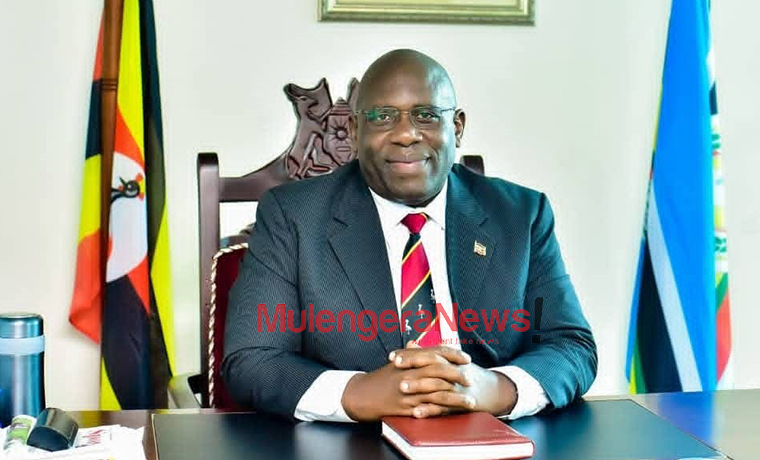

By Asuman Kiyingi
[In his latest missive, Advocate Asuman Kiyingi, a former MP & Minister in Museveni’s government has at length explained why the Protection of Sovereignty Bill 2026 discredits and weakens the NRM government rather than strengthening it. What follows hereunder is the reproduction of Hon Asuman Kiyingi’s latest missive].
VERBATIM:
The Emperor Is Naked: The Reactionary Logic of the Sovereignty Bill, 2026
By Asuman Kiyingi
He may have been misquoted. Or perhaps he has since reconsidered. But in a moment of rare candour, Gen. Muhoozi Kainerugaba was widely reported to have described the ruling National Resistance Movement (NRM) as “the most reactionary organization” in Uganda today.
A forensic reading of the Protection of Sovereignty Bill, 2026 suggests that this was no slip of the tongue, but an unintended Saul to Paul moment. The Emperor is naked. This Bill represents neither governance nor security; it is the codification of fear—specifically, the state’s fear of a citizenry that organizes, questions, and connects beyond the traditional perimeter of state control.


The Architecture of Encirclement
The Bill’s internal logic reveals a strategy of civic asphyxiation. Clause by clause, it recasts ordinary civic activity as inherently suspect. Under Section 1, an “agent of a foreigner” is defined with such elastic breath that it captures any person whose activities are “directly or indirectly supervised, directed, controlled, financed, or subsidised by a foreigner.” Most chilling is Section 1(b), which expands the term “foreigner” to encompass Ugandan citizens residing outside Uganda.
This is not regulation; it is encirclement. Having long utilized the Public Order Management Act (POMA) to throttle physical assembly, the state now seeks to seize the financial and intellectual lifeblood of civic engagement.

The objective is clear: to ensure no independent center of mobilization can attain the capacity to challenge the status quo. This legislative maneuver arrives alongside a radical political agenda: proposals to extend presidential terms from five to seven years and to shift the election of the President to Parliament. In this light, the Bill is a preemptive “silencer” fitted to the body politic.
The Price of “Protection”: Economic Sabotage by Law
While the Bill invokes “sovereignty,” it ignores the empirical reality of our global interconnectedness. Data from the Citizens Coalition Against Sovereignty Bill reveals that this “protection” comes at a staggering cost:
- Capital Flight: A projected reduction in foreign inflows by UGX 3–5 trillion annually, effectively stalling GDP growth by up to 1 percentage point.
- Fiscal Erosion: An estimated tax revenue loss of UGX 500 billion to 1 trillion as consumption and employment take a hit.
- Job Losses: The potential destruction of 20,000–30,000 jobs, primarily among skilled youth and professionals.
Under Section 22(1), the Bill imposes a logistical blockade by prohibiting any person from receiving more than twenty thousand currency points—exactly UGX 400 million—from a foreigner within twelve months without written approval from the Minister.
Article 21 and the Fracturing of Citizenship
Uganda’s 1995 Constitution is unambiguous. Article 21 guarantees equality before the law and prohibits discrimination. By placing the diaspora within the regulatory crosshairs of “foreigners” under Section 1(b), the Bill introduces a distinction that is constitutionally offensive.
This is a fundamental redefinition of belonging that threatens the Diaspora’s role as a vital economic lifeline. Remittances contribute approximately UGX 4.5–5.3 trillion annually. By stigmatizing these funds, the Bill risks a UGX 450 billion to 1 trillion drop in remittances. To legislate distance where none exists is to engage in legislative xenophobia against our own kin, threatening the healthcare and education of millions of households.
The Monopoly of Influence
The Bill ignores state-level external global capital overbearing influence, focusing its weight exclusively on domestic actors who engage with the world outside of NRM-approved channels. As Robert Klitgaard famously noted, systems defined by Monopoly (M) and Discretion (D) without Accountability (A) inevitably drift toward corruption ($C=M+D-A$).
Here, the commodity being monopolized is feared political influence. Under Section 17, the Minister holds the sole power to grant certificates of registration, while Section 18 allows for refusal if the Minister is “satisfied” the applicant is not a “fit and proper person”—a standard devoid of objective criteria. This “regulatory uncertainty” forces financial institutions to “de-risk,” raising compliance costs by 5–10% and choking the private sector.
The Resurrection of Sedition
Perhaps the most insidious element is the attempt to regulate speech through the euphemism of “economic sabotage.” In Section 13, the Bill criminalizes any person who publishes information that “weakens or damages the economic system or viability of the country”.
Uganda’s constitutional jurisprudence—from Onyango-Obbo v. Attorney General to Andrew Mwenda v. Attorney General—appeared to have buried the ghost of colonial sedition. Yet, the logic has returned. By swapping political language for technocratic terminology, the state extends its reach while narrowing the citizen’s defense. The penalty is a staggering fine of up to one hundred thousand currency points (UGX 2 billion) or imprisonment for up to twenty years. The colonial state feared the politically conscious subject; the NRM administration fears the economically literate one who might flag the fiscal cost of patronage, grand corruption and abuse of office.
The Honest Witness
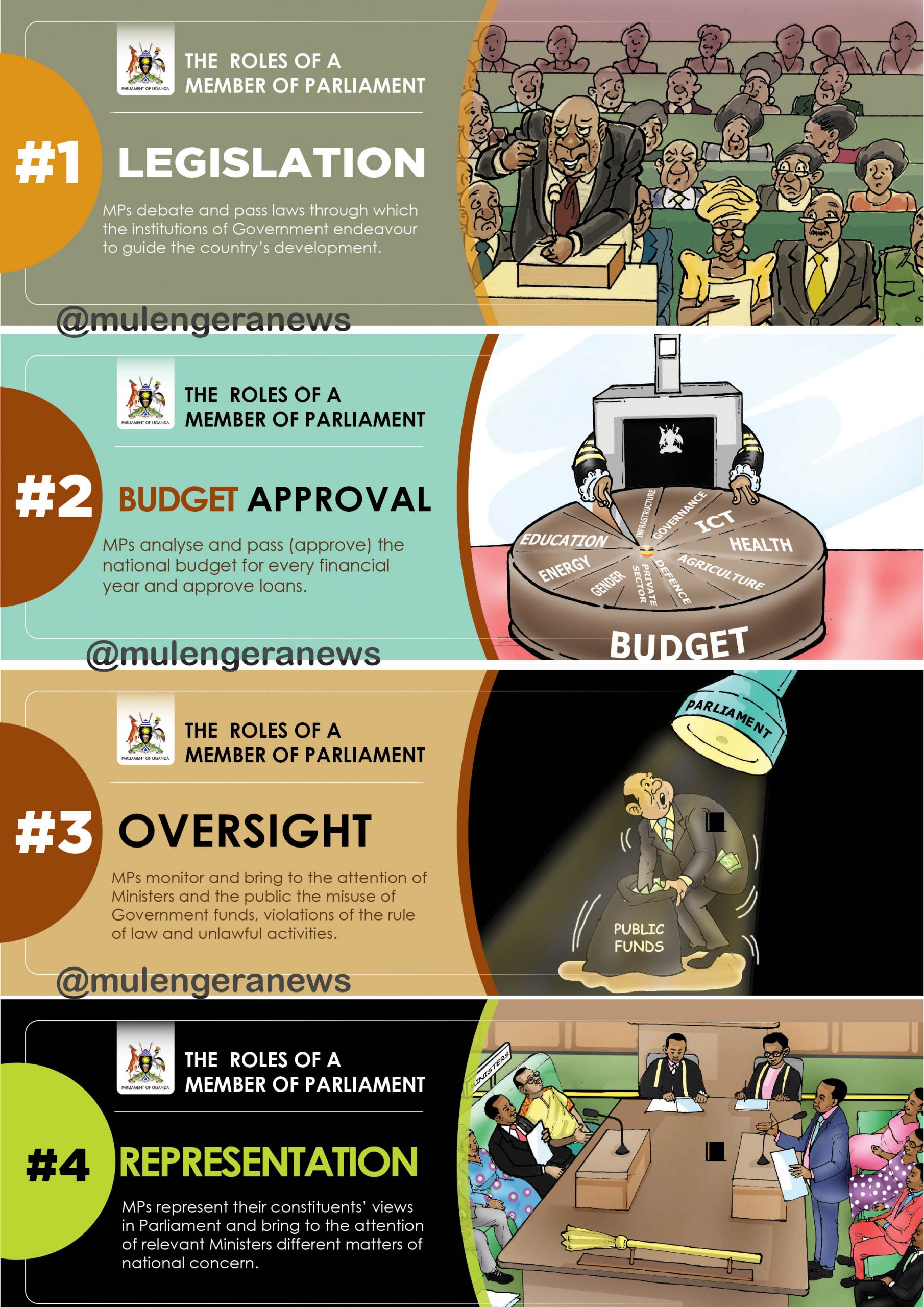
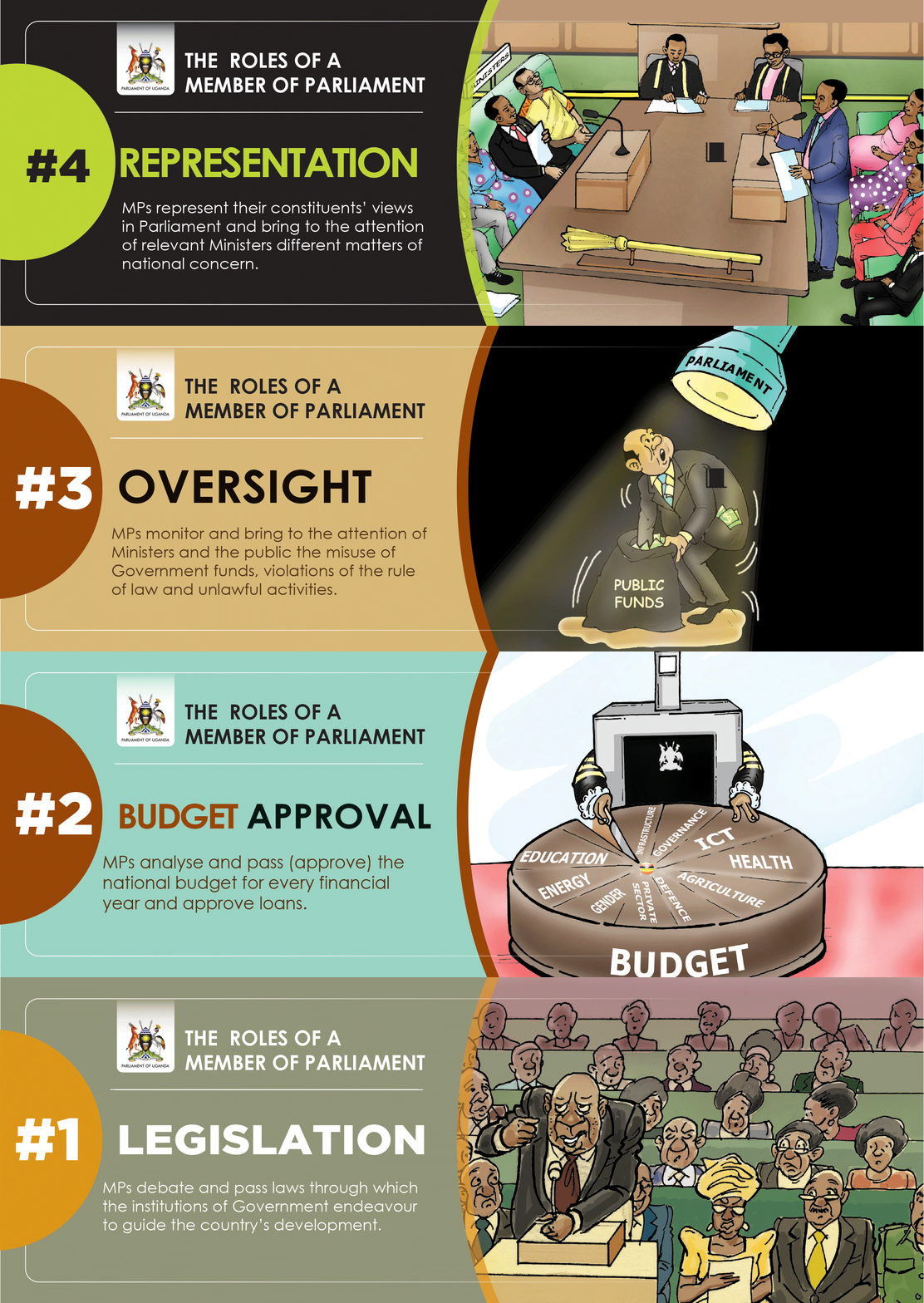
In the classic tale, the Emperor’s power endured only as long as the court remained silent. The test before Uganda’s Parliament is whether it will act as a mute chorus for the executive or as an honest witness to the people.
The Protection of Sovereignty Bill, 2026 is a declaration of no confidence in the Ugandan people. Sovereignty does not reside in the halls of the Ministry of Internal Affairs; it resides, per Article 1 of the Constitution and ironically acknowledged in Section 5 of the Bill, in the people. Any law that seeks to silence that voice has already confessed its own fragility. The Emperor is naked. The only remaining question is: who in the House has the courage to say so? The writer is a Senior Advocate and former Minister. (For comments on this story, get back to us on 0705579994 [WhatsApp line], 0779411734 & 041 4674611 or email us at mulengeranews@gmail.com).