






By Ben Musanje
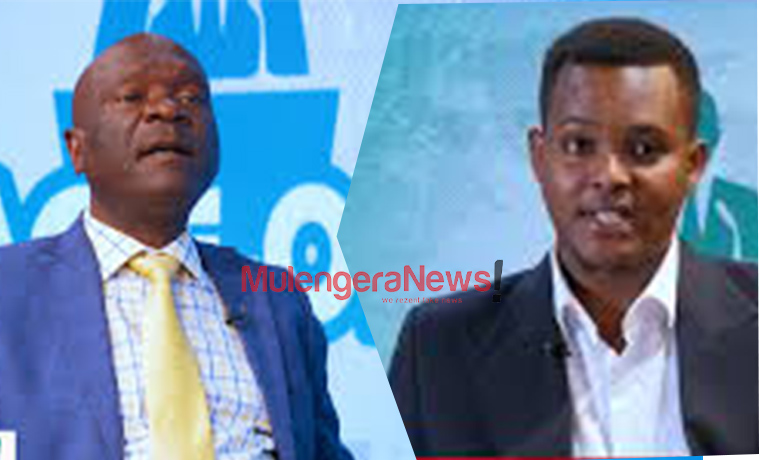
Outgoing Mawokota South Member of Parliament Yusuf Nsibambi has sparked a political storm after a tough and unapologetic appearance on NBS Television’s Face-Off, where he delivered a hard-hitting critique of the National Unity Platform (NUP), defended his political shift, and painted a dramatic picture of opposition politics as disorganized, underfunded, and easily manipulated.
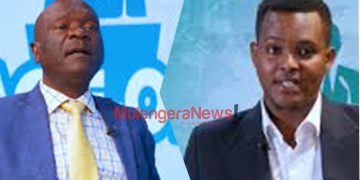
Hosted by journalist Canary Mugume, Nsibambi walked into the interview projecting calm confidence but quickly turned the discussion into a forceful political statement that left little room for ambiguity about his current position. He openly acknowledged his departure from long-time opposition politics and defended his engagement with President Yoweri Museveni as a turning point he described as both personal and strategic.
Nsibambi, who has for years been associated with opposition activism at the time he was a member of the Forum for Democratic Change (FDC), told viewers that his decision to engage with the President came after what he called “critical moments” ahead of elections, where he believed the country was facing serious instability. He claimed that after repeated attempts to meet the President, he eventually succeeded through intermediaries, including religious leaders, and described the interaction as transformative. He suggested that after those meetings, he began to see himself not as an opponent, but as a contributor to national stability.

In one of the most striking parts of the interview, Nsibambi said his earlier political identity had been rooted in what he now considered a mistaken belief system. He argued that prolonged opposition activism had failed to deliver meaningful change and insisted that engagement with the ruling establishment offered a more realistic path to influence governance.

He went further, directly criticizing what he described as internal weaknesses within opposition politics, particularly targeting NUP. Nsibambi alleged that sections of the opposition had relied on emotional mobilization rather than structured strategy, and he claimed that youth were misled into political confrontation. He described a volatile political environment during campaigns, alleging that groups of young people, some from outside Uganda, were brought into political activities that escalated tensions on the ground.
Nsibambi also made controversial claims about campaign dynamics, saying insecurity forced candidates to rely on informal protection groups during rallies. He described what he called “Eggaali” groups, saying they accompanied him during campaigns due to inadequate security arrangements. He claimed that such groups became a necessity in a charged political environment, where he said official protection was insufficient and competition on the ground was intense.
He also turned his attention to campaign financing, arguing that modern politics had become heavily commercialized. Nsibambi claimed that candidates in central Uganda required massive financial resources to compete effectively, suggesting that only those with access to significant funding could run successful campaigns. He contrasted this with opposition parties, which he said often, struggled to mobilize comparable resources, forcing them to rely instead on public anger and sentiment.

Throughout the interview, Nsibambi repeatedly emphasized that his decision to align with the National Resistance Movement was personal and not part of any collective political arrangement. He insisted that his engagement with the President was centered on dialogue, peace, and addressing what he described as post-election tensions, including concerns about detained or arrested individuals following electoral periods.
He also argued that discussions he participated in after meeting the President were focused on national stability, including calls for dialogue between political actors and the possibility of addressing cases involving what he referred to as politically affected individuals. Nsibambi maintained that his intention was not to mobilize people into political alignment, but to promote reconciliation and reduce confrontation.
Despite his firm defense, Nsibambi’s remarks have triggered strong reactions, particularly among opposition supporters who view his shift as a betrayal of long-standing activism. However, within the interview itself, he remained firm and unshaken, repeatedly insisting that the opposition lacks the structure, resources, and strategic clarity required to challenge the current political order effectively.
He concluded his appearance by asserting that his departure from opposition politics was based on reflection and experience, not pressure, and that he now believes governance challenges can be better addressed through engagement rather than confrontation. His message was clear and uncompromising, presenting himself as a man who had changed course after decades in activism, and who now believes he is operating on what he called a more realistic political path. (For comments on this story, get back to us on 0705579994 [WhatsApp line], 0779411734 & 041 4674611 or email us at mulengeranews@gmail.com).