






By Mulengera Reporters
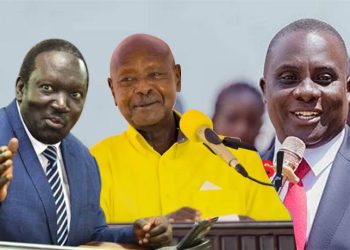
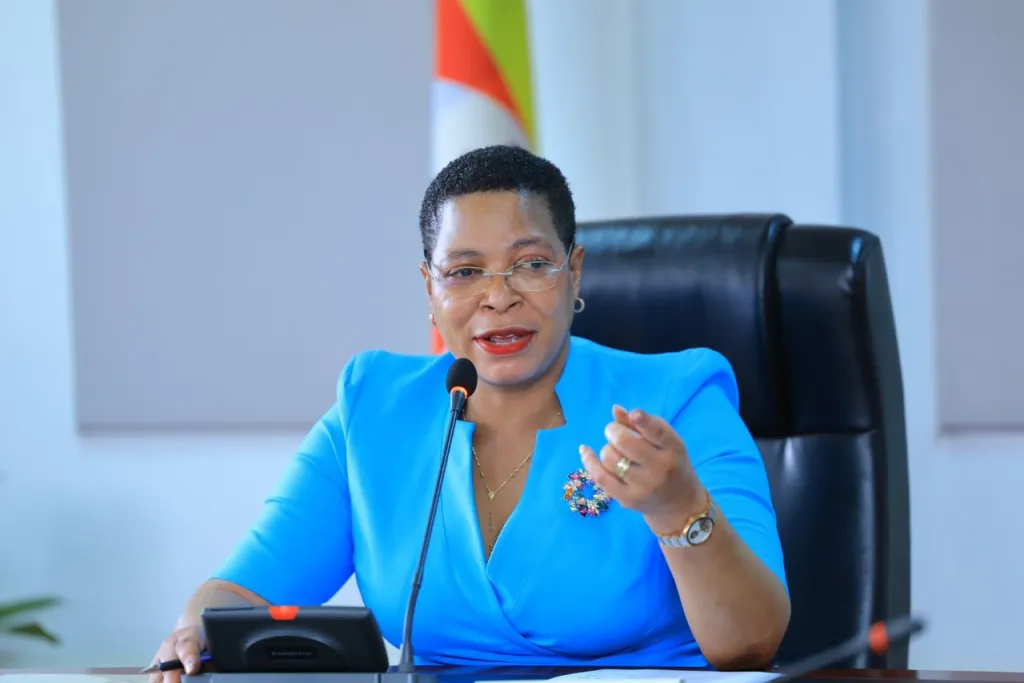
At his Rwakitura home where he received the victory certificate from the EC and also had religious leaders converge to pray for his long life on Sunday, president Museveni praised speaker Anita Among for being energetic and always in the field instead of being an armchair head of legislature and 2nd national chairperson of the mighty NRM party always seated in office in Kampala.
Museveni said he was happy when Among remained part of his campaign trail and drove to different parts of the country by road, which enabled her to see firsthand the roads which are in bad state and therefore in need for urgent reconstruction.

Museveni, who addressed 143 rallies in the whole country in the last roughly 100 days, said he was particularly happy when he learnt that Anita Among had driven through one of the bad marram roads in Ankole’s Buhweju and also in Lango’s Alebtong where she was able to see the need for improvement first hand.
Museveni said that once the head of the legislature gets out of the comfort zone of Kampala and goes to the countryside to see people’s service delivery problems first hand, it then becomes easy for the area MPs reporting such things to get the institutional support.

“This is why it’s good to have a speaker who moves around instead of one who just sits in the office,” Museveni said prompting some in his audience to remember the words Anita Among used at Entebbe state house during the movement conference as she campaigned to replace former speaker the elderly Rebecca Kadaga for the position of NRM 2nd national vice chairperson.
In the same speech Museveni implied anger about the leadership at the works ministry whose officials he blamed for absence of the road maintenance budget. “What is the ministry of works doing to stop these roads from deteriorating and getting worse?” he furiously asked.
He said that he had realized on the campaign trail that Ugandans get very angry at his government when they see small potholes grow into crater lakes on major roads, making them impassable, without the relevant ministries of government bringing the problem to his attention so that it can be immediately solved.
Saying that the people of Uganda had suffered for too long as a result of bad roads, inability to access safe drinking water, extortionist head teachers charging in UPE/USE schools and as a result of absence of basic medicines in hospitals, Museveni said that no unserious government officials are going to be tolerated in his new government which starts in May 2026.
“I’m going to be very harsh you people in this kisanja. You will have to forgive me,” said Museveni who in the same speech promised to end household poverty through PDM and to also use the oil money to build more power generation dams, the railway system and prioritize the education of Uganda’s young scientists to increase the competitiveness of the graduates of Uganda’s education system.
He said that within the 20 years of the existence of the first phase of the country’s oil project, emphasis will be put on long term public infrastructure projects which can benefit the country’s current and future generations.
He said that the oil cash will begin flowing later this year and that’s the money he will be using to construct a railway system, build more power generation dams and also invest in the training of Uganda’s scientists.
Museveni registered his contempt for his chief opponent Robert Kyagulanyi who he said had destroyed himself when he gave an inept campaign speech at his Hoima rally where he tried to excite ordinary Banyoros by promising to give 20% of the oil money to the region’s districts to increase salaries and welfare expenditures for the enjoyment of local government staff and employees.
He thanked Banyoro voters for rejecting Kyagulanyi’s cheap talk and for going on to vote for NRM. Museveni also announced that Uganda was on the verge of confirming existence of commercially extractable oil deposits in Lango sub region, Kyankwanzi in Buganda and Karamoja in the north eastern part of the country. These too, he said, will help strengthen Uganda and accelerate the country’s socio-economic transformation.