






By Ben Musanje
The Uganda Human Rights Commission (UHRC) has revealed that while the 2026 Presidential and Parliamentary elections were largely peaceful, they were marred by technical failures, declining voter turnout, restricted internet access, and isolated cases of violence.
In its preliminary findings released at its headquarters along Lumumba Avenue in Kampala, UHRC said Ugandans voted on January 15, 2026, to elect the President, directly elected Members of Parliament, and District Women Members of Parliament. A total of 21,649,068 voters were registered and assigned to 50,739 polling stations across the country.
UHRC deployed 121 observers to 990 polling stations in 78 districts, operating through its 12 regional offices. The Commission said most polling stations received voting materials on time, but delays were reported in Kampala, Wakiso, and Mukono, with some stations opening as late as 11:30am.
Despite the late starts, voters were seen arriving as early as 6:30am and remained calm while waiting to cast their ballots. However, overall voter participation declined. UHRC reported that only 11,366,201 voters cast ballots, translating into a turnout of 52.5 percent, down from 59.35 percent in the 2021 general elections. Turnout was higher in rural areas, while Kampala and Wakiso recorded the lowest participation.

The Commission identified the Biometric Voter Verification Kits (BVVKs) as one of the most significant challenges on polling day. Although each polling station was allocated at least two kits, the devices failed at many locations. In some polling stations in Yumbe and Wakiso districts, the kits were not delivered at all, forcing officials to revert to the manual National Voters Register.

At around 9:30am, the Electoral Commission instructed presiding officers to use the manual register where biometric verification had failed. UHRC said the move allowed voting to continue, but noted that the late communication meant some polling officials did not receive the guidance in time.
UHRC also reported that polling stations were generally accessible to older persons, persons with disabilities, and expectant mothers, as many were located on open and flat grounds such as school compounds and churches. However, in parts of Moroto and Nakapiripirit, voters had to walk long distances from mountainous areas to reach polling stations.
Security was described as largely calm nationwide, with regular police patrols that did not interfere with voting. Most security personnel were unarmed or lightly equipped, though armed polling constables were observed in a few areas of Kampala, Sembabule, and Mbarara. UHRC warned that security deployments must be carefully calibrated to avoid discouraging voter participation.

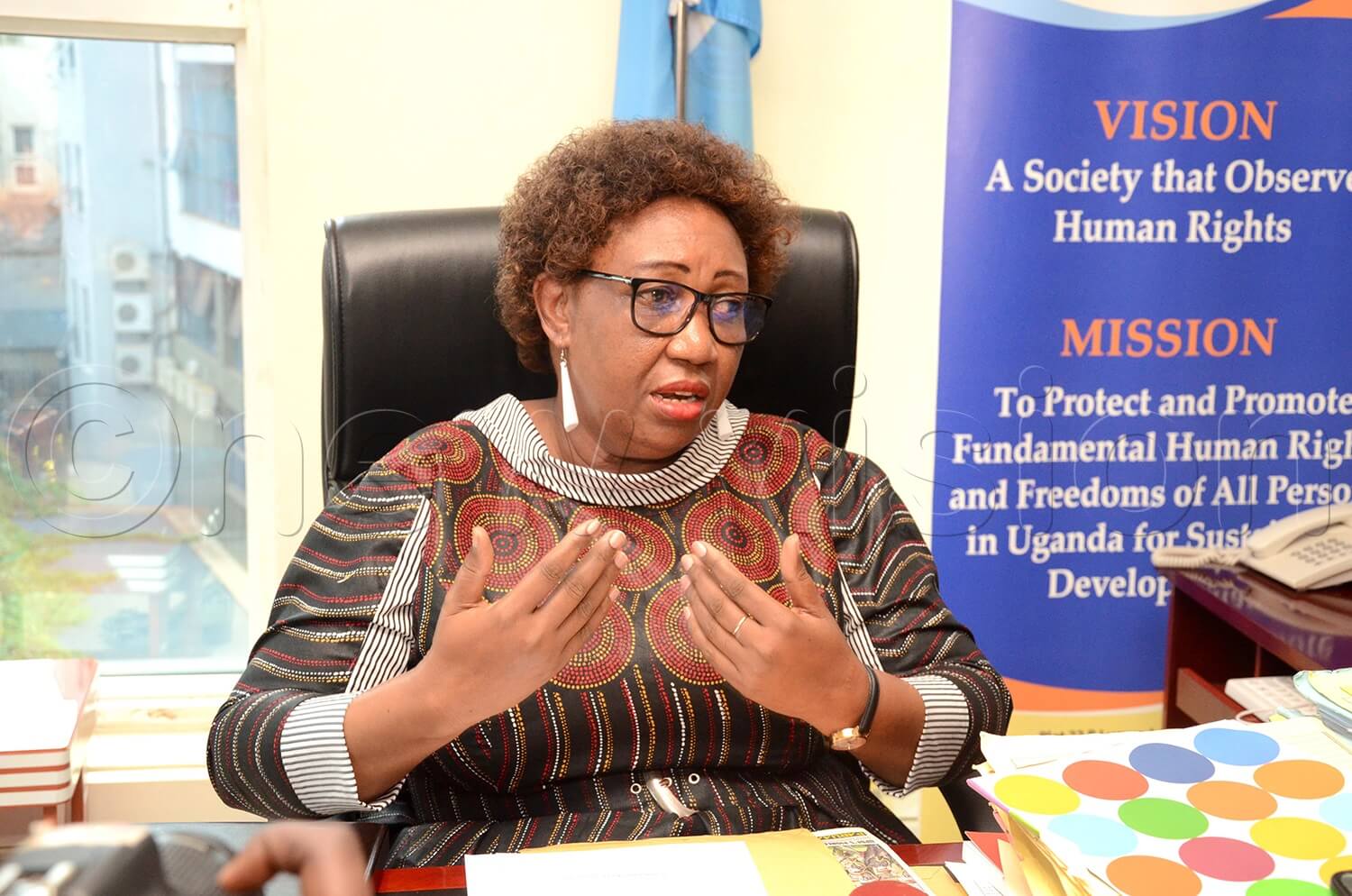
Mariam Wangadya, UHRC Chairperson said vote counting and tallying followed Electoral Commission guidelines and were conducted in the presence of candidates’ agents and observers. While most polling stations closed at 5:00pm, counting at some stations continued beyond 8:00pm, with all agents present receiving copies of the declaration of results forms.
Among the human rights concerns raised was the temporary suspension of public internet access by the Uganda Communications Commission two days before polling day. Wangadya said the partial shutdown, which affected about 17 million internet users, limited access to information and freedom of expression and association. Restrictions on mobile money services were also reported to have affected rural communities that rely heavily on mobile money transactions.
Although voting was largely peaceful, UHRC documented incidents of violence at polling stations and tally centres in several districts, including Kampala, Wakiso, Kayunga, and Mitiana. Media reports cited seven deaths, three gunshot injuries, and 25 arrests in Butambala and Kalungu districts.
Wangadya further noted a persistently high number of invalid votes. According to the Electoral Commission, 273,353 ballots were invalidated, mainly due to incorrect or missing markings, a trend similar to the 2021 elections.
UHRC also observed disparities in the presence of candidates’ agents at polling stations, with major political parties better represented than smaller parties such as the Democratic Party, Alliance for National Transformation, and Forum for Democratic Change.
Despite the challenges, Wangadya said the elections allowed many Ugandans to exercise their right to vote in a generally peaceful environment. The Commission has called on the Electoral Commission to improve testing of electoral technologies, expand voter education, and strengthen safeguards for human rights in future elections.