








By Ben Musanje
President Yoweri Museveni has placed himself at the center of Uganda’s latest political controversy, revealing that he personally blocked the release of Rev. Father Deusdedit Ssekabira of Masaka Diocese, who he accused of working with opposition leader Robert Kyagulanyi.
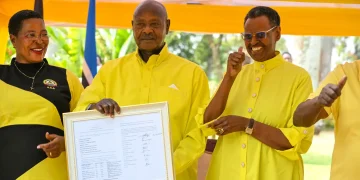
Speaking on Sunday while celebrating his presidential victory at his residence in Rwakitura, Western Uganda, Museveni said that some people had wanted to use civil rights to create disorder, but he and his government had refused.
He warned a small group of what he described as traitors, accusing them of collaborating with foreigners and various groups to destabilize the country.

Museveni said that when religious leaders led by the Bishop of Masaka diocese Rt Rev Serverus Jjumba met and asked him to release the Masaka priest, he refused, explaining that authorities could not release him unless he admitted wrongdoing and stopped the alleged subversive activities. He emphasized that the government’s goal was not to punish, but to ensure that such actions never happened again.

The President praised Ugandans for rejecting violence and maintaining peace, noting that stability was upheld not only by security forces, but also by ordinary citizens, including members of the opposition.
He said many Ugandans had expressed that they did not want the country to become like Libya and warned that traitors must stop their activities immediately, as the state was fully aware of their actions.
Background of the Priest’s Case

Father Ssekabira had been charged with money laundering and remanded to prison until January 21, 2026. According to the charge sheet, he and others still at large had allegedly concealed or disguised the ownership of 500 million shillings at Centenary Bank in Masaka between 2023 and 2025, funds authorities believed were linked to criminal activity.
The arrest had caused national concern. The Uganda Catholic Lawyers Society (UCLS) condemned what it described as an abduction and enforced disappearance. They said Father Ssekabira had been seized on December 3 by armed men in unmarked vehicles, without a warrant or explanation.
For ten days, his whereabouts had been unknown, and his family, church leaders, and lawyers had been denied access. The Catholic lawyers argued that this violated Uganda’s Constitution and international human-rights obligations, and that confirmation of custody did not make the arrest lawful.
UCLS warned that secret detentions and military custody of civilians undermined the rule of law. They urged the military to immediately produce Father Ssekabira before a civilian court, grant him unrestricted access to legal counsel, family, and church authorities, and disclose the legal basis and conditions of his detention.
The Uganda People’s Defence Forces later confirmed that Father Ssekabira was in lawful custody, saying he was being investigated over alleged involvement in violent subversive activities against the state and would be produced before a court of law.
Meanwhile, the Bishop of Masaka Diocese, Rt Rev Serverus Jjumba while releasing the Christmas message in Masaka, said the church had handled the matter cautiously and firmly, expressing hope that the truth would come out.
As tension over the case grew, believers in Masaka thronged churches, praying for Father Ssekabira and others recently reported missing. The situation has placed Museveni at the center of a tense national debate, highlighting the delicate balance between leadership, security, and civil liberties in Uganda.