








By Mulengera Reporters
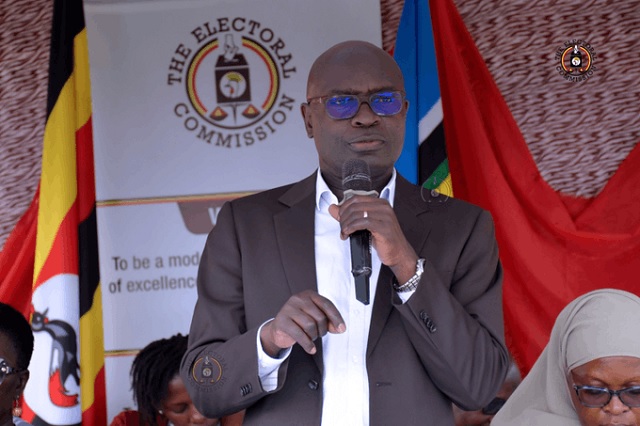
The Chairman of the Electoral Commission (EC), Justice Simon Byabakama, has addressed concerns raised by religious leaders regarding the recent directive for voters to leave polling stations after casting their votes.
During an interaction with Religious Leaders and top officials from the EC and Uganda Police at the Inter-Religious Council of Uganda (IRCU) offices in Mengo on 2nd January 2026, Byabakama clarified that the measure is aimed at ensuring a peaceful and orderly election process, and not to infringe on citizens’ rights.
The EC’s directive, which has sparked debate, is part of broader efforts to prevent disturbances at polling stations, particularly in light of violent incidents observed during previous elections, such as the 2021 general elections and the Kawempe North by-elections.

Byabakama emphasized that while the law allows voters to stay within 20 meters of a polling station, the Commission is now asking voters to return home immediately after voting to minimize potential disruptions.

Byabakama assured those present that the decision was not intended to take away the rights of citizens or limit their ability to observe the voting process. He explained that it was a proactive measure to ensure the election process is conducted peacefully and without unnecessary interference. He added that voters were free to return during tarrying time, but they were encouraged to avoid lingering at polling stations after casting their ballots.
The EC Chairman also highlighted that the law already provides for safeguards to protect the integrity of the vote, with designated agents appointed by candidates who are authorized to remain inside polling stations.
These agents, two per candidate, are responsible for monitoring the process from the opening of the station until counting is completed.

Byabakama pointed out that the agents are tasked with ensuring transparency throughout the election process, including overseeing ballot issuance and counting. He emphasized that the presence of these agents was enough to safeguard the interests of the candidates, and that voters did not need to stay around the polling stations to monitor the process.
He also clarified that there are numerous agents at each polling station, including those for presidential and parliamentary candidates. With each candidate allowed two agents, the EC Chairman noted that there were already dozens of agents inside polling stations, ensuring that everything was properly observed.
Religious leaders, who had earlier criticized the measure, reaffirmed their position that citizens should have the right to observe the polling process. They argued that ensuring transparency and the safety of voters should remain a priority.
Despite the differing views, Byabakama reassured the leaders that the Commission is committed to upholding the law and ensuring the safety and security of all involved in the election process. He urged political candidates to avoid encouraging voters to remain at polling stations, as this could create unnecessary tension or lead to potential violence.
Byabakama however requested the support and understanding of all stakeholders, including religious leaders, to ensure a peaceful and fair election process.
The EC’s decision is expected to be enforced in the lead-up to the upcoming general elections, as authorities continue to make preparations to safeguard the integrity of the voting process.