






By Mulengera Reporters
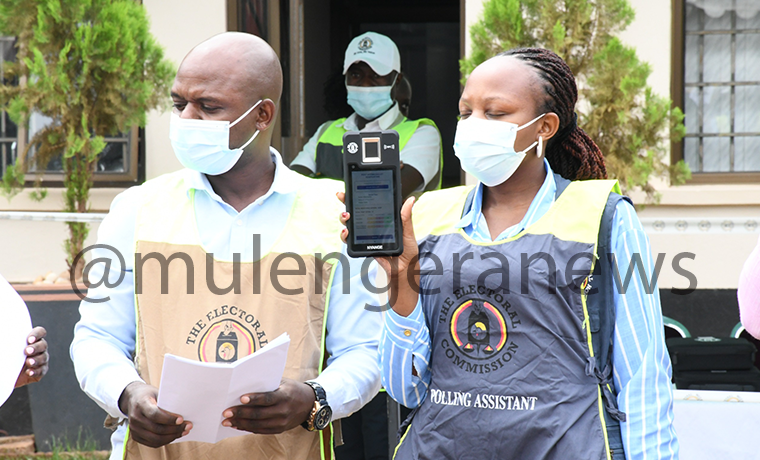
In a groundbreaking move, Uganda is set to usher in a new era of election transparency and security with the rollout of the Biometric Voter Verification Kit (BVVK) for the 2025/2026 General Elections.
The device, which has already been deployed at polling stations across the country, is poised to become a game-changer for Uganda’s democratic process. For the first time in history, voters can be confident that the integrity of their votes will be protected through advanced biometric verification technology.
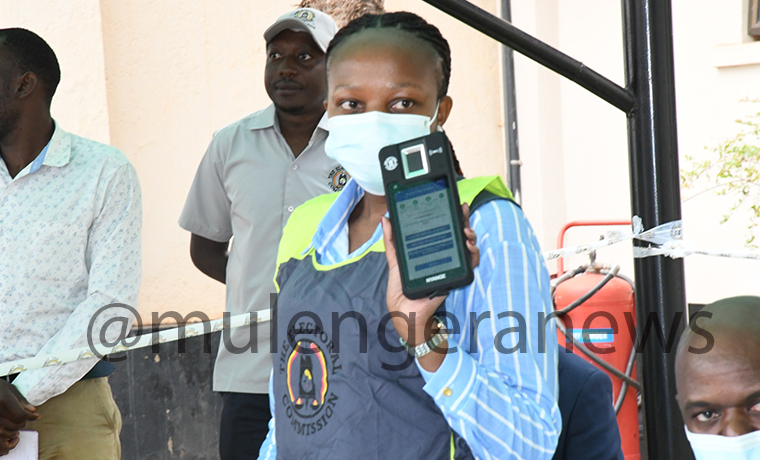
The BVVK is a state-of-the-art handheld device equipped with fingerprint and facial recognition technology, designed to ensure that only eligible voters are able to cast their ballots. This system promises to eliminate common election-related issues such as voter impersonation, multiple voting, and ballot stuffing problems that have long plagued the integrity of elections in Uganda and many other nations.

The Electoral Commission (EC) has made an unprecedented commitment to safeguarding the democratic process, with 109,142 BVVKs deployed across the country to facilitate an efficient, secure, and fraud-free election. The introduction of this biometric verification system marks a major milestone for the EC’s goal of improving the credibility and transparency of Uganda’s electoral process.

The BVVK: A Revolutionary Tool for Electoral Integrity
The BVVK is designed to verify a voter’s identity by comparing their biometric data (fingerprints and facial features) to an existing voter database. Before being issued a ballot, each voter must go through this biometric verification process. This is done through a combination of fingerprint scanning and facial recognition, both of which are validated in real-time by the system. The BVVK ensures that only eligible voters, who are already registered in the system, can cast their ballots.
By confirming each voter’s identity through biometric data, the system eliminates the possibility of voter impersonation and duplicate voting, which has been a major concern in past elections. No one will be able to vote more than once or under a false identity. This one-voter, one-ballot system is guaranteed to uphold the One-Man/Woman, One Vote principle—one of the cornerstones of a democratic society.

Voters will no longer be subjected to the uncertainty of whether their vote could be tampered with or whether someone else is fraudulently casting a ballot in their name. The BVVK offers a level of security and accountability previously unimaginable in Uganda’s electoral process.
A Step Toward Full Transparency in Elections
Before polling stations officially open, the BVVK system undergoes a thorough setup process. Polling station officials scan the QR codes on the voter register and assign the BVVK to the appropriate station. This initial step ensures that each polling station is properly linked to the centralized database. The verification process then begins with the officials themselves, who must undergo their own biometric checks—either fingerprint or facial verification to ensure they are authorized to operate the system.
Once the BVVK is set up and polling station officials are verified, the ballot paper booklets are scanned by the machine, ensuring that only valid ballots for that particular station are used during the election. This process minimizes the possibility of fraudulent ballots from other polling stations being used in the voting process.
The Voting Process: A Seamless and Secure Experience
When a voter arrives at the polling station, they present their National ID, Voter Location Slip (VLS), or the QR code from the voter register. The BVVK system then proceeds to verify their fingerprint or, if necessary, their facial features to confirm their eligibility to vote. This verification step ensures that no ineligible voter can participate in the election.
Once the voter has been successfully verified, the ballot paper for the category they wish to vote in Presidential, MP, or Woman MP is scanned by the BVVK system. The corresponding ballot paper for each category is then issued to the voter, after which they are directed to the appropriate ballot box.
However, to maintain the secrecy of the vote, the Presidential ballot is handed to the voter openly, while the other two ballots are placed in a sealed pouch to prevent accidental mixing. This ensures that the voter can only place the correct ballot in the corresponding transparent ballot box. The BVVK maintains the integrity of the process, ensuring that the secrecy of the vote is not compromised.
If a voter accidentally spoils their ballot, the BVVK system allows for the re-issuance of a new ballot. The system automatically cancels the spoiled ballot and issues a replacement after verifying the voter’s biometric data once again.
Ensuring Accuracy: Post-Ballot Verification and Counting
Once voting concludes, the system doesn’t stop. At the end of the polling day, all ballots are subject to thorough post-ballot verification. Each ballot’s QR code is scanned and cross-checked to ensure it was legitimately issued at the correct polling station, in accordance with the One-Man/Woman, One Vote principle.
In the unlikely event that any unverifiable ballots are found, those potentially linked to ballot stuffing or multiple voting, they will be separated and recorded in the Official Report Book as an incident. This step ensures that only genuine ballots are counted.
The results declaration forms (DR forms), completed by the Presiding Officer after sorting the votes, is also scanned by the BVVK system as a backup. This digital record will be submitted to the tally center for verification, ensuring that the physical results match the digital ones, adding another layer of security to the election process.
The People’s Confidence Restored
The rollout of the BVVK system has been met with widespread approval from voters, many of whom have expressed renewed confidence in the electoral process. For the first time, there is a clear assurance that no one will tamper with the election outcome. With the biometric verification in place, voters can rest assured that their choices will remain secret, and that their ballots will be counted fairly.
Election observers from around the world are closely watching Uganda’s 2025 General Elections, seeing them as a potential model for how technology can transform democracy. If successful, Uganda’s use of the BVVK system could set a global precedent for other countries looking to modernize their election systems and improve electoral integrity.
A New Era for Uganda’s Democracy
With the 2025 General Elections underway, the BVVK system is quickly becoming the backbone of Uganda’s election process. From voter verification to post-ballot checks, the BVVK offers a level of accuracy, security, and transparency that has never been seen before. The Electoral Commission is confident that this technological innovation will help secure free, fair, and credible elections for generations to come.
The BVVK has given Ugandans the chance to participate in a democratic process they can trust, one that is not vulnerable to fraud, manipulation, or tampering. As the elections continue, the system will undoubtedly prove its value as a critical tool for ensuring the integrity of Uganda’s democratic future.
In the days leading up to the final tally, one thing is certain: Uganda is on the brink of a historic election, and the rest of the world is watching closely.
Will This Be the Future of Democracy?
As the final ballots are cast and the votes are counted, the world will be watching. Will Uganda’s use of the BVVK revolutionize elections across Africa and beyond? Only time will tell—but one thing is for sure: Uganda has taken a monumental step toward ensuring that every vote counts. (For comments on this story, get back to us on 0705579994 [WhatsApp line], 0779411734 & 041 4674611 or email us at mulengeranews@gmail.com).