







By Mulengera Reporters
Kasagama Sub County in Lyantonde District, Western Uganda once notorious for cases of defilement, early pregnancies, and deadly accidents involving young girls fetching water from open dams is now experiencing a dramatic transformation following the installation of a solar-powered water supply system.
Kasagama village in Kisaluwoko Parish, which for years recorded high numbers of minor pregnancies linked to long and unsafe journeys to water sources, was selected as a beneficiary of the nationwide Solar-Powered Water Supply and Irrigation Project implemented by the Ministry of Water and Environment (MWE).
The project stems from a presidential directive by President Yoweri Museveni to install solar-powered water systems across the country, supported by over 111 million Euros from UK Export Finance. The Ministry later contracted Nexus Green to construct 450 solar-powered water supply and irrigation projects nationwide.

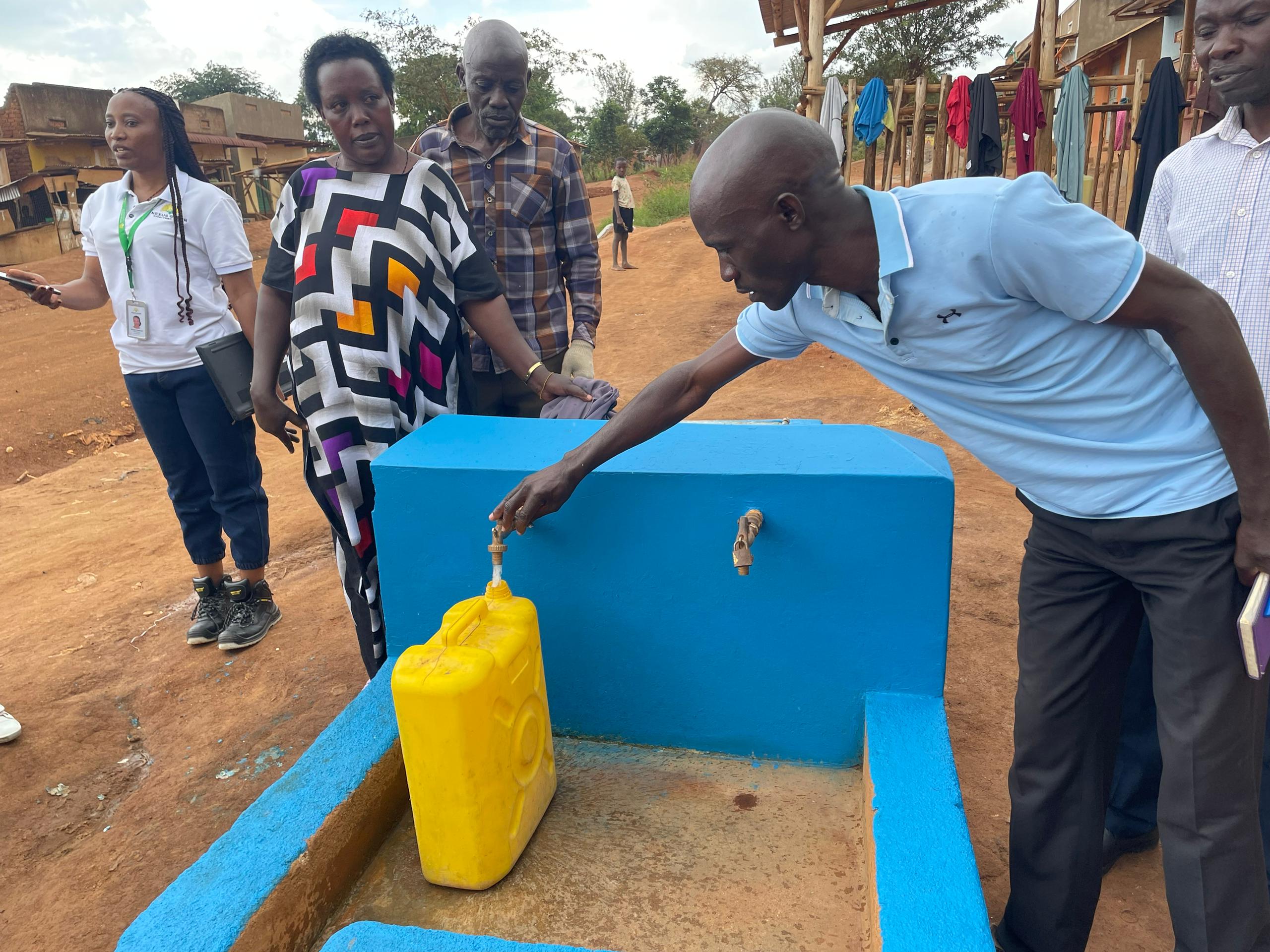
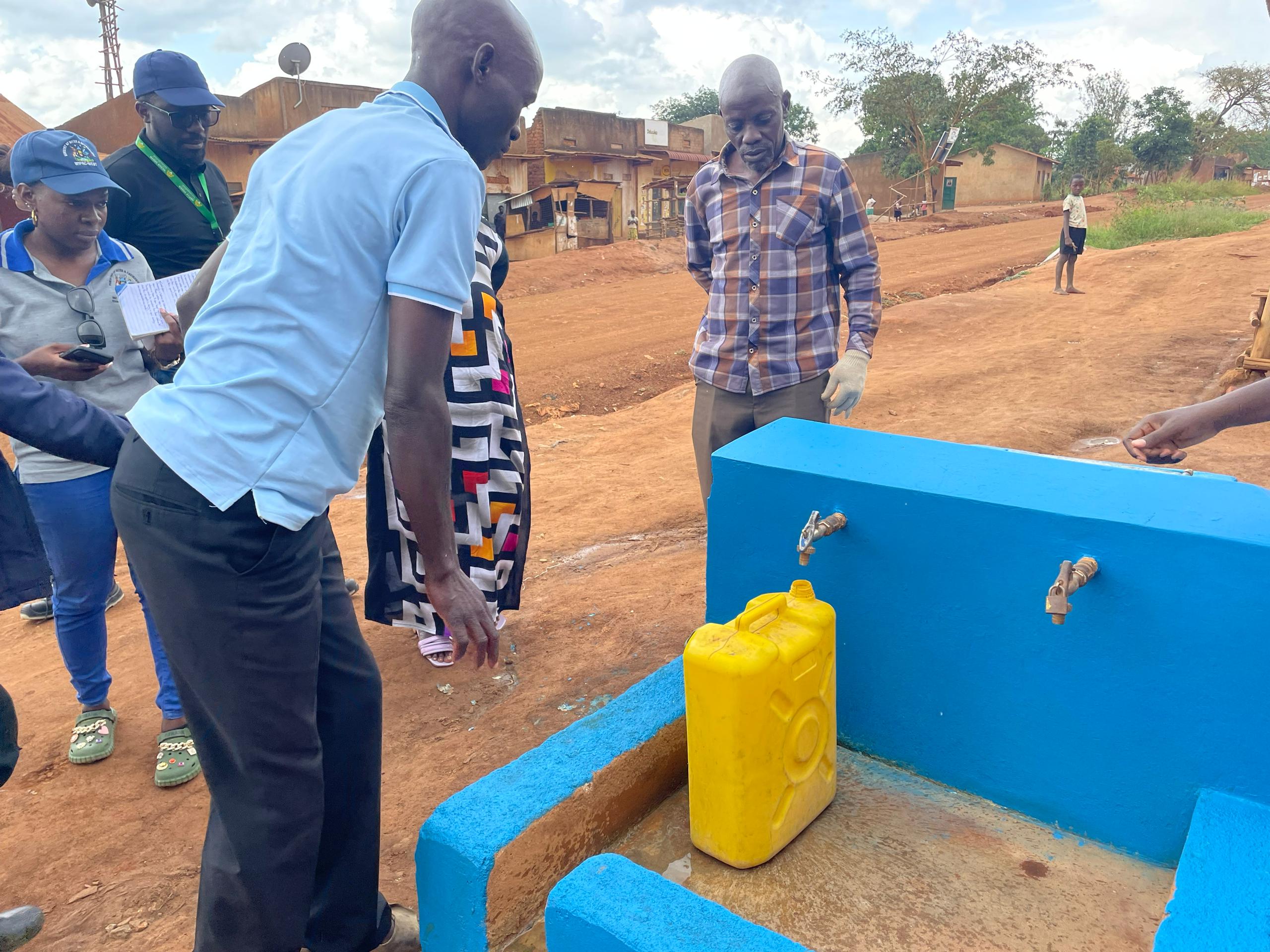
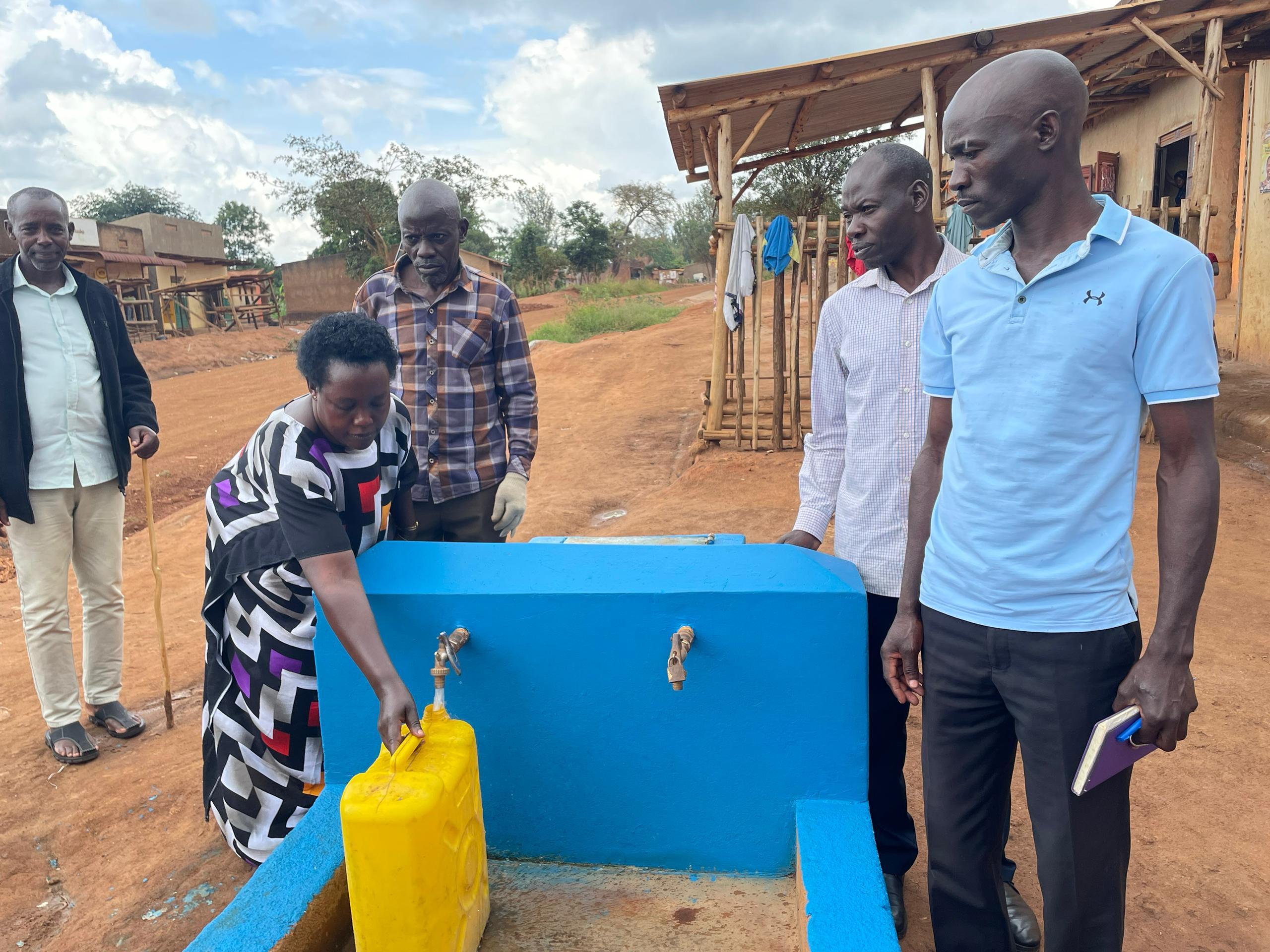
During an assessment survey, Nexus Green engineers found that the mountainous terrain of Kasagama village qualified it for a centrally located water facility, now known as the Kisaluwoko Solar-Powered Water Supply Project.
The Chairperson of the Kisaluwoko Water Users Committee, Fred Ssekago, explained that many girls were previously defiled and others became pregnant while walking long distances to nearby dams to fetch water. He noted that the installation of the solar-powered water source had significantly reduced the distance traveled by girls, leading to a sharp decline in cases of defilement and early pregnancies.
Ssekago further recalled that before the project, two fatal incidents occurred in which a man and a child drowned while fetching water from the dams, adding that such tragedies have not been reported since the new water system was installed. He said residents now pay 100 shillings per jerrycan, with the funds used for maintenance and to pay a security guard, noting that the project has also reduced waterborne diseases and created employment.
Residents say the social impact has been equally profound. Resty Nassanga, a resident of Kisaluwoko, explained that she and other married women previously faced constant misunderstandings with their husbands, who suspected them of infidelity whenever they took long hours fetching water from the dam. She said such domestic conflicts have since ended following the installation of the nearby water source.

At Kisaluwoko Building Tomorrow Primary School, teacher Sylvia Mbatidde reported that pupils previously encountered dangers such as attacks from stray dogs on their way to the dam, but said these risks have been eliminated since clean water was brought closer to the community. She also criticized the unreliability of National Water and Sewerage Corporation services and called for better coordination between government agencies.
Kasagama Village Chairperson Denis Baguma Salongo said the village is now safer and largely free from waterborne diseases, although he emphasized the need for water extensions to reach more households. He added that the village would give full support to President Yoweri Museveni in the 2026 elections to safeguard the development gains achieved.
Leaders from neighbouring villages also appealed for inclusion. Kayera Village Chairperson Fred Lutasingwa urged the Ministry of Water and Environment to extend clean water services to Kayera and surrounding villages such as Namba Satu and Namba Nnya, which are still struggling with unsafe water sources.
During a community meeting with MWE officials and Nexus Green representatives, resident Rogers Jumba raised concerns about the duration of Nexus Green’s management of the project, saying the community needed clarity to prepare for future responsibilities. In response, Cleophas N. Kyarimpa, Nexus Green’s Community Liaison Officer for the Western Region, explained that although the official management period is six months, the company continues to oversee the project while outstanding issues are being addressed under the government agreement.
The Ministry of Water and Environment’s Senior Public Relations and Communication Officer, Noel Mugangi, commended the community for embracing the project and cooperating with the Water Users Committee. He said government would consider water extensions once resources become available and urged residents to continue protecting and properly managing government programs to attract more development initiatives.
Meanwhile, Nexus Green’s Supervising Engineer for the Western Region, Monica Twikirize, explained that the facility operates using 18 solar panels generating 475 watts, enabling the pumping of 20 cubic meters of water in seven hours per day, which she said is sufficient for the intended population. She urged the community to respect the facility and avoid vandalism to ensure sustainable water supply.
Once a symbol of danger and despair, Kasagama’s water story now stands as a powerful example of how access to clean water can restore safety, dignity, and hope to vulnerable communities. (For comments on this story, get back to us on 0705579994 [WhatsApp line], 0779411734 & 041 4674611 or email us at mulengeranews@gmail.com).