






By Ben Musanje
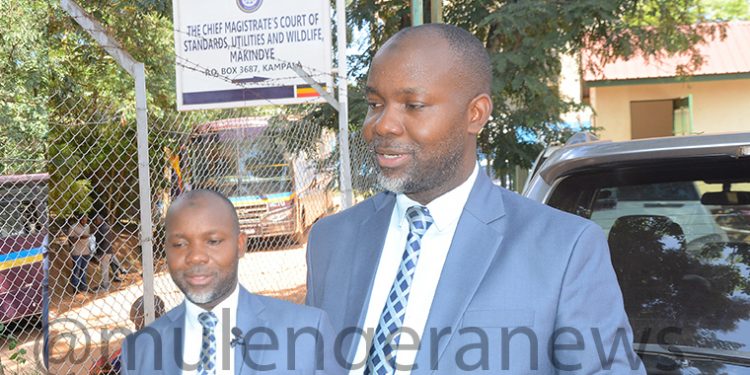
Uganda Communications Commission (UCC)’s Head of Litigation, Prosecution and Legal Advisory, Abudu Sallam Waiswa, has said there is renewed hope that Facebook may soon be officially restored in Uganda nearly five years after the platform was suspended.
This was while responding to questions from the audience of a joint press conference with stakeholders in the management of the 2026 elections organized by the Uganda Human Rights Commission (UHRC) at Sheraton Hotel in Kampala on Thursday.
Waiswa addressed public concerns about the future of the platform and the broader question of responsible digital communication.
His remarks came in response to a question from the audience on whether the government was in advanced talks with Facebook’s parent company, Meta.

Waiswa emphasized that while UCC encourages citizens to freely express themselves across all communication platforms, users must remain mindful of the responsibility that comes with such freedom.

“Our objective is to ensure people can communicate freely using available technologies,” he said, “but we remind all consumers that whatever information you share must be factual, fair, and aimed at peace. The impact of what you post whether on TV, radio, YouTube, or Facebook can be as big as any mainstream media broadcast.”
He noted that today, technology has turned “almost everyone into a journalist,” making the need for responsible online behaviour more urgent than ever.
UCC, he added, is committed to creating an enabling environment through clear licensing categories for radios, televisions and online channels many of which have already complied.

Waiswa, however, warned that some users still view regulation as an attack on their freedom. “Do not run away from regulation,” he urged. “Registering your online platform only increases your credibility and attracts business.”
Why Facebook Was Blocked
In a rare detailed explanation, Waiswa reiterated that Facebook’s suspension in 2021 was triggered by what government considered widespread misuse of the platform.
“The platform was being used as a conduit for unacceptable content—images, videos and messages that created division and could not be aired on a normal TV station,” he said.
The shutdown came just days before the 2021 general elections, after Facebook reported that a network linked to Uganda’s Ministry of Information had been using fake and duplicate accounts to manipulate public perception and boost certain posts. Uganda later blocked access to Facebook, and it remains officially unavailable without VPN.
‘We Still See You on VPN’
Despite the suspension, Waiswa revealed that an estimated 1.5 million Ugandans continue to use Facebook through VPNs down slightly from the 1.8 to 1.9 million users recorded before the ban.
But he issued a stern reminder: “Even when you’re using VPN, technology enables UCC and other government institutions to know that you are using Facebook. If you do anything wrong on that platform, you are not immune from liability.”
He cautioned that the notion that VPN use hides a user’s identity is false. “Do not be lied to. We see you,” he emphasized.
Talks Underway for a Possible Reopening
On whether Facebook will return, Waiswa said there is optimism.
“I have seen reports and messages from leaders, and I’m aware that UCC and other government institutions have held many discussions with Facebook. There is hope that once concerns are addressed, the platform may be officially opened.”
He urged Ugandans to use all communication platforms responsibly, noting that misuse is what often forces regulators into decisions that affect the general public.
As the country gears up for the 2026 elections, conversations about digital freedoms, responsible communication and regulation are again at the forefront making Waiswa’s remarks a significant signal of shifting ground in Uganda–Meta relations. (For comments on this story, get back to us on 0705579994 [WhatsApp line], 0779411734 & 041 4674611 or email us at mulengeranews@gmail.com).