









By Kassim Sematimba
On Thursday, November 27th, 2025, the Justice Law and Order Sector (JLOS) renewed its call for accuracy, balance, and responsibility in justice reporting, with Senior Technical Advisor Racheal Odoi-Musoke urging journalists to highlight not only challenges but also the many success stories emerging from Uganda’s justice system.
Speaking at the JLOS Media Engagement Workshop at Kabira Country Club in Kampala, Odoi-Musoke, who represented the Permanent Secretary (PS) at the Ministry of Justice and Constitutional Affairs, Robert Kasande, thanked the Austrian Government for its unwavering 25-year support to Uganda’s justice sector, saying Austria’s consistency has played a major role in strengthening reforms that continue to improve access to justice for vulnerable communities across Uganda.

She noted that while the media plays an important role in exposing injustices, it must also give space to positive developments happening within courts, prisons, human rights institutions, and JLOS agencies. Odoi-Musoke expressed concern about the growing trend of inaccurate reporting on court matters, including misquoted figures and misinterpreted rulings, warning that such errors distort public understanding and undermine trust in justice institutions.

She told members of the fourth estate that the sector often feels embarrassed when judicial decisions are misreported and stressed that the capacity-building workshop was designed to equip them with the right knowledge to inform the public responsibly.
Accuracy, she emphasized, is not optional but a safeguard for public trust.
Delivering her remarks as the chief guest, Dr. Katja Kerschbaumer, the Head of Development Cooperation at the Austrian Embassy, reaffirmed Austria’s deep partnership with Uganda, which spans more than three decades.

She said Austria’s collaboration with JLOS (especially the predictable annual budget support supplied since 2002) has contributed significantly to Uganda’s justice, human rights, and accountability reforms. Kerschbaumer noted that the justice system does not operate in isolation and that communication is just as important as service delivery, because it shapes public trust.
She explained that the media holds the power to translate legal developments into information that citizens can understand, absorb, and act on. According to her, “a justice system that is understood is a justice system that is trusted.”
She also highlighted Austria’s support for reforms in child justice, commercial justice, legal aid, and alternative dispute resolution, praising JLOS’s coordinated approach in which institutions work together rather than in isolation. This approach, she said, strengthens planning, budgeting, and efficiency while bringing reforms closer to the community.
Odoi-Musoke reinforced this message by urging journalists to verify facts and avoid inaccuracies that may mislead the public. She said the credibility of the justice sector relies heavily on how journalists report its work, and called on court reporters to pay extra attention to figures, rulings, and legal details.
Ms. Sarah Kekinguri, CEO of Nalaw Foundation Limited, applauded journalists for their role in public education but urged the Judiciary to support more specialised training for court reporters.
She noted that while media houses often invest in training reporters in politics, health, or environmental reporting, the justice sector is rarely prioritised, despite being highly technical. She said the Judiciary must take responsibility for equipping journalists with accurate knowledge so they can explain legal processes clearly to ordinary citizens.
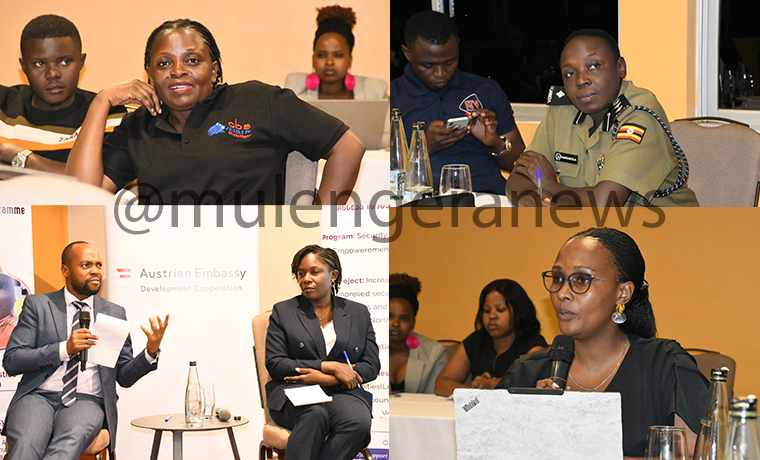
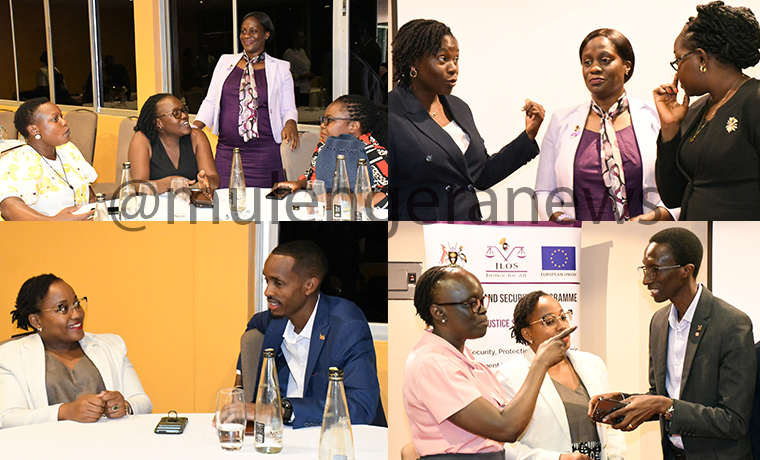
The workshop brought together representatives from the Media, Judiciary, ODPP, Uganda Prisons, Uganda Police, civil society organization groups, and development partners, with all parties committing to strengthening their relationship. (For comments on this story, get back to us on 0705579994 [WhatsApp line], 0779411734 & 041 4674611 or email us at mulengeranews@gmail.com).