








By Kassim Sematimba
Professor Gerald Karyeija, a Professor of Public Administration and Management at the Uganda Management Institute (UMI), has warned that political parties in Uganda continue to face deep structural challenges that are affecting their effectiveness and shaping the country’s political landscape.

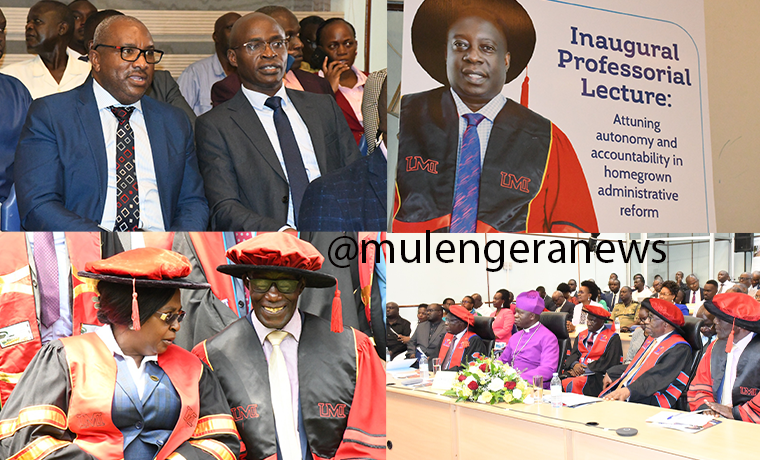
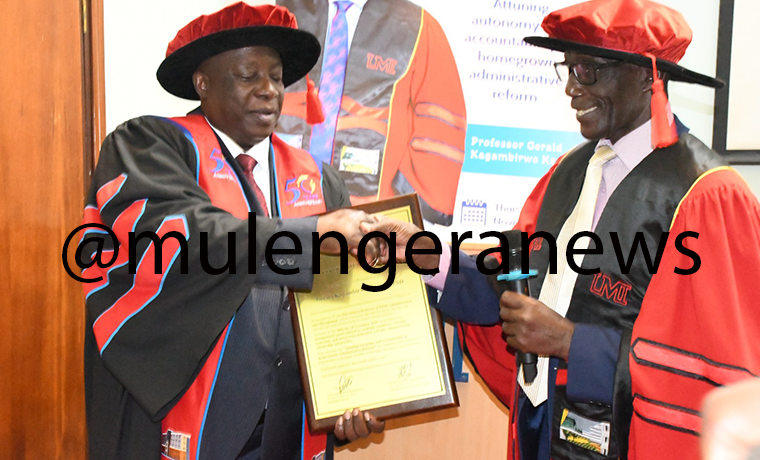
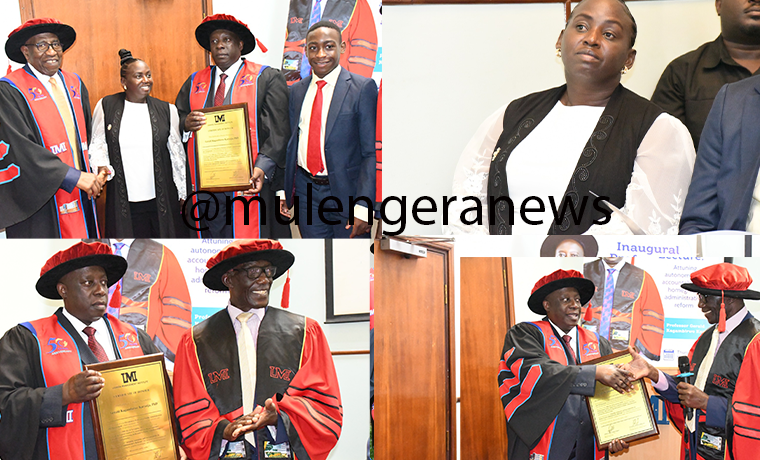
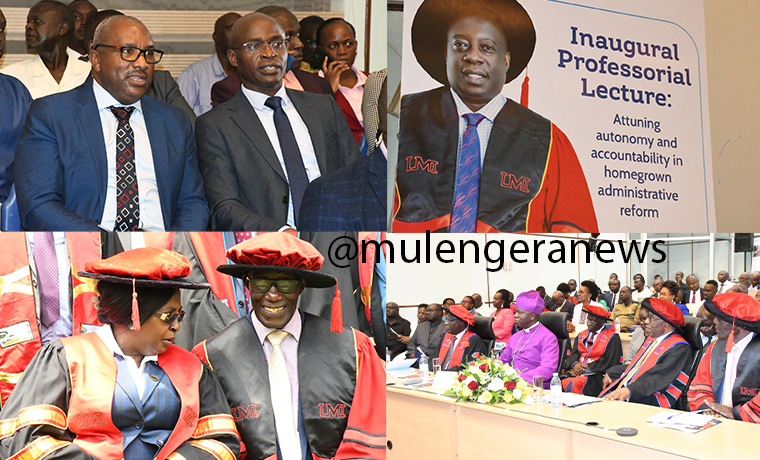
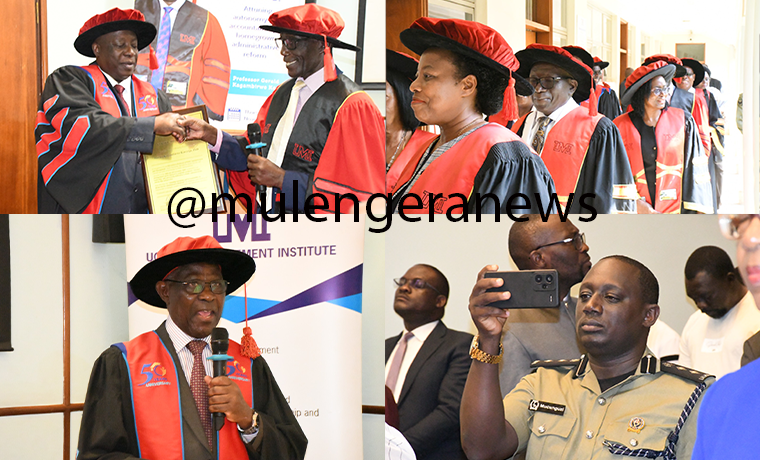
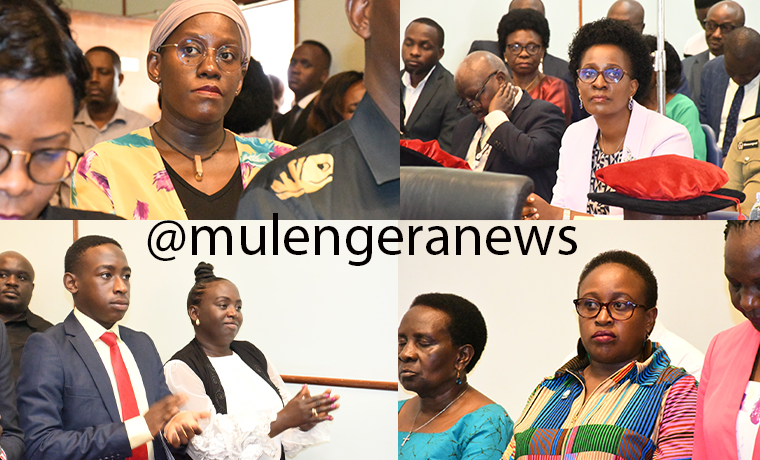
He made the remarks while delivering his inaugural professorial lecture at UMI, an event attended by the former Prime Minister Dr Ruhakana Rugunda, senior government officials like the Director Communication at Parliament Chris Obore, academic leaders, and fellow scholars.

During his address, Prof. Karyeija explained that his long-term study of governance and democratic processes has revealed persistent weaknesses within party systems.
The professor who was among the four professors who were recently appointed by UMI to head departments noted that many political parties still struggle with internal organisation, ideological clarity, and sustainable leadership structures.
He pointed out that these challenges have contributed to the growing influence of independent parliamentary candidates, who in recent elections have surpassed all other political groups in the number of nominations.

According to him, this trend reflects a widening gap between citizens and traditional party platforms.
Prof. Karyeija’s observations emerged from an analysis of his extensive research portfolio, which spans more than 60 publications.
In reviewing his past work, he identified recurring themes relating to network leadership, stakeholder engagement, risk management, service delivery, education policy, and social inequality.
He said that these themes are interconnected with the broader governance environment and the performance of political institutions.
Prof. Karyeija also reflected on his personal journey, stating that his academic philosophy is rooted in institutionalism, administrative culture, and practical policy analysis—an orientation shaped significantly by his upbringing.
His father, a university lecturer, instilled in him humility, reliability, and a commitment to pursuing knowledge for its scientific value, while his mother, a nursery school teacher, influenced his approach to hard work, resilience, honesty, and faith.
He added that early recognition by his teachers, including a certificate for discipline and academic excellence, encouraged him to pursue a life of scholarship.
Prof. Karyeija further acknowledged several professors who had shaped his intellectual development and guided him toward a teaching career. He noted that their mentorship and personal commitment to academic excellence had influenced his own professional ethos.
Turning to his current work, he said he is examining longstanding tensions between administrative and political values—an issue that has remained unresolved for more than a century.
Prof Karyeija transitioned from a public service skills training institute to an alternate degree awarding institute, explained that much of his recent research continues to focus on this area, as it underpins many governance challenges facing African public institutions.
He also highlighted his collaboration with colleagues in the African Association of Public Administration on the revision of a partnership mechanism manual, saying that preliminary findings from their study have revealed new insights that require further investigation.
Additionally, he mentioned ongoing work aimed at strengthening the agility and resilience of trade commissions across Africa.
The lecture was widely described by UMI officials and participants as both a celebration of academic achievement and an important reflection on the governance issues confronting Uganda.
Prof. Karyeija’s warning about the structural weaknesses within political parties underscored the urgency of addressing these challenges to ensure a more stable and accountable political system. (For comments on this story, get back to us on 0705579994 [WhatsApp line], 0779411734 & 041 4674611 or email us at mulengeranews@gmail.com).