







By Ben Musanje
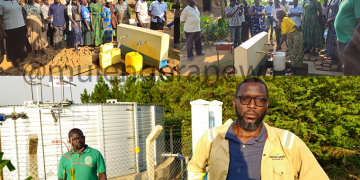
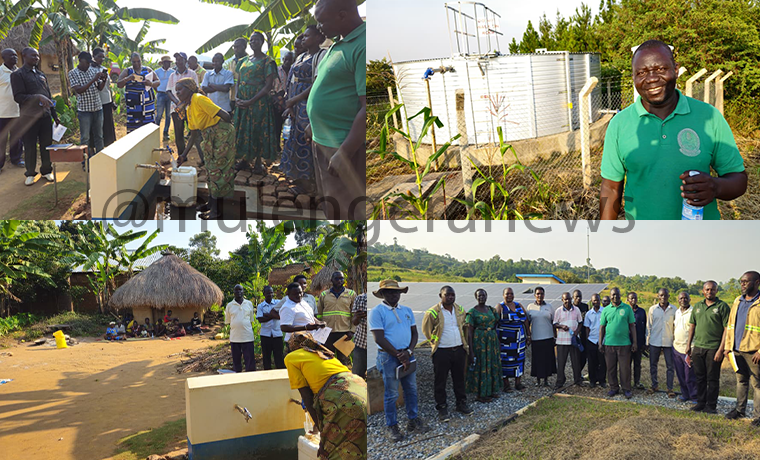
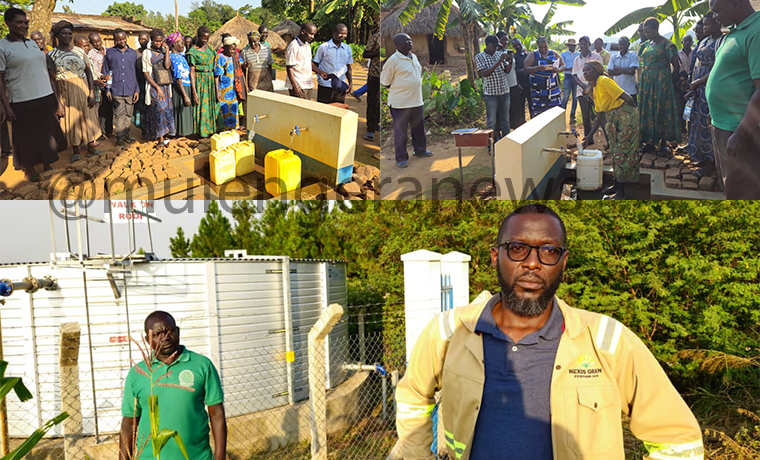
Nebbi District is experiencing a major shift in access to clean water following the installation of a €177,056 solar-powered water system on Apang Hill, even as communities continue to struggle with impassable mountainous roads and lack of electricity.
The project, implemented by the Ministry of Water and Environment through Nexus Green Limited under President Yoweri Museveni’s directive, now supplies seven villages in Ndhew Sub County: Nguthe, Palyech Central, Palyech, Lengi, Awu, Ambere, Nyonguki, Omoyo Central and Omoyo North.
Eunice Atimango, the Nebbi District Woman Councilor for Ndhew Sub County, says the development marks a turning point for an area where a single water source once served up to five villages.

She notes that before the project, residents routinely relied on unsafe, unreliable sources, contributing to frequent illness.

Atimango welcomes the government’s intervention but stresses that the community still faces challenges with poor roads and complete lack of electricity across several villages.
Palyech Village Water Board Chairperson Williams Assa Okwir says the project has already transformed daily life, especially for the elderly who previously endured long walks for contaminated water.
He describes the system as a lifeline that now stretches across more than four kilometers, serving multiple villages that for decades lived without clean water.

Okwir believes the system’s impact will continue to grow if the government extends more service points, particularly to support agricultural activities during dry seasons.
He also urges residents to take responsibility for maintaining the system, noting that community participation is vital for sustainability—from fixing broken pipes to routine cleaning.
Before the installation, he says, everyone relied on polluted tap water or distant gas-field sources, which fueled disease and even domestic tensions caused by the long hours women spent collecting water.
With the new supply in place, he says such conflicts have sharply reduced.
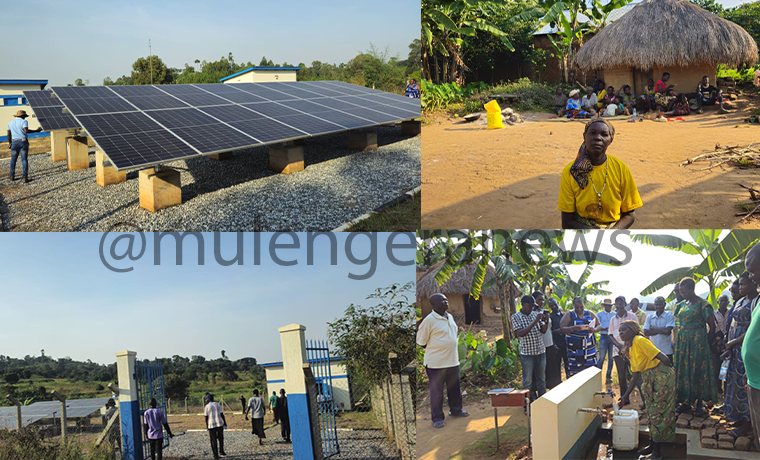
Project Engineer Emmanuel Balwanyi of Nexus Green Limited explains that the system—powered by 36 solar panels of 475 watts peak, additional spares and two lightning-protection panels—was designed with future expansion in mind.
Although only about 500 people currently benefit directly, the infrastructure can support up to 5,000 residents as more households acquire the equipment required for individual connections. Balwanyi notes that demand is high, but many families cannot yet afford connection materials.
Local leader Omar Pithua of Palyech Central village raises concerns about uneven water routing, saying the system initially directed flow toward the Church of Uganda while leaving nearby mosques underserved despite having a larger Muslim population.
He hopes adjustments will ensure fair distribution across all religious and community lines.
The solar-powered water system is expected to serve a total population of 5,908 people and can pump up to 257.9 cubic meters of water per day. For many residents, it is the first visible sign of government development reaching their remote hills.
The project comes as State Minister for Energy and Mineral Development Phionah Nyamutooro whose home district is Nebbi continues her political rise, standing unopposed as the district’s Woman MP.
Residents say the water installation reflects renewed momentum in local service delivery, even as they continue to call for roads, power and expanded access to government programs that will fully lift the district out of decades of hardship.