







By Mulengera Reporters
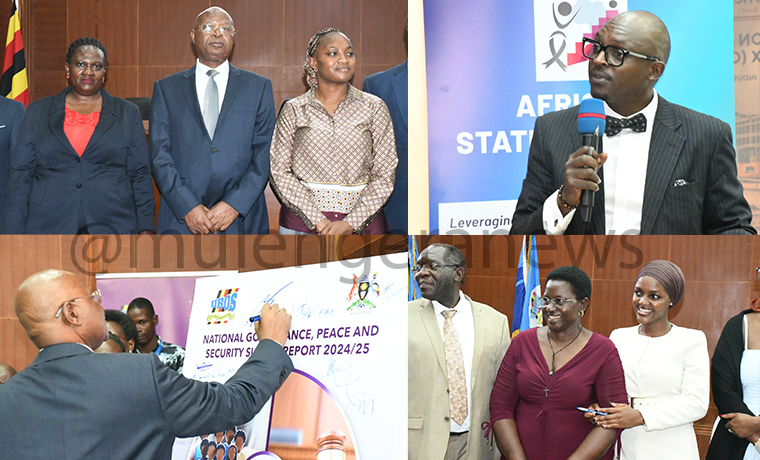
On Tuesday 18th November, Uganda Bureau of Statistics (UBOS) held celebrations to mark the Africa Statistics Day, which was simultaneously marked in every African country.

Each country has what technically is called the National Statistics Office (NSO), which in Uganda’s case is UBOS. The NSOs are charged with collecting data and producing official government statistics to guide evidence-based planning and resource allocation decisions in the respective countries.

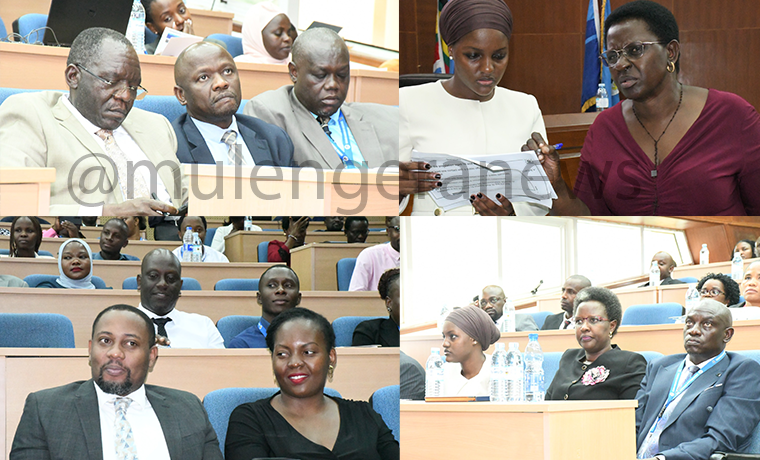
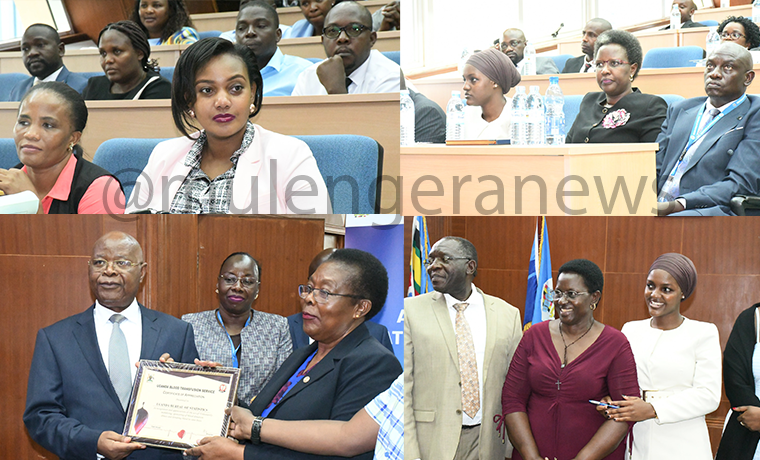
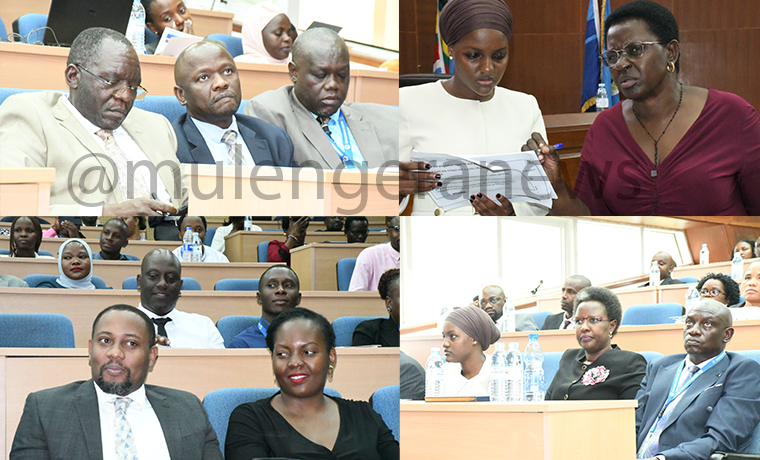
The Tuesday event was held at Statistics House (UBOS headquarters) in Kampala where hundreds of stakeholders converged. Besides journalists, participants came from Uganda Police Force, UN Women, the East African Community Secretariat, the academia and Ministries of Education, Foreign Affairs, Internal Affairs etc.

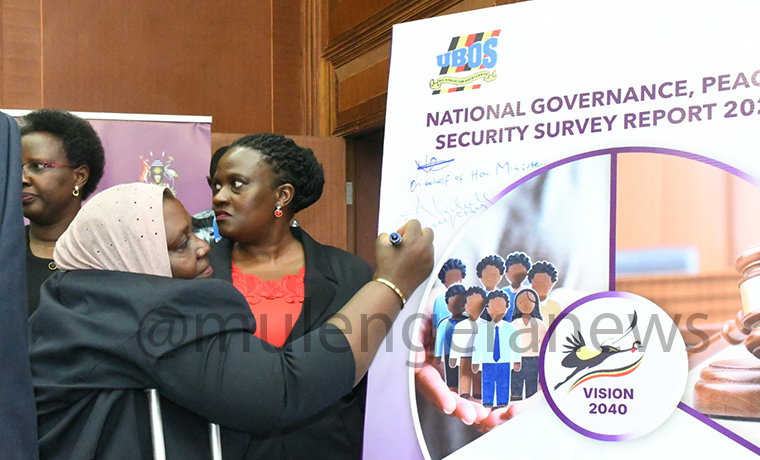
The report, deriving from the survey that UBOS had spent months conducting to get the public’s views on the performance of the GoU’s Governance, Peace & Security program was also disseminated during the Tuesday event.
Among other things, the report revealed levels of public trust and confidence in Justice Law & Order Institutions or MDAs, which fall under the GPS program. The report launching ceremony was presided over by the UBOS line Minister Amos Lugoloobi, who was represented by Ms Rosette Kavuma, a senior technocrat at the Finance Ministry.
There was a plenary session discussion on the findings of the survey and Equal Opportunities Commission Chairperson Hon. Safia Jjuuko Nalule was among those who spoke and commended UBOS for producing such an insightful report, and in a timely manner.
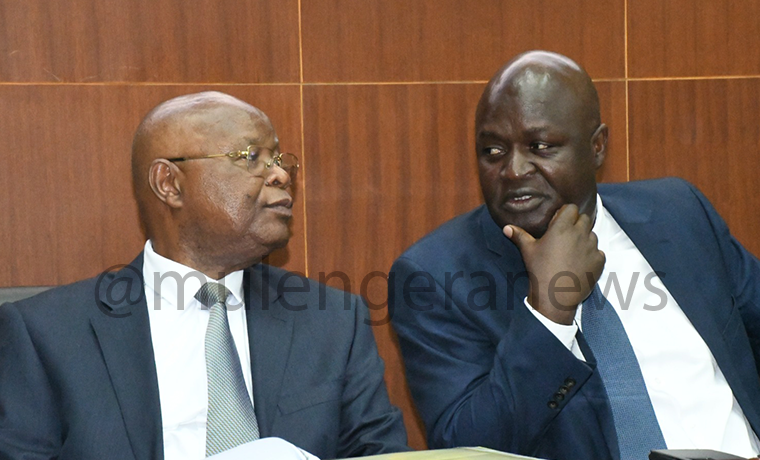
She implored the UBOS Executive Director Dr. Chris Mukiza to deliberately involve EOC and closely work with its researchers next time such a survey gets to be undertaken.
Nalule added that the report would enrich advocacy for EOC as its officials go about lobbying for government programs that are more gender-sensitive and gender-balanced. She said there is a lot of evidence and data in the report, which her affirmative action-oriented Commission can leverage to engage in effective advocacy.
The representative of the UN Women, which rendered financial and technical support which enabled UBOS to conduct the survey, implored the GoU to match its political will with financial will to deliberately fund interventions aimed at inclusiveness and generally bettering the life of all citizens regardless of gender and age.
UBTS BOSS’ MESSAGE:
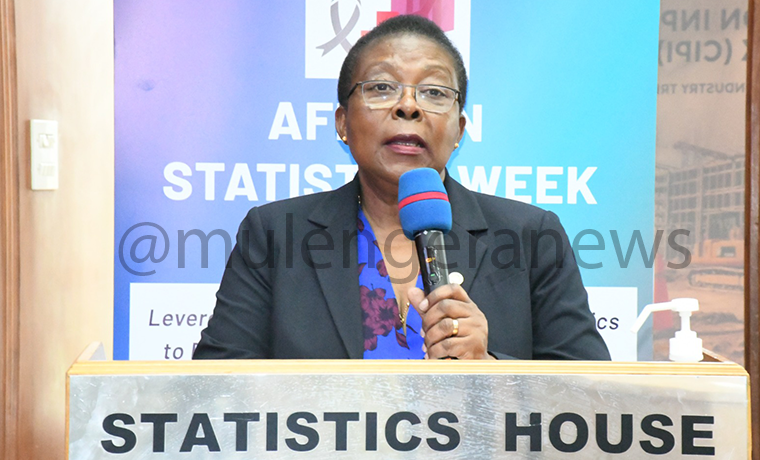
One of the outstanding speakers at the event was Dr. Dorothy Kyeyune, the Executive Director of Uganda Blood Transfusion Services (UBTS), which majority Ugandans simply know as the Nakasero Blood Bank.
She thanked UBOS for flagging the blood donation drive to be one of the weeklong key activities that were carried out to mark the Africa Statistics Day for this year. She revealed that there was an ongoing partnership between UBTS and UBOS to amplify blood donation, leveraging the Africa Statistics Day.
She proudly revealed that in the last 8 years of partnership, the UBOS mobilization had enabled UBTS to collect up to 5,429 units of blood from voluntary blood donors mobilized by UBOS staff working both at the headquarters in Kampala and at regional offices in the upcountry towns and cities.
She also explained that every Ugandan aged 17 years and more, and is ascertained to be in good health, is eligible to donate blood.
Dr. Dorothy Kyeyune also explained that, whereas the WHO protocols require that 10% of the country’s population should regularly engage in active blood donation, out of Uganda’s 49m people, very few ever volunteer to donate. This could be due to lack of awareness and other causes. She said that annually, UBTS annually collects 400,000 units of blood, which falls short of the required blood (namely 600,000 units).
Dr. Kyeyune explained that it’s important that private and public organizations, like UBOS, prioritize blood donation as part of their CSR program because blood can only be got through people donating.
“Even the inadequate quantities we collect can’t last forever because blood expires every after 35 days from the day it was collected. We have to keep replenishing our stocks and this is the only way we can have blood. It can’t be purchased from anywhere and it can’t be manufactured in factories. It’s only through people donating,” she explained.
Thanking UBOS for the opportunity to sensitize and create awareness among the people present at the Tuesday event, Dr. Kyeyune explained that it’s ideal that every woman aged 17 years and more donates blood at least twice a year, and a man thrice.
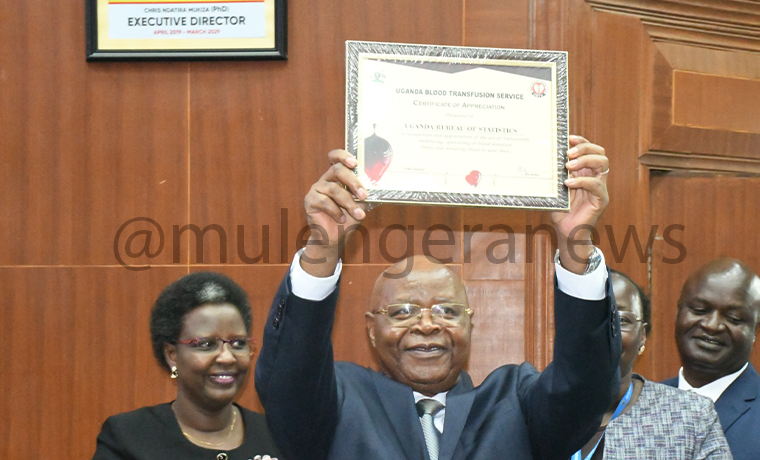
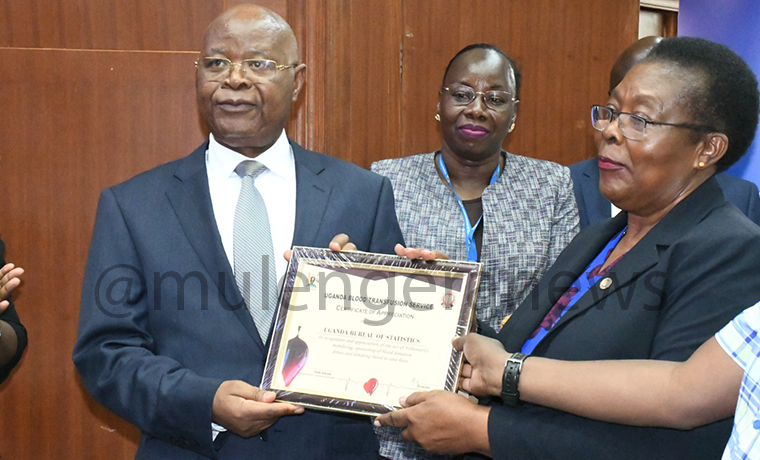
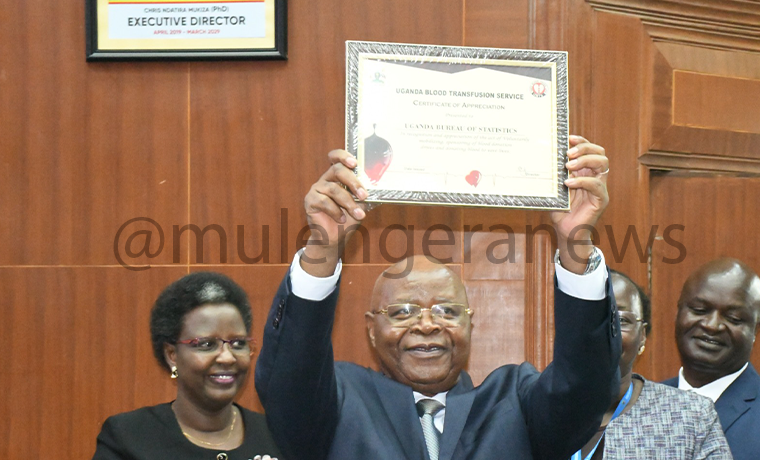
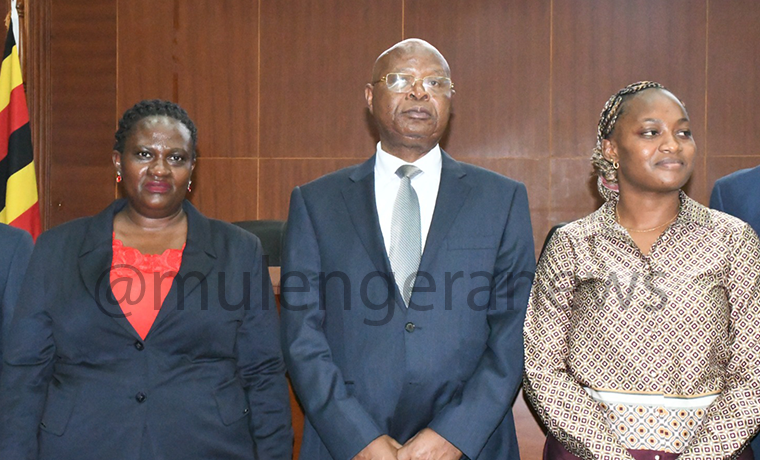
Revealing that the UBOS support and blood donation partnership is only rivalled by that of Uganda Red Cross, an overjoyed Dr. Kyeyune presented Dr. Mukiza with an award of recognition to honour his patriotic leadership and deliberate efforts to support the voluntary donation of blood by his staff and members of the public.
For the last 8 years, UBOS has annually used the Africa Statistics Day awareness-creation activities to roll out blood donation drives in Kampala and at its regional offices in Mbarara, Gulu etc.
Dr. Kyeyune explained that if Ugandans (who can safely do so) are not appropriately mobilized and sensitized to donate, there will be no blood to facilitate critically needed blood transfusion procedures both at government and private hospitals and health facilities.
She explained that blood transfusion ought to be free at both private and public facilities, and no one patient should be made to pay for blood.
Dr. Kyeyune also used the UBOS platform to explain the categories of patients who critically need blood to be quickly transfused into their body. She explained that 60% of the blood UBTS annually collects goes to children who often require blood transfusion because of exposure to mosquito bites which make them anemic and susceptible to malaria, which drains their blood stream.
25% of the blood UBTS collects is used to aid mothers whose childbirth processes get complicated and require surgical operation. Accident victims also require blood transfusion to replace lost blood, without which no human can sustain life for even a minute.
Cancer patients also benefit a lot from the collected blood to replenish their platelets, Dr. Kyeyune explained. Sickle cell patients also thrive on frequent blood transfusion as is the case with heart patients who undergo surgery.
“You know our government has tremendously invested and health systems within Uganda have become greatly improved. As a result of that, many cases are managed locally within the country at Mulago not abroad anymore and many of those complex procedures require blood transfusion. The prevalence of medical tourism out of Uganda is diminishing and that too has increased need for blood to facilitate blood transfusion,” Dr. Kyeyune explained.
She proceeded to make it clear that other government MDAs must emulate UBOS and become more deliberate about aligning blood donation activities more into their CSR programs in order to increase blood donation “because science has so far failed to have in place technology that can give us blood, which is why we have to solely depend on blood collection from voluntary donors.”
Thanking UBOS for the platform that was given to her to amplify the blood donation message, Dr. Kyeyune stressed thus: “Blood has no pharmacy where it can be bought from and can only be got from UBTS blood banks, which require voluntary blood donation to keep replenished.”
The long-serving UBTS boss also expressed fears that in especially these months of November, December and January; there is need to increase outreach programs to recruit new potential blood donors because school children and young adults, from whom a lot of blood is always collected, are going to be inaccessible because of the ongoing national examinations season, which will be followed by the long end of academic year holidays. (For comments on this story, get back to us on 0705579994 [WhatsApp line], 0779411734 & 041 4674611 or email us at mulengeranews@gmail.com).