






By Ben Musanje
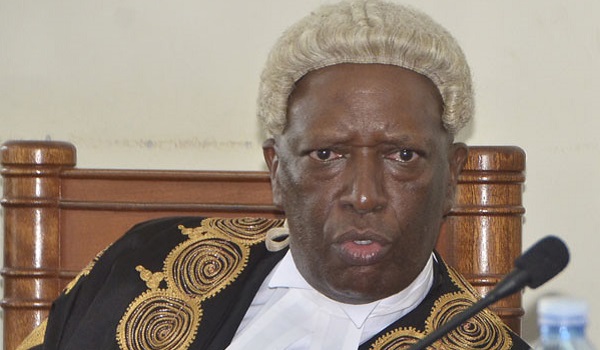
Uganda is gripped by shock, disbelief, and heated debate after controversial city lawyer Shamil Atabua made explosive claims linking his ancestral spirits to the death of former appellate judge Kenneth Kakuru.
Speaking during a public engagement at the Uganda Law Society (ULS) in Kololo on Friday, Atabua stunned listeners when he alleged that after a confrontation in which he said he was assaulted by Justice Kakuru, he warned the judge that his ancestors would deal with him. He suggested that the events that followed including the judge’s painful and highly publicized illness were proof that his warning carried weight.
Justice Kakuru died in March 2023 at the age of 65 at Aga Khan Hospital in Nairobi, Kenya, where he had been undergoing treatment for prostate cancer. His death was officially attributed to cancer. However, Atabua’s dramatic remarks have reopened conversations around the circumstances and sparked emotional reactions across legal and political circles.

The outspoken lawyer did not stop there. He launched a fierce attack on sections of Uganda’s judiciary, alleging that some judges suffer from serious mental health challenges that affect their judgment. According to him, certain judicial officers act irrationally, make inconsistent decisions, and allow personal emotions to influence their rulings.

He claimed that in some cases judges react angrily to criticism, including comments on social media, and then issue arrest warrants or contempt of court orders in what he described as emotional retaliation. He painted a picture of tension within the Court of Appeal, alleging that some judges refuse to sit on the same panel with colleagues they view as unstable or unpredictable.
In one of the most startling claims, Atabua said that on one occasion, a judge allegedly turned away and left the court premises after spotting him, reportedly out of fear of suffering the same fate as Justice Kakuru. The story has since circulated widely, fueling speculation and intense discussion within legal circles.
Atabua insisted that he does not tolerate corruption in the judiciary and argued that judges who accept bribes or abuse their office should be retired in the public interest. He claimed that questionable rulings have caused suffering to families and businesses, leaving lasting damage. He urged both the Chief Justice and the President to act decisively against what he described as corrupt or mentally unfit judicial officers.

His remarks have sharply divided public opinion. Critics say the statements are reckless, inflammatory, and disrespectful to the memory of a deceased judge. Others argue that beneath the sensational language lies a deeper frustration with accountability and transparency within the justice system.
As the controversy rages, the Uganda Law Society has stepped forward to address a related but broader concern — the mental and physical well-being of lawyers themselves.
The Society’s Vice President, Anthony Asiimwe, acknowledged that the legal profession is extremely demanding. He explained that lawyers often work long hours, spend days researching complex matters, and face intense pressure in courtrooms. He warned that many legal professionals silently suffer from stress-related illnesses, depression, and burnout.
He revealed that leadership within the Law Society has made member well-being a priority. The organization has entered partnerships to promote sports and physical activity among lawyers, encouraging participation in football leagues and other recreational events. The aim, he explained, is to create outlets for stress and promote healthier lifestyles within the profession.
Asiimwe also highlighted the Society’s Health Care Benevolent Fund, which supports members who fall seriously ill or lose their lives. He stressed that lawyers should rely more on institutional support systems instead of turning to emergency fundraising efforts when tragedy strikes. He emphasized that a lawyer’s greatest asset is mental clarity, warning that if the mind breaks down, the entire profession — and even the country — suffers.
Meanwhile, the Law Society teased what it described as a major upcoming announcement, referred to as Executive Order Number 7. Although details remain confidential as drafts are finalized, the promise of a significant development has added yet another layer of anticipation to an already tense atmosphere.
The combination of spiritual claims, accusations of judicial instability, calls for public-interest retirements, and urgent warnings about mental health has created a perfect storm in Uganda’s legal community.
For now, the judiciary has not issued an official response to Atabua’s sensational statements. But inside court corridors, law offices, and public debate platforms, the conversation is growing louder by the day.
What began as a bold claim about ancestral spirits has turned into a national debate about mental health, judicial integrity, and the hidden pressures inside Uganda’s justice system. And the country is watching every move. (For comments on this story, get back to us on 0705579994 [WhatsApp line], 0779411734 & 041 4674611 or email us at mulengeranews@gmail.com).