






By Aggrey Baba
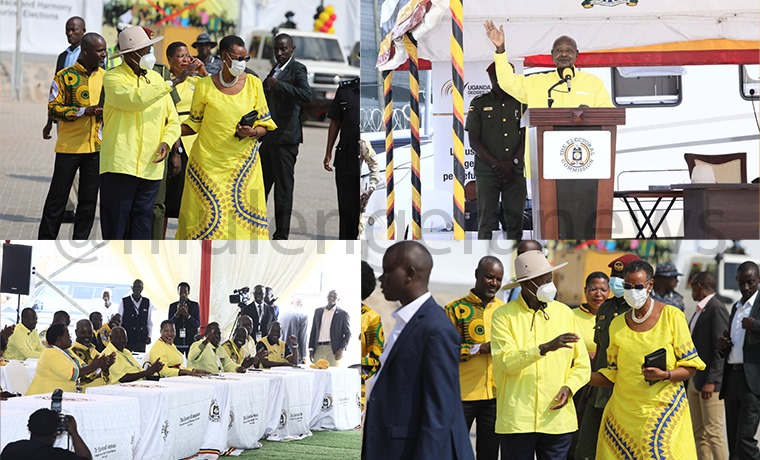
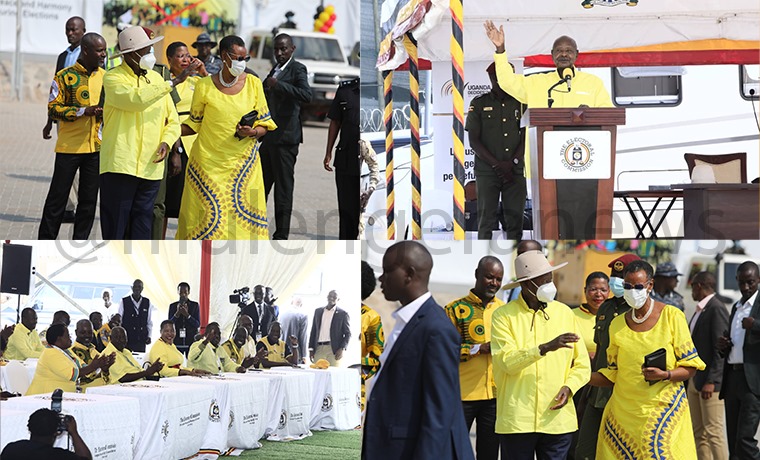
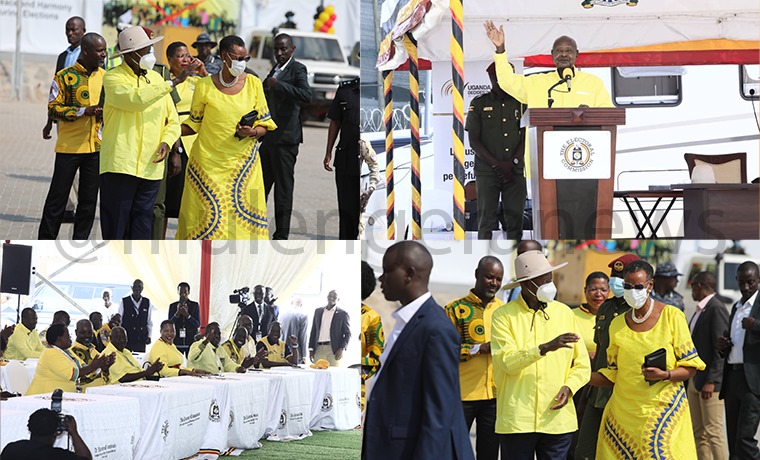
At President Yoweri Museveni’s post-nomination rally in Kololo on Tuesday, First Lady and Education Minister Janet Kataha Museveni pledged a renewed government push to construct classrooms in schools where pupils still study under trees, a promise delivered amid a broader message from Museveni about imbalances in school distribution across the country.
Addressing thousands of NRM supporters gathered for Museveni’s nomination celebration, Kataha acknowledged that classroom shortages remain a real problem in many rural areas. She said the government has identified schools with the most urgent needs and committed to building and rehabilitating classrooms to ensure children no longer have to study outdoors.
“We know that some of our children are still studying under trees, and we cannot ignore this reality. Government is committed to ensuring that more classrooms are built in schools with dire need,” she noted.
Her pledge came with a call for continued political support for the NRM, stressing that completing ongoing education projects depends on another five years for Museveni. The First Lady urged voters to re-elect the President to allow the government to finish infrastructure work that she said is still unfinished.

Museveni used the same platform to expand on systemic problems in Uganda’s education footprint. He pointed to a mismatch between administrative units and schooling infrastructure, noting there are roughly 10,700 parishes but about 12,500 primary schools, a distribution he called careless when some parishes host multiple government primary schools while others have none.

He also warned that rapid increases in administrative units, from about 1,000 sub-counties to 2,000, had outpaced the growth in public secondary schools, of which he said there are roughly 1,500.
Museveni also argued that priorities must favour service delivery such as classrooms and schools before creating new administrative structures. His comments reflect a long-running government debate over resource allocation between new political units and essential public services.
The Education Minister also addressed an ongoing teachers’ salary dispute, criticizing an industrial action by arts teachers over perceived pay disparities. She urged teachers to continue teaching while the government works on salary enhancements, adding that salary reviews are underway for arts teachers and civil servants more broadly.

The announcements come against a backdrop of growing public concern about the state of education infrastructure, especially in remote districts where children still sit under trees for lessons or use dilapidated classrooms, a concern which was raised by a journalist, at the EC headquarters Lubowa, shortly after Museveni’s nomination.
Government statistics and independent education actors have repeatedly highlighted overcrowding, teacher shortages, and decaying facilities as barriers to learning outcomes.
Mrs. Museveni’s announcement at a presidential rally, just after her husband’s nomination, folds a public-service promise into a high-stakes political event, underscoring how education pledges are being mobilised in the run-up to the 2026 elections. Critics may view the move as campaign messaging, while supporters argue it makes government intentions public and accountable.