





By David Serumaga
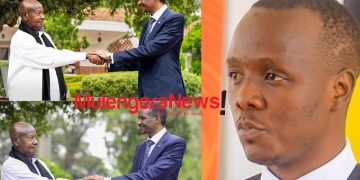
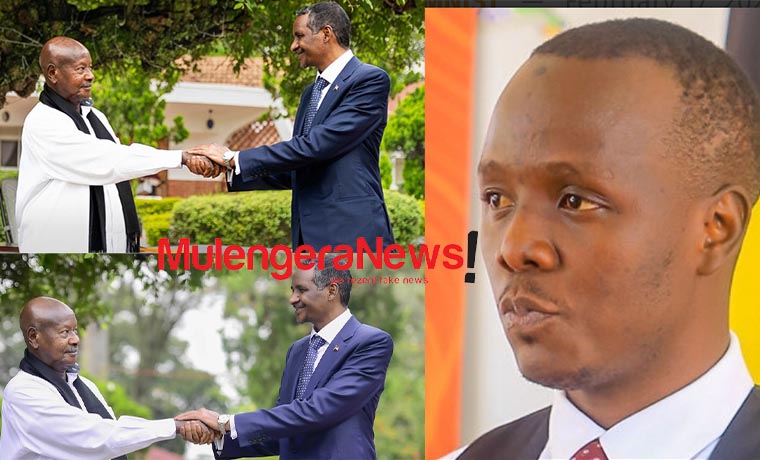
On Friday, 20th February 2026, the President of the Republic of Uganda, H.E. Yoweri Kaguta Museveni, hosted General Mohamed Hamdan Dagalo, Commander of Sudan’s paramilitary Rapid Support Forces (RSF), at State House Entebbe. The meeting comes at a time when Sudan remains engulfed in a devastating conflict between the RSF and the Sudanese Armed Forces (SAF), a war that began in 2023 and has since claimed more than 24,000 lives while displacing millions. Families have been torn apart, communities uprooted, and access to food, medicine and shelter severely disrupted, making it one of the gravest humanitarian crises in recent history.
In line with the principle of African-led solutions to African challenges, the African Union (AU) entrusted President Museveni with a mediation role in the Sudan conflict. The AU cited his extensive experience in regional diplomacy and peace-building efforts across the continent as key to this responsibility, particularly at a moment when several international initiatives have struggled to secure a lasting ceasefire.
During its 1308th emergency session, the African Union Peace and Security Council (PSC), acting under Article 7 of its Protocol, directed President Museveni to urgently facilitate negotiations between the warring parties. In this capacity, he is expected to engage both sides toward an unconditional cessation of hostilities and to advocate for the immediate opening of humanitarian corridors, enabling life-saving assistance to reach civilians caught in the crossfire.
The engagement at State House therefore forms part of broader continental efforts to restore dialogue, reduce suffering, and create conditions for stability in Sudan. At its heart lies a simple but urgent objective: to silence the guns and give the Sudanese people a chance to rebuild their lives in peace.

In undertaking this assignment, President Yoweri Kaguta Museveni is expected to encourage a genuinely inclusive political process in Sudan—one that brings all key actors to the table and steers the country away from fragmentation or competing centres of authority. Sustainable peace cannot grow from exclusion. It must rest on dialogue that reflects the diverse voices and aspirations of the Sudanese people.
It is therefore regrettable that some officials within Sudan have criticised the engagement, describing it as an “affront to humanity” or a breach of international law. Dialogue, particularly in moments of deep conflict, is not endorsement. It is a necessary bridge toward de-escalation. Engagement with General Mohamed Hamdan Dagalo, commander of the Rapid Support Forces, forms part of wider efforts to bring all parties toward a cessation of hostilities. Mediation requires speaking to those directly involved in the conflict, however difficult that may be.
As Chair of the African Union Peace and Security Council process on the Sudan crisis under the mandate of the African Union, President Museveni’s role is to facilitate dialogue—not to take sides. His focus is to encourage a shift away from divisive politics rooted in identity, whether ethnic or religious, and toward a framework centred on national interest, stability and the welfare of ordinary citizens whose lives have been disrupted by war.

President Museveni’s track record in regional peace efforts has shaped the confidence placed in him by continental leaders. In South Sudan, he has played a consistent role in supporting stability during periods of political uncertainty. In March 2025, at the request of President Salva Kiir Mayardit, Uganda deployed elements of the Uganda People’s Defence Forces to help prevent a relapse into widespread violence. The objective was to avert further suffering and institutional collapse, allowing space for governance structures to function and communities to resume normal life.
Uganda’s stabilisation efforts have not been confined to one country. The Uganda People’s Defence Forces have contributed to regional security initiatives in the Democratic Republic of the Congo and in Somalia, where sustained regional cooperation has gradually supported recovery from prolonged instability. These engagements reflect a broader commitment to preventing state collapse and mitigating humanitarian crises within the region.

Seen in this light, the meeting between President Museveni and General Dagalo should be understood as part of a wider continental responsibility to reduce violence and restore dialogue. Peace processes are rarely linear, and they often begin with difficult conversations. For the people of Sudan—families displaced, children out of school, communities fractured—the priority is not rhetoric, but relief and reconciliation. It is toward that end that the mediation effort is directed. The Writer Works with Uganda Media Centre and a Student of Law. (For comments on this story, get back to us on 0705579994 [WhatsApp line], 0779411734 & 041 4674611 or email us at mulengeranews@gmail.com).