






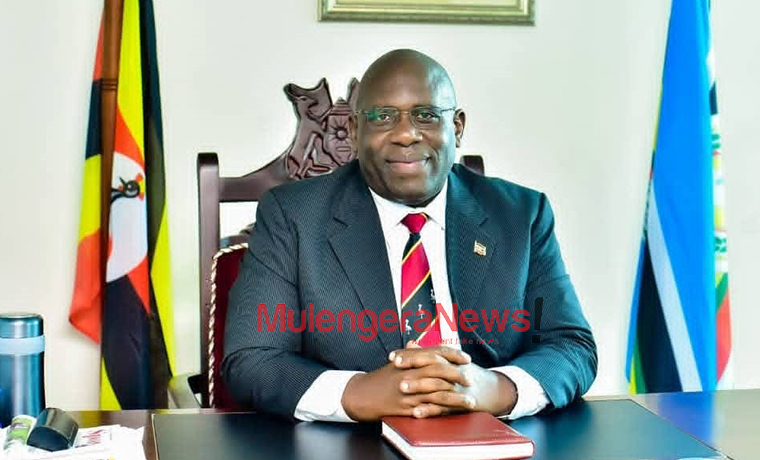
By Asuman Kiyingi
The Social Contract and the Promise of 1995
A constitution derives its authority not simply from its enactment, but from the continuing willingness of those who exercise state power to remain bound by it. It is, at its core, a political covenant—a social contract through which citizens surrender part of their natural liberty in exchange for security, justice, accountable government, and the impartial protection of their rights.
This principle lies at the heart of modern constitutionalism. John Locke argued that free people consent to establish governments to protect life, liberty, and property. Jean-Jacques Rousseau maintained that sovereignty ultimately resides in the people, who delegate authority to institutions created to serve the common good. Modern constitutions therefore perform two reciprocal functions: they empower governments to govern, but they also restrain governments from abusing that power.

Citizens obey the law because they trust that those entrusted with public authority will themselves obey the Constitution. Every constitutional democracy experiences occasional violations of law, which functioning institutions can correct. A true crisis begins, however, when violations become systematic, when oversight institutions become unable or unwilling to correct them, and when constitutional guarantees exist only on paper while executive discretion becomes the principal regulator of political life.

That, increasingly, is the constitutional question confronting Uganda.
Thirty years ago, Uganda appeared to have broken decisively with its history of constitutional instability. The 1995 Constitution emerged from one of the most extensive consultative processes on the African continent. The Odoki Constitutional Commission gathered submissions from ordinary citizens, religious leaders, cultural institutions, and political organisations. Ugandans overwhelmingly expressed a desire for accountable government, judicial independence, respect for fundamental rights, civilian supremacy over the military, and safeguards against a return to authoritarian rule.
The resulting charter was celebrated as one of Africa’s most progressive constitutional settlements. It contained an extensive Bill of Rights, entrenched judicial review, recognised decentralisation, restored traditional cultural institutions, and sought to permanently remove the armed forces from partisan politics.

Three decades later, however, an uncomfortable question now lingers: Has the constitutional settlement negotiated in 1995 progressively lost the legitimacy upon which it was founded?
This question does not arise because particular political actors have become unpopular. It arises because Uganda increasingly exhibits a pattern in which the Constitution’s most fundamental guarantees are repeatedly challenged without effective institutional correction. When this occurs over a prolonged period, it becomes a question of whether the underlying social contract itself requires peaceful renegotiation.
The Constitution Under Strain
Perhaps nowhere is this tension more visible than in Article 208 of the Constitution. The framers understood Uganda’s painful history of military intervention. Article 208 was drafted in unequivocal language, requiring the Uganda People’s Defence Forces (UPDF) to be non-partisan, national in character, patriotic, professional, disciplined, and subordinate to civilian authority.
Recent developments have inevitably raised questions about whether that constitutional firewall remains intact. The emergence and rapid expansion of the Patriotic League of Uganda (PLU), publicly championed by General Muhoozi Kainerugaba while serving as Chief of Defence Forces, has generated significant constitutional debate.
The issue is not whether General Muhoozi enjoys political rights as a citizen. The narrower institutional question is whether the serving commander of the national armed forces can simultaneously remain constitutionally non-partisan while leading sustained political mobilisation connected to future presidential succession.
The concern arises from the constitutional danger created when the distinction between military command and partisan political organisation becomes blurred while an officer remains in active command. Article 208 exists precisely to ensure that the armed forces belong equally to every Ugandan citizen, regardless of political affiliation.
This issue assumes greater significance when viewed alongside the Supreme Court’s landmark decision in Attorney General v Hon. Michael Kabaziguruka, which held that military courts lack constitutional jurisdiction to try civilians because they do not possess the institutional independence required of courts exercising judicial power over ordinary citizens.
Yet constitutional legitimacy depends upon faithful implementation. When authoritative judgments encounter hesitation, delay, or selective application, public confidence shifts from faith in institutions to uncertainty about whether constitutional guarantees remain practically enforceable.
The same concern arises regarding personal liberty. Article 23 guarantees that no person shall be deprived of liberty except according to law, requiring detainees to be brought before a court within forty-eight hours. Article 24 absolutely prohibits torture and cruel, inhuman, or degrading treatment.
Nevertheless, persistent reports of arrests by unidentified security operatives travelling in unmarked vehicles—popularly known as “drones”—together with reports of prolonged incommunicado detention, have generated increasing public anxiety.
Specific incidents involving prominent Ugandans have brought these questions into national focus.
The reported abduction and detention of former Kampala Lord Mayor Erias Lukwago illustrates why these issues extend beyond individual fortunes. Seized while engaged in legal work and held incommunicado, Lukwago was produced before court in visibly poor health. The controversy deepened following public statements attributed to General Muhoozi Kainerugaba on his verified X account acknowledging that Lukwago had been tortured.
Such an acknowledgment by the CDF raises an extraordinary constitutional question: How can a constitutional democracy reconcile the acknowledged torture of a citizen with Article 24’s absolute prohibition?
Similarly, the public abduction of Hon. Muhammad Muwanga Kivumbi, captured on camera by NBS Television as he was taken away by security operatives, has intensified concern. His whereabouts remain unknown after more than 10 days of incommunicado detention, raising urgent questions regarding compliance with Article 23.
An individual’s constitutional rights cannot depend upon political popularity or acceptability. The essence of constitutionalism is that even critics of government remain entitled to the protection of the law. When access to family, legal representation, personal doctor, and judicial supervision becomes uncertain in politically sensitive cases, confidence in constitutional guarantees diminishes for everyone.
Uganda’s Recurrent History of Broken Compacts: Uganda’s present predicament forms part of a longer historical pattern where successive constitutional settlements have struggled to survive when political competition became dominated by the concentration of power and the control of coercive institutions.
The 1962 Independence Constitution represented Uganda’s first attempt to reconcile a modern nation-state with historical kingdoms and identities. It was a negotiated political settlement that recognised regional autonomy, but it was severely tested when national political competition intensified.
The 1966 constitutional crisis and the 1967 Constitution marked a major rupture. The conflict between the central government and the Buganda Kingdom escalated into the suspension of the constitutional order and the military attack on the Lubiri. This established a dangerous precedent: that constitutional disputes could be resolved through state coercive power rather than negotiation.
The subsequent 1967 Constitution entrenched a highly centralised model that concentrated authority within the executive, ultimately creating conditions for the military takeover of 1971.
The 1985 Nairobi Peace Agreement sought to establish a framework for transition and reconciliation between the military government and the National Resistance Army (NRA). However, before the agreed arrangements could mature, military victory displaced political compromise when the NRA captured Kampala in January 1986.
The 1995 Constitution was designed to break this historical cycle by replacing the politics of force with the politics of law. As legal scholars Professors Frederick Jjuuko and Sam Tindifa observe in their analysis of Ugandan political settlements, these historical milestones have often functioned as elite-driven accommodations rather than enduring social contracts.
Because these frameworks were frequently transactional pacts constructed to preserve immediate political interests, they remained inherently fragile.
Consequently, over the years, several constitutional amendments have fundamentally altered the architecture of 1995, including the removal of presidential term limits in 2005 and age limits in 2017. While undertaken through legally established parliamentary procedures, the deeper question is whether repeated alterations to foundational safeguards have weakened public confidence in the settlement itself.
As Jjuuko and Tindifa’s critique suggests, a constitution can be legally amended while its underlying social contract becomes progressively hollowed out and fragile.
Why Buganda and Busoga Should Convene a Sovereign National Conference: History demonstrates that national dialogues rarely emerge spontaneously. They usually begin through a coalition of institutions or communities possessing sufficient legitimacy and organisational capacity to create a platform for wider national participation.
Benin’s historic 1990 Sovereign National Conference emerged from an alliance of civic and religious institutions, while Kenya’s constitutional reform process developed through sustained engagement among political actors and civil society before culminating in the 2010 Constitution.
Uganda’s own constitutional history demonstrates that when the political settlement becomes contested, the answer cannot always be found within the ordinary mechanisms created by that same settlement. At such moments, the people—the ultimate source of constitutional authority—must have an opportunity to deliberate on the future direction of the state.
In my considered view, the most credible constitutional nucleus to initiate such a process in Uganda lies in a partnership between Buganda and Busoga—not because these regions possess a superior claim over Uganda’s future, but because they combine historical legitimacy, economic influence, demographic significance, and strategic national assets capable of providing a platform for a broader national conversation.
Their role would be fundamentally different: to convene, not to control; to open the door, not to occupy the room.
Buganda remains Uganda’s principal economic engine. The Greater Kampala Metropolitan Area contains the largest concentration of national economic activity, hosting Parliament, the central bank, manufacturing industries, major universities, and Entebbe International Airport. Buganda’s contribution would arise from this present-day institutional capacity and economic significance.
Busoga represents one of the country’s most important strategic resource frontiers. It hosts critical energy infrastructure along the Nile corridor—including the Nalubaale, Kiira, Bujagali, and Isimba hydroelectric stations—which form the foundation of Uganda’s energy security.
Furthermore, the emerging Makuutu Rare Earth Project in Mayuge and Iganga positions Busoga as a region of global strategic importance. The governance of rare earth elements raises fundamental constitutional questions concerning national sovereignty, resource ownership, revenue sharing, and distributive justice.
However, the purpose of involving Buganda and Busoga is not to elevate two regions above others. On the contrary, it is precisely to demonstrate that every constituent community of Uganda brings immense value to the national table.
The outdated assumption that some regions are permanently resource-poor and therefore dependent on central government control has been challenged by Uganda’s evolving resource map.
Bunyoro and Acholi possess significant oil resources. Karamoja has substantial mineral wealth, including gold and marble deposits. Buganda and surrounding regions remain central to Uganda’s agricultural economy through coffee—our enduring “black gold.” Busoga possesses strategic energy and mineral resources, including uranium potential that places it at the centre of future energy discussions.
Tooro contributes extraordinary environmental, tourism and cultural assets. Ankole contributes agricultural and livestock strength. Acholi offers invaluable experience in peacebuilding and post-conflict recovery. Lango, Teso, Bugisu, Bukedi, Sebei and West Nile each possess distinct economic, cultural and strategic capabilities.
The myth of the “impoverished region” has therefore been permanently challenged by geography. Uganda is not a country lacking resources; it is a country whose governance arrangements have struggled to ensure that national wealth is translated into equitable development.
This widespread and decentralised wealth provides the material foundation for a more equitable system of governance, whether through meaningful devolution or a federal arrangement negotiated through national consensus.
A Sovereign National Conference is therefore not a luxury. It is an urgent mechanism through which Uganda can determine how its collective wealth, diversity and aspirations can be organised into a more legitimate political order.
A Sovereign National Conference also differs fundamentally from an ordinary parliamentary process. Parliament derives its authority from the existing Constitution; it exercises constituted power. The people, however, possess the original democratic authority from which constitutions derive their legitimacy; they exercise constituent power.
When the foundational constitutional settlement itself becomes the subject of national concern, legitimacy must ultimately return to the people.
This does not mean rejecting Parliament or abolishing constitutional institutions. Rather, it recognises that there are moments in a nation’s history when ordinary institutions may lack the political capacity to resolve fundamental structural questions.
A Parliament whose members are products of the existing political settlement may find it difficult to undertake reforms that fundamentally alter the very structures within which they operate. Expecting a highly partisan legislative body to voluntarily limit executive dominance, enforce absolute military neutrality, or redesign the distribution of national resources presents an inherent institutional challenge.
A Sovereign National Conference would therefore serve as an inclusive vehicle of citizen participation, operating alongside existing institutions to address unresolved national questions. It would not claim authority above the Constitution; rather, it would seek to renew the constitutional covenant upon which state legitimacy depends.
Its mandate would include addressing questions such as land justice, regional equity, federalism or meaningful devolution, military neutrality, judicial independence, corruption, and fair governance of national resources.
Professor Wangoola-Wangoola Ndawula has described one of the enduring dilemmas of post-colonial states as the tension between constitutional government and “Gun Power”—the reality that coercive authority too often becomes the ultimate guarantor of political power.
A Sovereign National Conference offers Uganda a peaceful constitutional response to that dilemma. It seeks to ensure that political authority derives from consent rather than coercion, from institutions rather than personalities, and from law rather than force.
It is constitutional renewal, not constitutional destruction.
Conclusion: Refounding Uganda Through Consent: A constitution survives not because it is written, but because those who exercise power accept that they, too, are bound by it.
The choice before Uganda is not between preserving the 1995 Constitution and abandoning constitutionalism. The real choice is whether to allow the gap between constitutional promise and constitutional practice to continue widening, or to create a peaceful national mechanism to renew the political covenant upon which the Republic rests.
Properly constituted, a Sovereign National Conference would bring together government, opposition, traditional institutions, religious leaders, civil society, the private sector and citizens from every region as equal partners.
Its purpose would not be to assign victory to one political faction or region. Its purpose would be to restore the principle upon which every genuine democracy rests: that sovereignty ultimately belongs to the people.
Thirty years after the adoption of the 1995 Constitution, Uganda has reached a moment of constitutional reflection. The country must decide whether its future will continue to be shaped by recurring cycles of political contestation and institutional strain, or whether it can peacefully renew its national compact through dialogue, consent and inclusion.
The ultimate question is not whether Uganda needs another Constitution merely for the sake of changing text. The deeper question is whether Ugandans can rebuild the trust between the governed and those who govern.
A Sovereign National Conference provides an opportunity to do precisely that: to transform constitutional frustration into constructive national renewal.
That is the conversation Uganda can no longer postpone. The writer is a senior advocate, former Member of Parliament and former Minister. (For comments on this story, get back to us on 0705579994 [WhatsApp line], 0779411734 & 041 4674611 or email us at mulengeranews@gmail.com).