







By Mulengera Reporters
Communities living around wetlands in southwestern Uganda are urging the government to increase investment in fish farming as a sustainable alternative to farming practices that have long damaged wetland ecosystems.
Residents from the Kigezi and Ankole sub-regions say aquaculture offers a promising livelihood option after they voluntarily abandoned unsustainable agricultural practices within wetlands. “Fish farming has proven to be the most viable alternative enterprise so far,” said a former wetland farmer from Rukungiri District. “I have over 50 acres of land that could be used for fish farming if the government helps establish the infrastructure.”
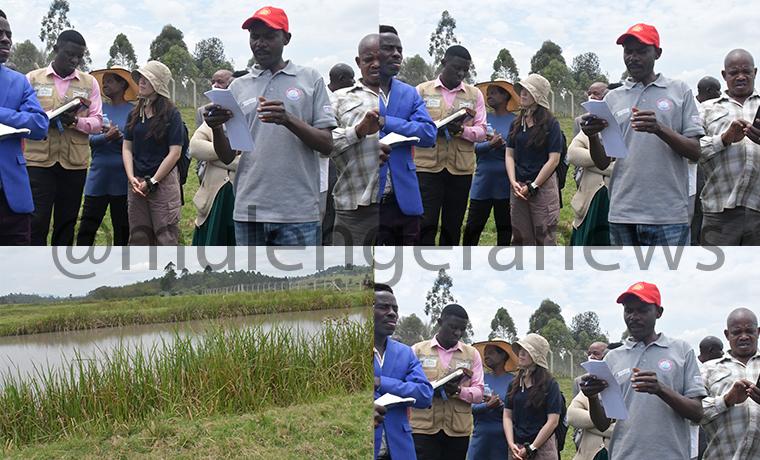
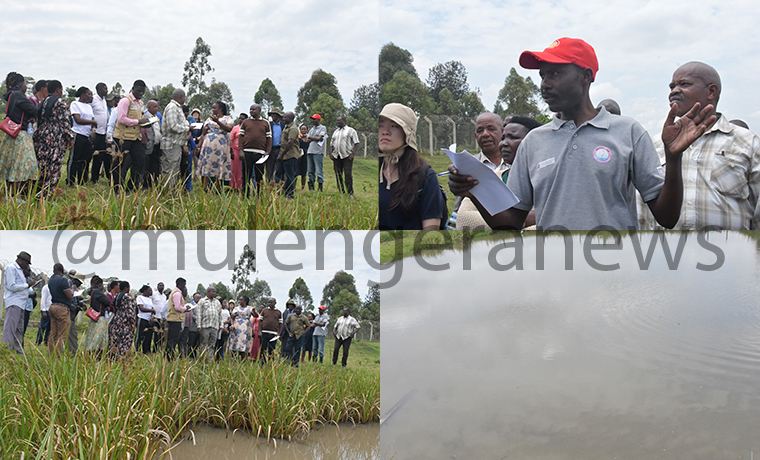
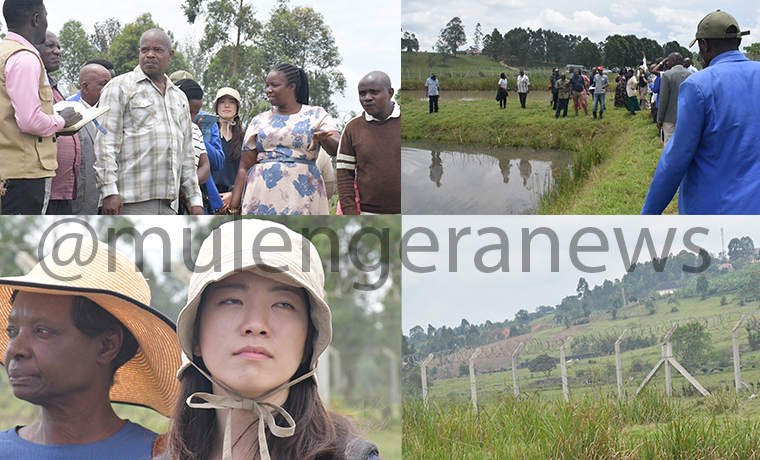
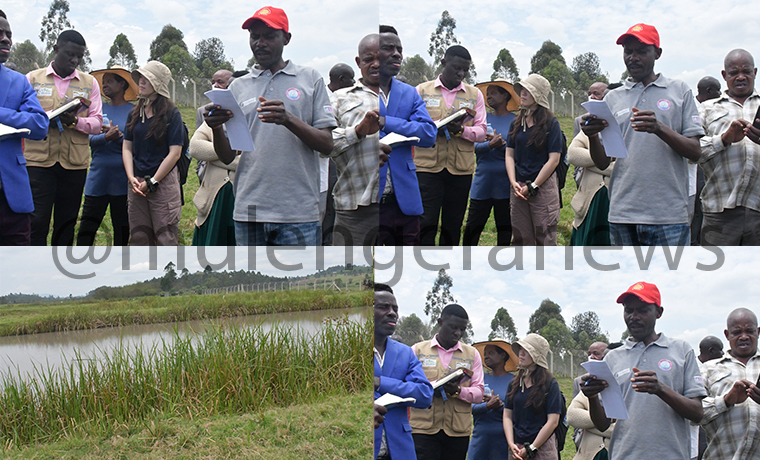
Thirty former wetland users from the districts of Rukiga, Ntungamo, Kabale, Rukungiri, and Kisoro recently undertook a study tour to Bushenyi and Kisoro to learn from government-supported livelihood initiatives. The tour aimed to expose participants to practical examples of sustainable enterprises such as fish farming, beekeeping, and water retention systems that promote environmental conservation and climate resilience.

According to Tom Okello, the National Project Coordinator, the initiative is part of the Building Resilient Communities, Wetlands Ecosystems and Associated Catchments in Uganda project, jointly supported by the Government of Uganda, the Green Climate Fund (GCF), and the United Nations Development Programme (UNDP).

One of the model sites visited was in Bushenyi District, where the Nyaruzinga Wetland — the community’s main water source — was restored under the project. The site now hosts six fish ponds and a water retention facility managed by the Nyakabirizi Fish Farmers Association. The association, chaired by Mr Pison Nuwareeba, comprises 68 members, including men, women, youth, and persons with disabilities, organised into three sub-groups: Bumbaire, Central, and Rwenjeru.
Since the ponds’ establishment in 2022, the group has recorded steady progress. The first harvest in August 2023 yielded 4,000 tilapia and 2,000 catfish, generating UGX 28 million (approx. USD 7,300). The second harvest in June 2024 produced 55,000 tilapia and 2,000 catfish, earning UGX 48.5 million (approx. USD 12,600). The group anticipates even higher returns in their upcoming harvest scheduled for October 2025.
Beyond income generation, members have reported improved livelihoods — including the ability to pay school fees and the establishment of a local savings and credit cooperative (SACCO). However, challenges persist. “We still face threats from predators like eagles and snakes, and the cost of feeds and labour remains high,” said Nuwareeba. Mr Vincent Kataate, the Bushenyi District focal person, noted that most of the beneficiaries were previously wetland farmers who transitioned into aquaculture. “This approach allows them to maintain stable livelihoods while supporting wetland restoration and promoting sustainable practices,” he explained.
As Uganda continues to balance ecological conservation with community livelihoods, scaling up such initiatives could play a key role in restoring degraded ecosystems while boosting food security and rural incomes. (For comments on this story, get back to us on 0705579994 [WhatsApp line], 0779411734 & 041 4674611 or email us at mulengeranews@gmail.com).