


By Ben Musanje
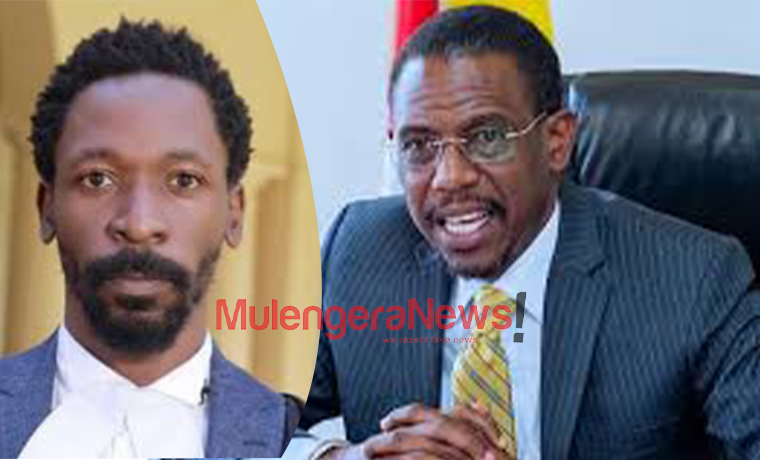
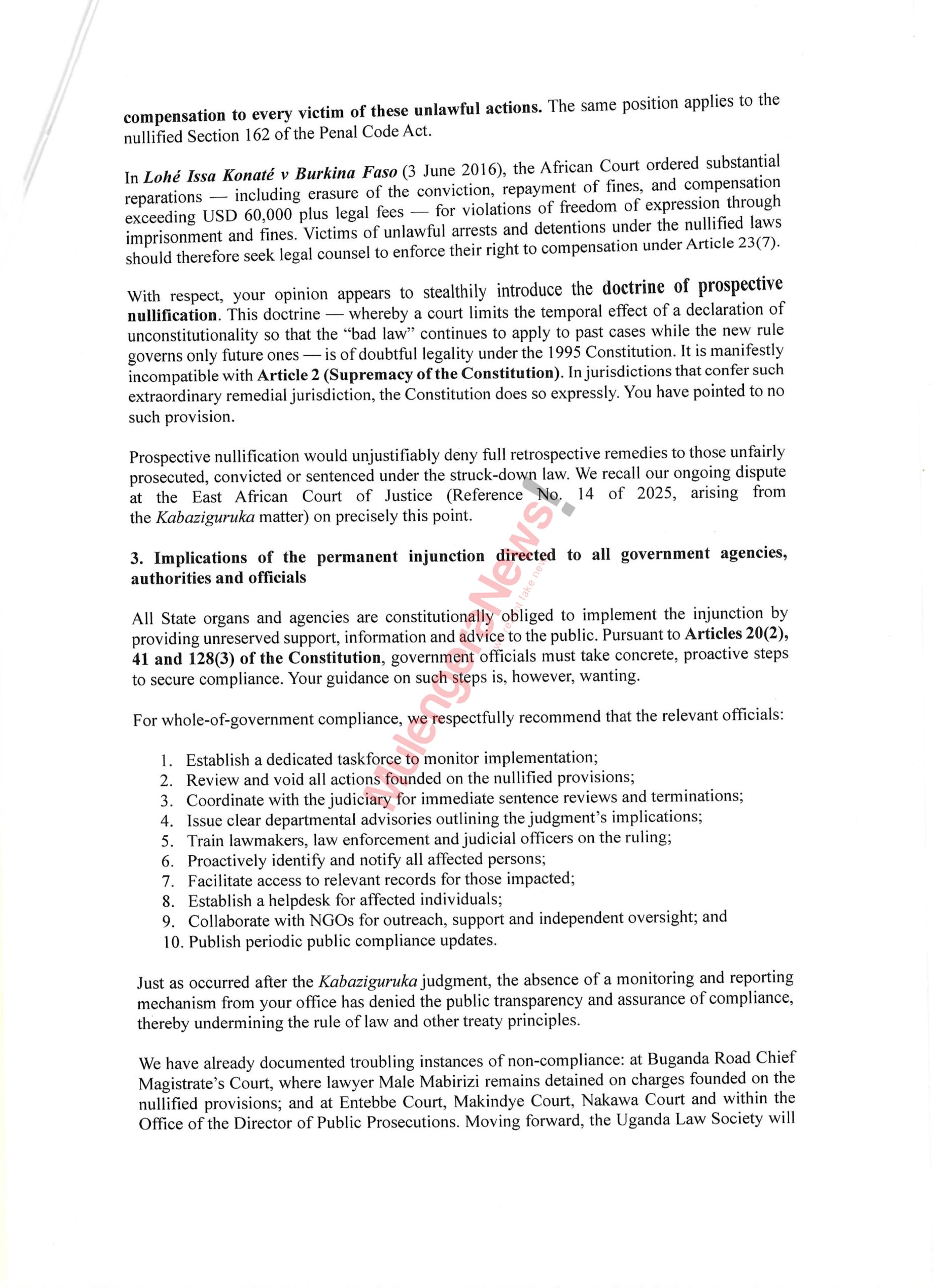
The Uganda Law Society (ULS) has sharply criticized guidance issued by Attorney General Kiryowa Kiwanuka following a landmark ruling by the Constitutional Court of Uganda that nullified the Computer Misuse (Amendment) Act 2022 and Section 162 of the Penal Code Act.

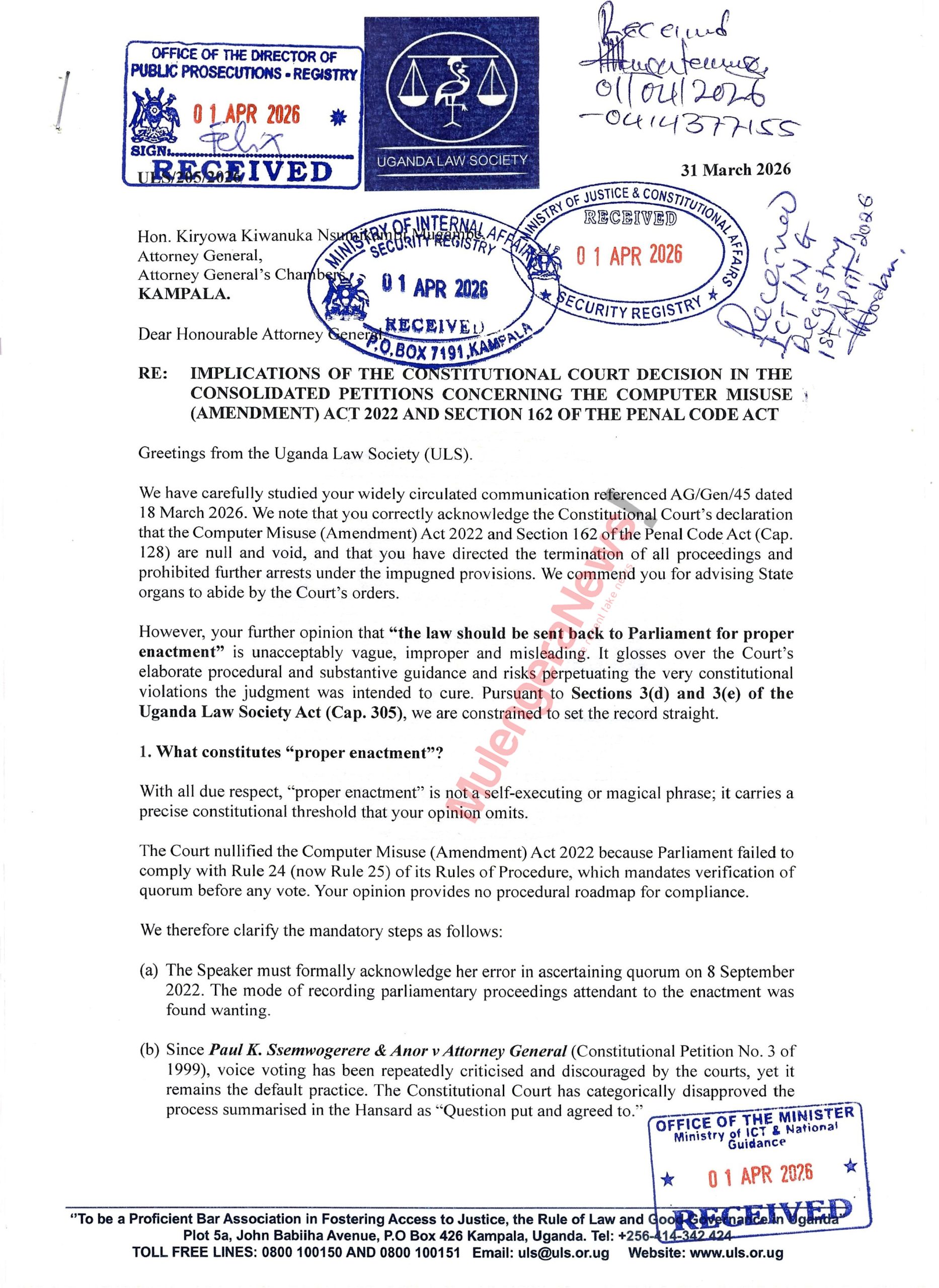
In a strongly worded letter dated March 31 signed by Society’s President Isaac Ssemakadde, the ULS accused the Attorney General of issuing what they termed as “vague, improper and misleading” advice after he directed state agencies to halt prosecutions and arrests under the invalidated laws. While the Society commended the directive to comply with the court’s orders, it took issue with Kiwanuka’s recommendation that the legislation be sent back to Parliament for “proper enactment.”

According to the Ssemakadde, the phrase “proper enactment” fails to reflect the Constitutional Court’s detailed procedural and substantive requirements. The Society argued that the court’s decision clearly outlined strict standards Parliament must meet, particularly on quorum verification and voting transparency.
The court had ruled that Parliament failed to comply with its own procedural rules when passing the Computer Misuse amendments, notably by not properly verifying quorum. The ULS emphasized that any future legislative attempt must include detailed vote records, including the number of Members of Parliament present, voting, abstaining, and supporting evidence for those figures.
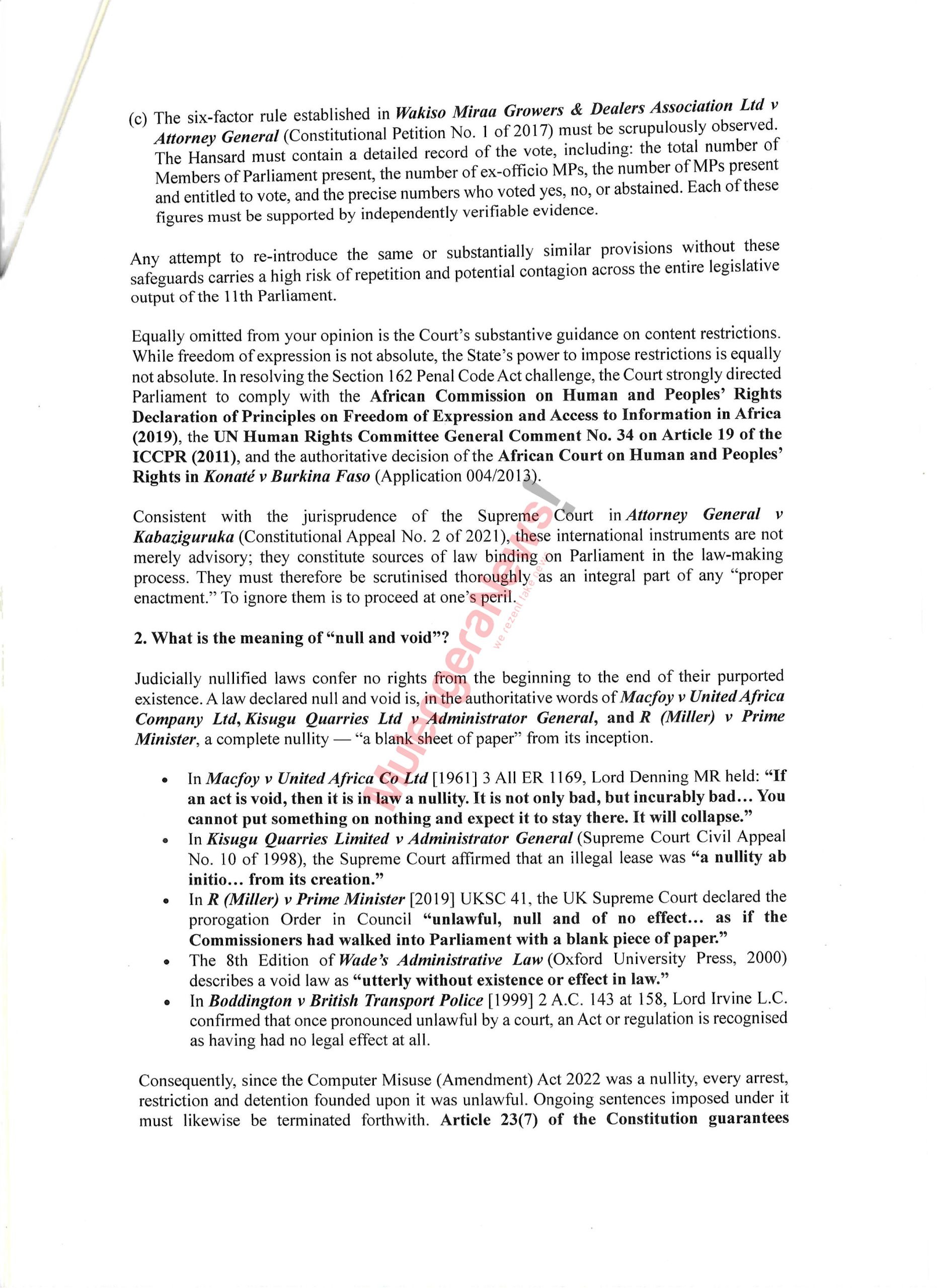
Beyond procedure, the Society also highlighted the court’s guidance on content restrictions, warning that any re-enacted law must align with international human rights standards on freedom of expression. It cited binding legal principles from regional and international bodies that Parliament must consider during lawmaking.
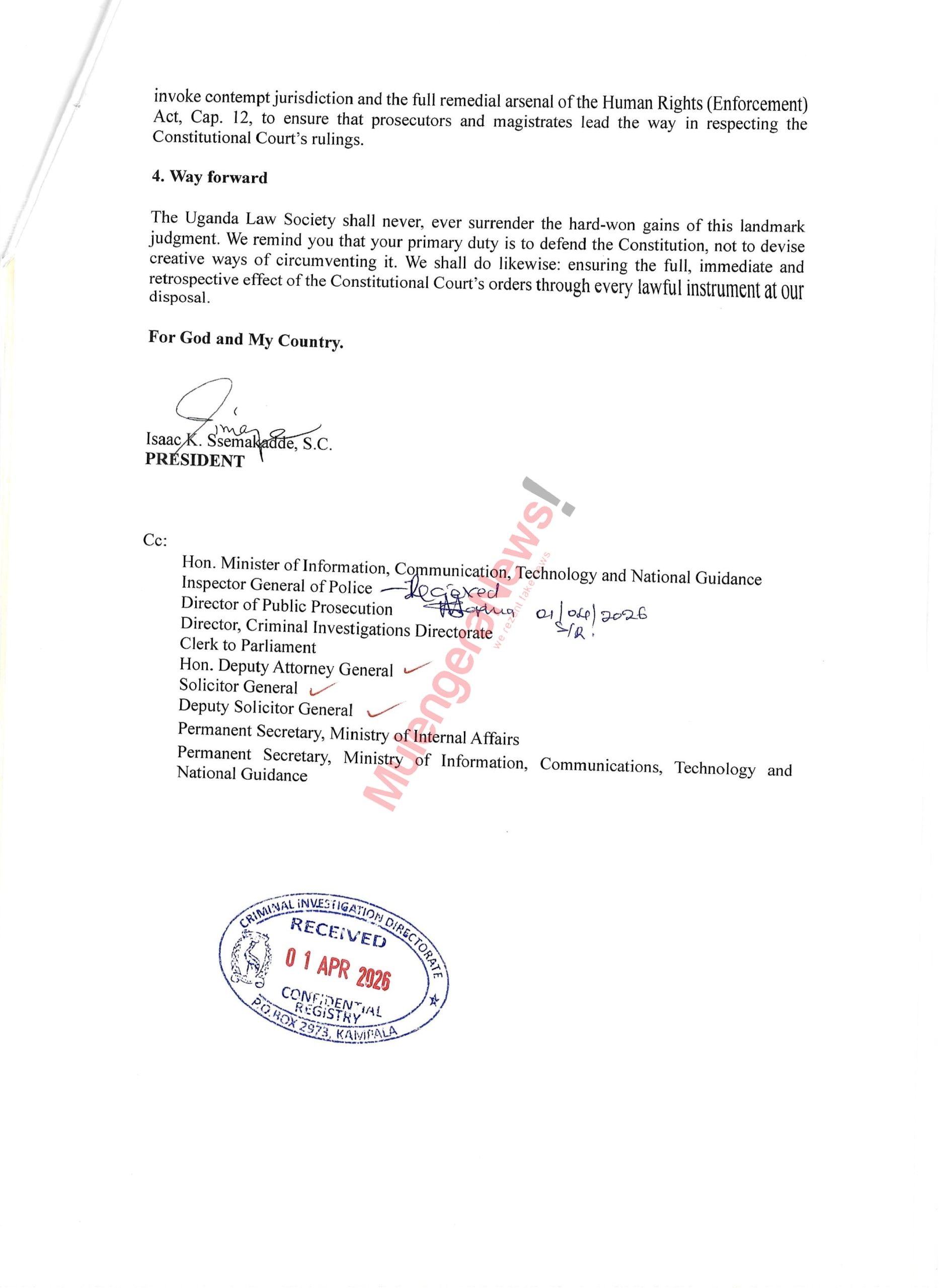
On the legal effect of the ruling, Ssemakadde underscored that laws declared “null and void” are treated as if they never existed. This means all arrests, prosecutions, and convictions under the invalidated provisions are unlawful. The Society called for the immediate termination of ongoing cases and sentences, as well as compensation for affected individuals under Article 23(7) of the Constitution.
The letter further warned against any attempt to apply the doctrine of prospective nullification, which would limit the ruling’s effect to future cases. Ssemakadde argued that such an approach is inconsistent with Uganda’s constitutional framework and would deny justice to those already affected.
To ensure compliance, the Society proposed the creation of a government-wide taskforce, review of all actions taken under the nullified laws, coordination with the judiciary for sentence reviews, and proactive outreach to affected individuals. It also called for training of law enforcement and judicial officers, as well as public reporting on implementation progress.
Ssemakadde expressed concern over what it described as early signs of non-compliance, citing ongoing detentions and prosecutions in several courts despite the Constitutional Court’s ruling.
In a firm closing statement, ULS President Isaac K. Ssemakadde warned that the Society would pursue legal action, including contempt proceedings, against officials who fail to uphold the judgment.
“The Uganda Law Society shall never surrender the hard-won gains of this landmark judgment,” the letter stated, signaling a potential legal standoff between the bar association and government authorities over the enforcement of the court’s decision. (For comments on this story, get back to us on 0705579994 [WhatsApp line], 0779411734 & 041 4674611 or email us at mulengeranews@gmail.com).