






By Ben Musanje
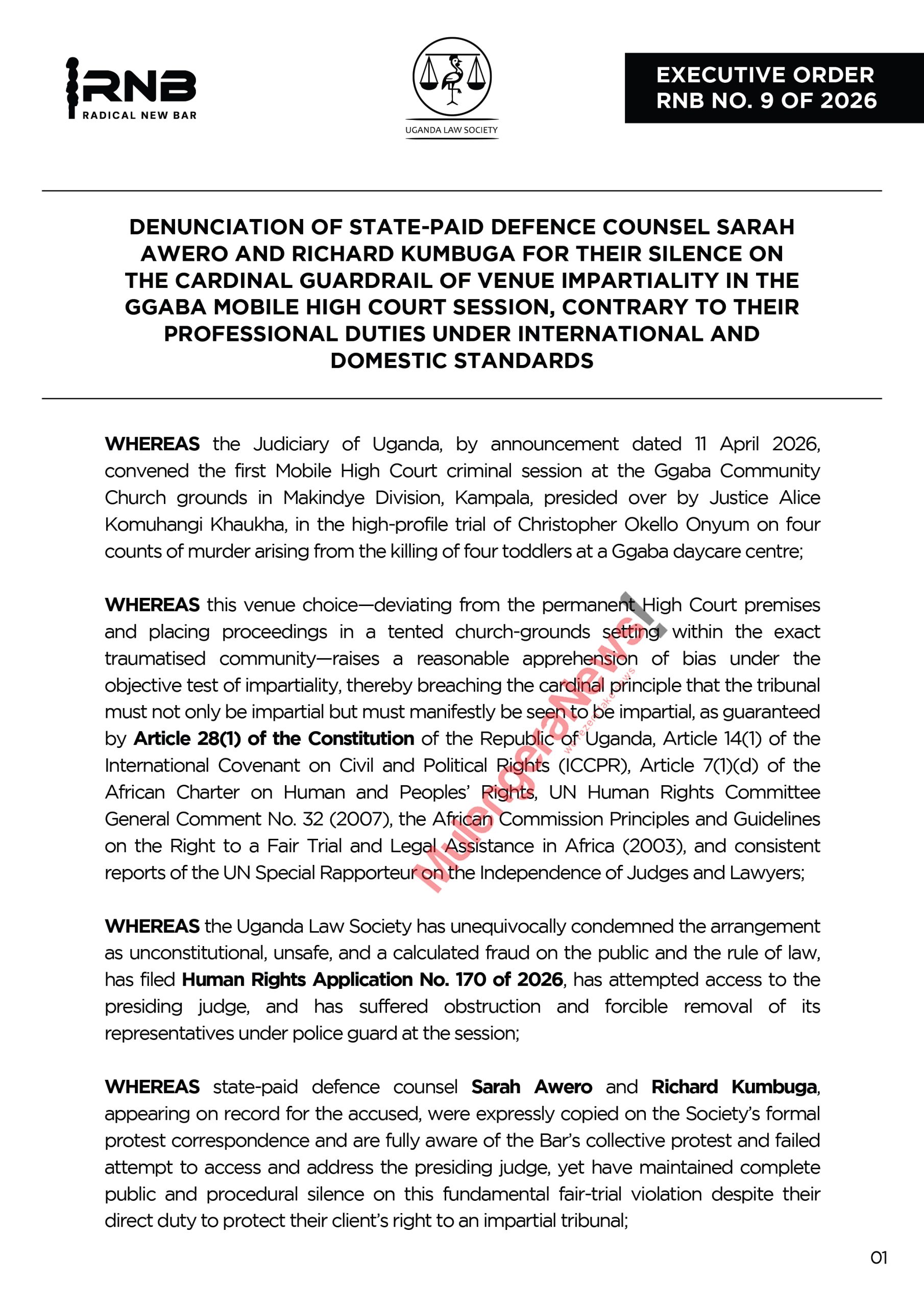
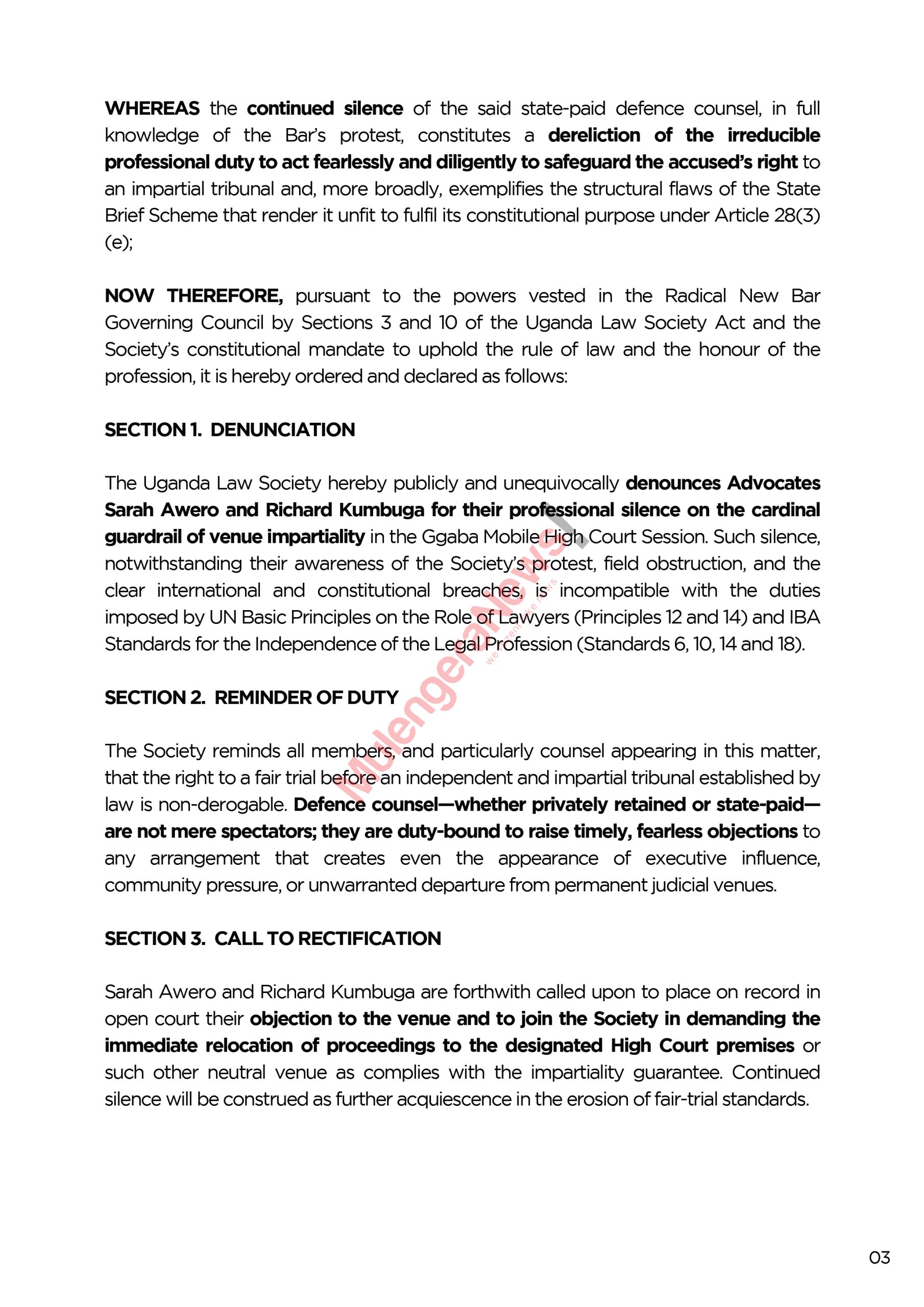
The Uganda Law Society has issued Executive Order No. 9 of 2026 formally denouncing two state-appointed defence lawyers for failing to challenge the venue of a controversial Mobile High Court session in Ggaba, raising broader concerns about fair trial standards and the effectiveness of Uganda’s State Brief Scheme.
The order arises from proceedings in the criminal trial of Christopher Okello Onyum, who faces four counts of murder related to the deaths of toddlers at a daycare centre in Makindye Division. The Judiciary is convening a Mobile High Court session at a church compound in Ggaba to hear the case, presided over by Justice Alice Komuhangi Khaukha.
In its executive order, the Society states that holding proceedings within the affected community, rather than at designated High Court premises, creates a reasonable apprehension of bias and undermines the constitutional requirement for an impartial tribunal.

It cites Article 28(1) of the Constitution of Uganda alongside international legal standards, including the International Covenant on Civil and Political Rights and the African Charter on Human and Peoples’ Rights, which guarantee the right to a fair and public hearing before an independent and impartial court.

The Society specifically criticizes Sarah Awero and Richard Kumbuga, who are representing the accused under the State Brief Scheme, for what it describes as their “professional silence” on the issue of venue. According to the order, both lawyers were aware of the Society’s formal protest to the court arrangement, as well as attempts by its representatives to access the proceedings and raise concerns before the presiding judge.
The document notes that these attempts were unsuccessful and involved the removal of Society representatives from the venue under police supervision. Despite these developments, the defence counsels have not placed any objection on record regarding the choice of venue.
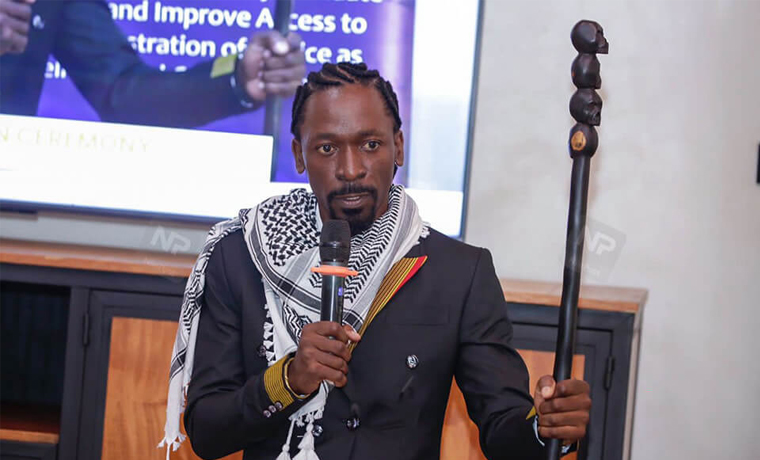
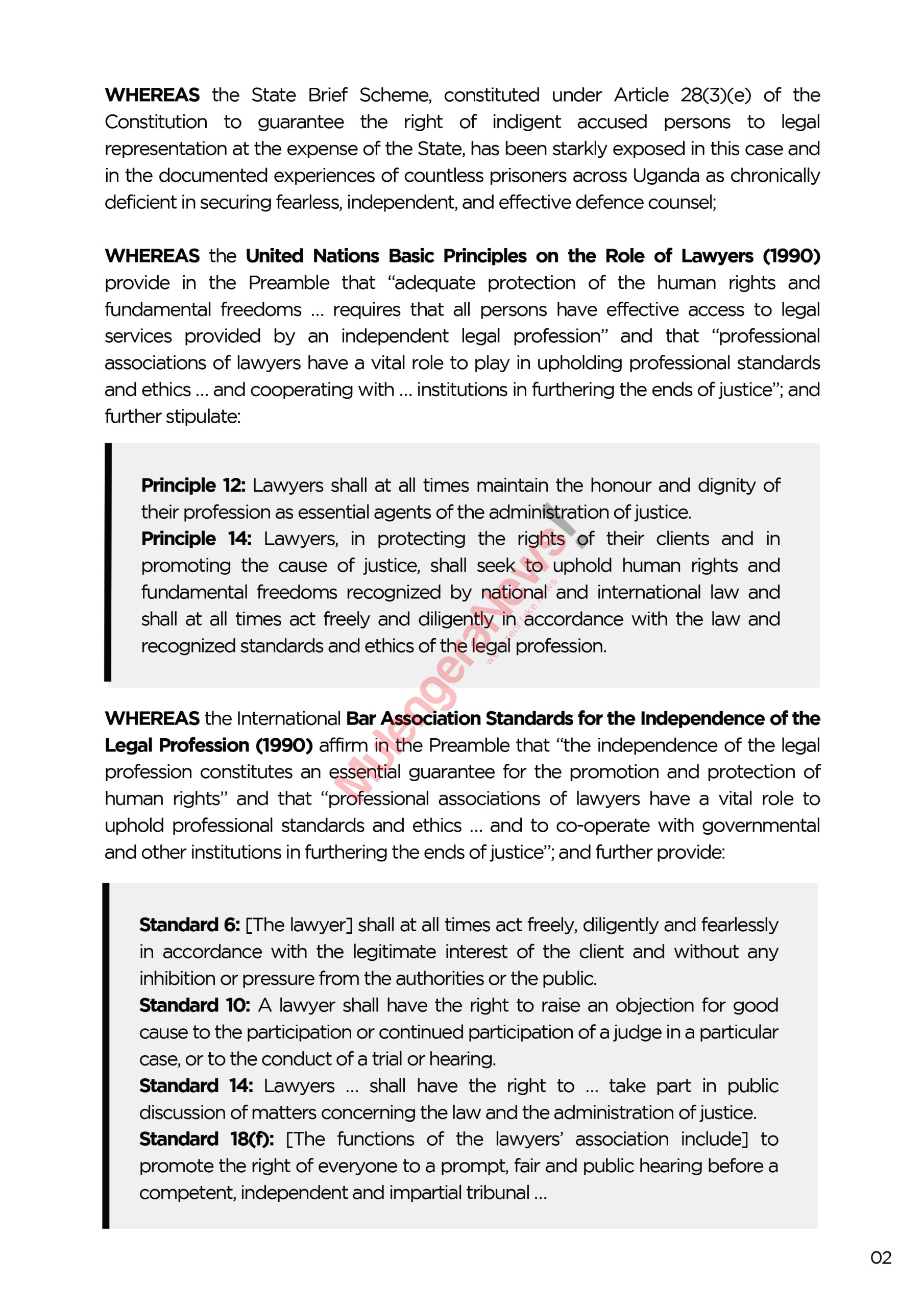
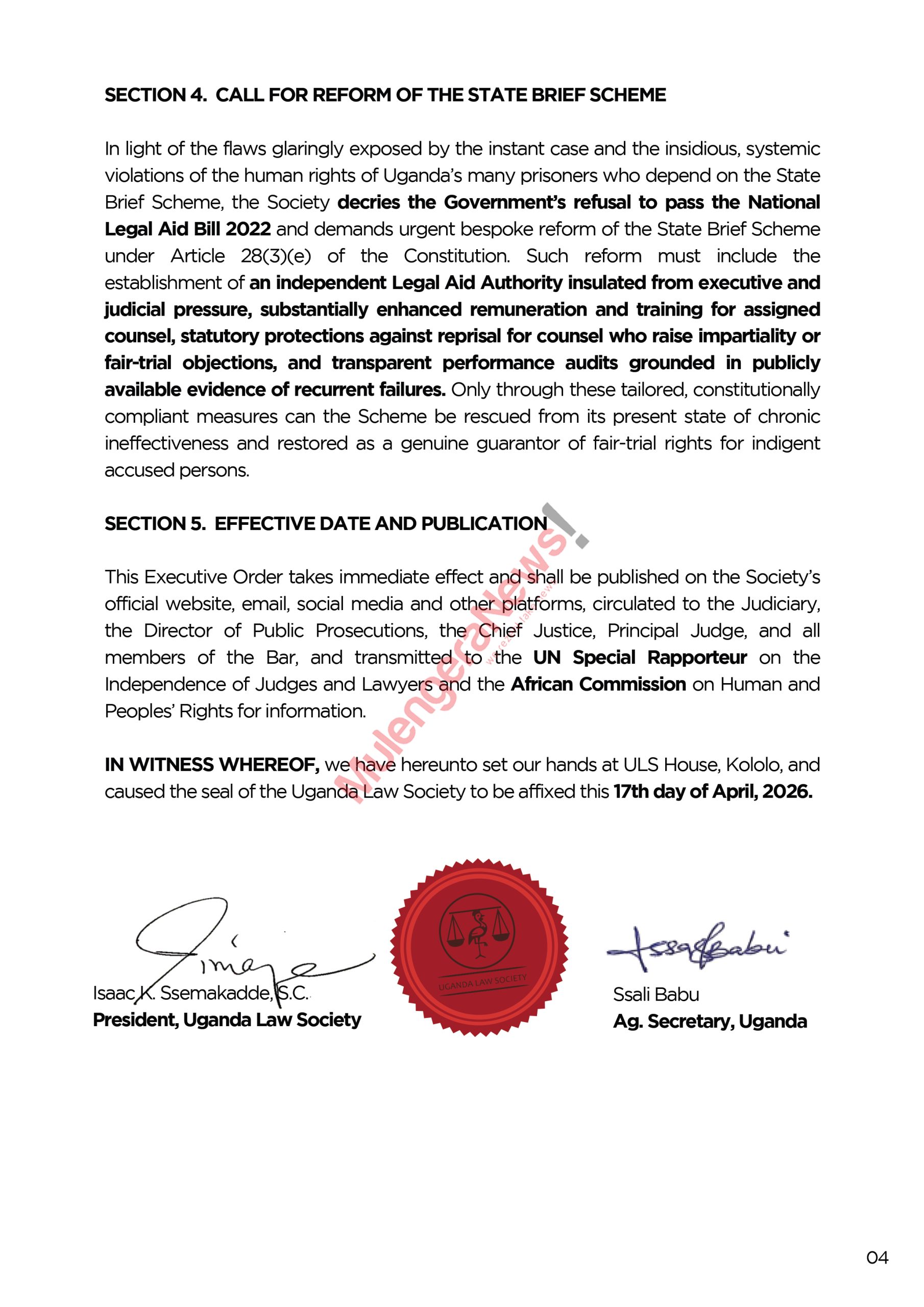
The executive order, signed by ULS President Isaac K. Ssemakadde and Society’s Acting Secretary Ssali Babu, argues that defence lawyers have an obligation to actively safeguard their client’s right to a fair trial. It references international principles governing the legal profession, including standards that require lawyers to act diligently and independently, and to challenge any circumstances that may compromise judicial impartiality.

Ssemakadde states that failure to object to a potentially prejudicial venue constitutes a departure from these obligations. It emphasizes that defence counsel, whether privately retained or state-appointed, are required to raise timely objections where there is a risk to fair trial rights.
Beyond the conduct of the individual lawyers, the Society uses the case to highlight what it describes as systemic weaknesses in the State Brief Scheme, which is intended to provide legal representation to indigent defendants under Article 28(3)(e) of the Constitution. The order suggests that the scheme has not consistently ensured independent and effective legal representation, particularly in complex or high-profile cases.
As part of its directive, the Society calls on Counsel Sarah Awero and Counsel Richard Kumbuga to formally object to the venue in open court and to support efforts to relocate proceedings to a neutral setting that meets constitutional standards of impartiality. It indicates that continued inaction may be interpreted as acceptance of the current arrangement.
The Society also calls for broader reforms to the State Brief Scheme, including the establishment of an independent Legal Aid Authority, improved remuneration and training for defence counsel, and legal protections for lawyers who raise objections related to fair trial rights. It links these proposals to the pending National Legal Aid Bill 2022, urging its passage as part of a wider effort to strengthen access to justice.
The executive order took immediate effect upon issuance on April 17, 2026, and has been circulated to key institutions, including the Judiciary, the Director of Public Prosecutions, and international human rights bodies. The Society maintains that the issues raised in the Ggaba proceedings have implications beyond a single case and reflect ongoing challenges in ensuring adherence to constitutional and international standards in Uganda’s justice system. (For comments on this story, get back to us on 0705579994 [WhatsApp line], 0779411734 & 041 4674611 or email us at mulengeranews@gmail.com).