












By Mulengera Reporters
The Uganda Communications Commission (UCC) is engaging stakeholders to validate preliminary findings from a national assessment examining how Ugandans access, use and experience information and communication technology (ICT) and related services across the country.
The National Demand-Side Assessment on ICT Access and Usage brings together evidence on the experiences of individuals, households, businesses and institutions in accessing telecommunications, internet, broadcasting, postal and digital financial services.
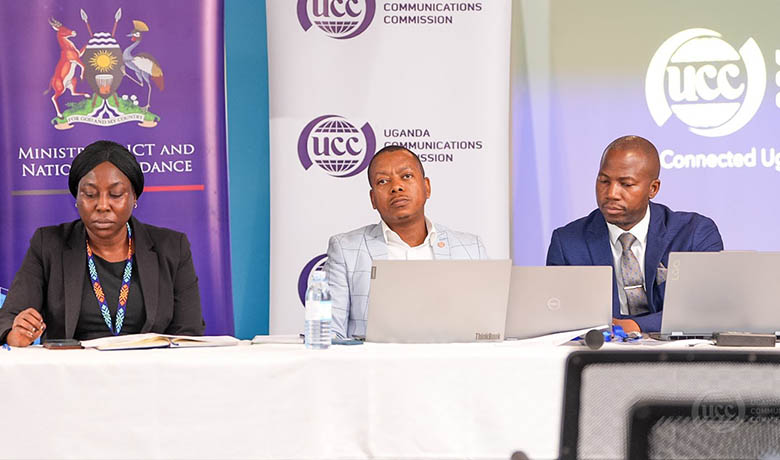
Speaking during the validation workshop, Eng. Rebecca Mayanja, representing the Director of ICT and Research at UCC, emphasized the importance of demand-side data in shaping Uganda’s digital development.

She explained that while data from service providers provides valuable information about the availability and supply of communications services, it does not always capture how those services are experienced by people in their communities.

The study therefore seeks to provide a clearer picture of how Ugandans actually access and use digital and communication services, as well as the challenges they face in doing so.
Eng. Mayanja highlighted several positive developments in Uganda’s digital landscape, including increased use of mobile internet, growing adoption of digital financial services and greater use of digital tools by businesses and institutions.
However, she cautioned that these gains are not being experienced equally across the country. Many Ugandans continue to encounter barriers that limit their ability to participate meaningfully in the digital economy.

Among the challenges identified are the high cost of communication services and devices, limited access to smartphones and other digital equipment, inadequate digital skills, unreliable or limited access to electricity and concerns about online safety.
She stressed that connectivity alone should not be considered sufficient, arguing that digital access must also be affordable, reliable, safe and useful if it is to deliver meaningful benefits to all Ugandans.
The assessment engaged more than 6,000 respondents drawn from households, individuals, businesses and institutions. According to the study presentation, the research followed the International Telecommunication Union (ITU) framework to produce reliable and internationally comparable results.
The methodology was developed using recent national census data from the Uganda Bureau of Statistics (UBOS), with rural-urban stratification and probability proportionate sampling applied to ensure appropriate representation.
In total, 3,167 households, 2,604 individuals, 597 businesses and 329 institutions participated in the assessment through computer-assisted personal interviews. The data was subsequently weighted to ensure that the findings appropriately represent the national population.
Preliminary findings provide insights into levels of electricity access, mobile phone ownership, smartphone penetration and internet use across Uganda. The results also point to variations associated with social welfare and geographical location, highlighting differences in the digital experiences of communities across the country.
The findings are expected to provide important evidence for understanding the extent of digital inclusion and identifying groups and regions that continue to face barriers to connectivity and digital participation.
The stakeholder validation workshop is intended to give participants an opportunity to examine the preliminary findings, provide context and identify areas that may require clarification or strengthening before the final report is produced.
Stakeholder input will also help ensure that the assessment provides accurate and actionable evidence for policymakers, regulators and other players involved in Uganda’s digital transformation.
The study covers a broad range of issues, including affordability, quality of service, digital inclusion, cybersecurity and barriers to meaningful connectivity. Its findings could therefore inform future policies, regulatory interventions and strategies aimed at expanding access to digital services.
Eng. Mayanja called on stakeholders to actively participate in the validation process, noting that their technical knowledge and experiences would be important in strengthening the credibility and relevance of the final findings.
The expected outcome of the engagement is a set of validated national findings, together with consolidated stakeholder input to be incorporated into the final report.
The assessment comes as Uganda seeks to expand digital participation and ensure that the benefits of technological development reach more people, businesses and institutions. By focusing on the experiences and needs of users, the study is expected to complement existing supply-side information and provide a more comprehensive picture of the country’s digital landscape.
For UCC, the ultimate goal is to ensure that evidence on how Ugandans use and experience ICT services contributes to policies and strategies that promote an affordable, reliable, safe and inclusive digital environment.(For comments on this story, get back to us on 0705579994 [WhatsApp line], 0779411734 & 041 4674611 or email us at mulengeranews@gmail.com).