






By Ben Musanje
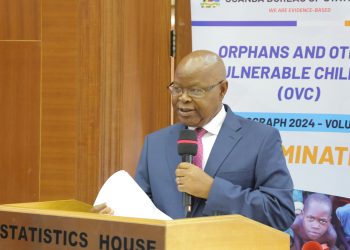
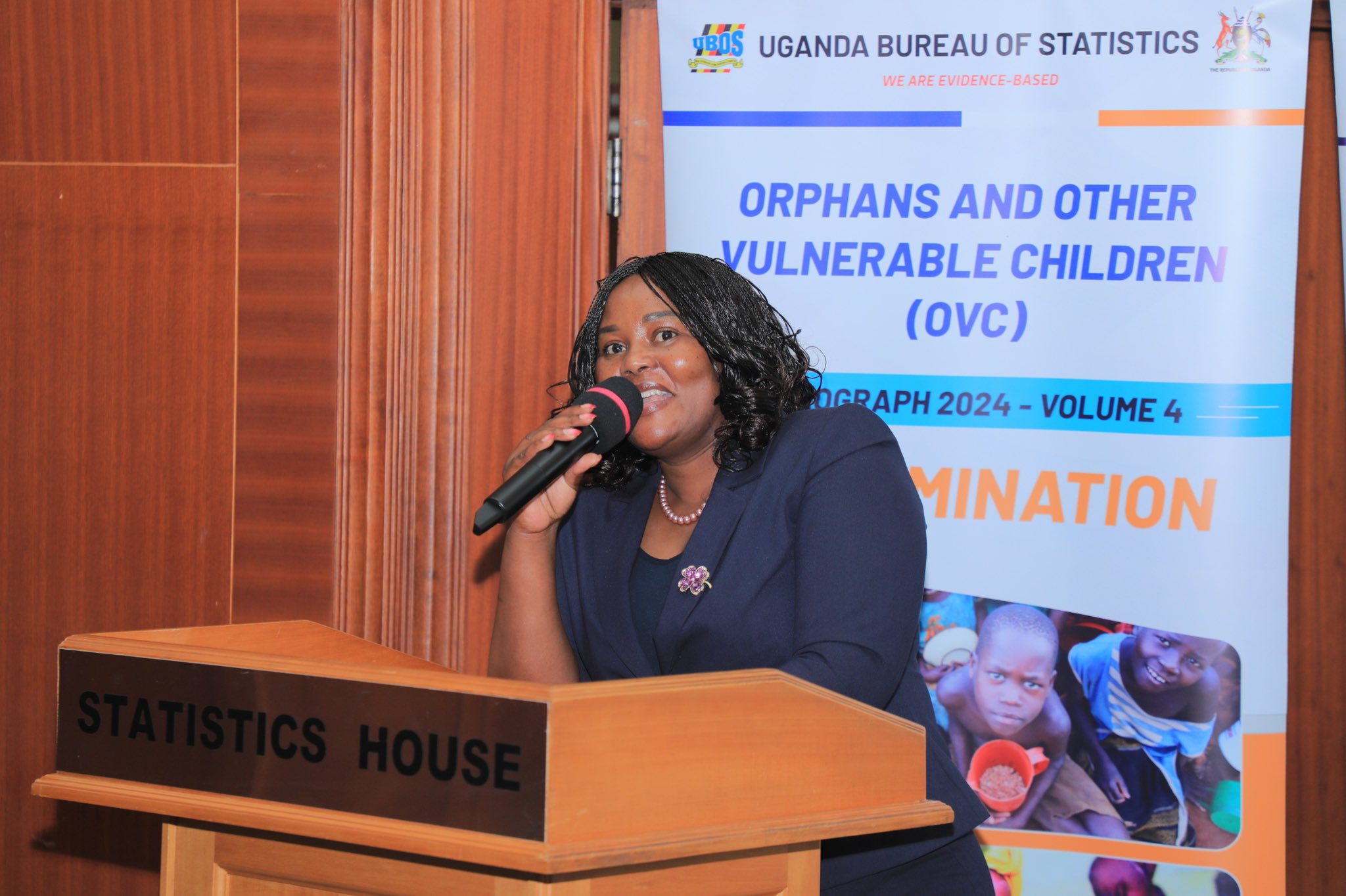
The atmosphere at Statistics House in Kampala grew tense as Sharon Owamahoronfite stepped forward and laid bare a powerful story hidden inside numbers—Uganda’s children are increasing, but so is their struggle.
Speaking at the dissemination of the Orphans and Vulnerable Children Monographs by the Uganda Bureau of Statistics, she revealed a country at a turning point, where growth and hardship are rising side by side.
Uganda’s child population has steadily climbed over the last 20 years. In 2024, children aged 0 to 17 made up 22.2 percent of the population, up from 19 percent in 2014 and just 13 percent two decades ago. Yet even as the number of children grows, families are having fewer births. The total fertility rate has dropped sharply from 5.8 in 2014 to 4.5 in 2024.

The structure of the population itself is changing. The 2014 population pyramid had a wider base, showing higher birth rates, while the 2024 pyramid is narrower and smoother. This smoother shape is not just demographic change, it reflects Uganda’s first fully digital census, where automation reduced errors and produced cleaner, more reliable data.

When it comes to boys and girls, the country stands balanced. The sex ratio in 2024 is exactly 100, meaning equal numbers of males and females. This is a shift from 2014, when the ratio was 103, showing slightly more boys than girls.
But beneath this balance lies a painful reality.
The data shows that 86.3 percent of children still have both parents alive. However, millions do not. About 6.2 percent of children live with only their mother after losing their father. Another 2.5 percent live with only their father after losing their mother. And 4.2 percent, some of the most vulnerable have lost both parents.


A small but important 0.8 percent of cases recorded “don’t know” when asked about parents’ survival. This, it was explained, does not always mean the parent is missing, but that the respondent in the household could not confirm their status.
In total, 13 percent of Uganda’s children—about 3 million are orphans. Among them, 4 percent have lost both parents, while 6 percent have lost only their fathers, making father loss the most common form of orphanhood.
Even when broken down by gender, the pain remains evenly spread. About 2.5 percent of both boys and girls have lost their mothers, while the difference between those who lost fathers is only about 0.2 percentage points. The crisis does not discriminate.
Where a child lives, however, changes everything.
In rural areas, 14 percent of children are orphans, compared to 12 percent in urban areas. And as children grow older, the likelihood of losing a parent increases sharply. The data shows that older children are more likely to be orphans and again, the loss of fathers rises faster than that of mothers.
Across Uganda’s map, the crisis deepens in certain regions. West Nile, Madi, and Karamoja stand out with the darkest shades—areas where orphanhood is highest. Meanwhile, places like Teso and Kampala show the lowest rates.
In central region, some districts are hit harder than others. Rakai leads with 16 percent of children orphaned, followed closely by Sembabule at 15 percent, with Kasanda also among the hardest hit.
In the east, Bududa tops the list at 18 percent, raising concerns about whether natural disasters like landslides could be playing a role.
In the west, districts such as Kikuube, Kiryandongo, Isingiro, Kamwenge, and Kyegegwa show high orphanhood rates, many of them hosting refugee settlements. Questions arise about whether children lost their parents before or during displacement.
In the north, the situation is even more alarming. Yumbe records a staggering 27.3 percent orphanhood rate, followed by Kaabong, Nabilatuk, and Amudat—figures that point to deep-rooted challenges in the region.
Despite this, there is a small sign of improvement over time. Compared to 2002, orphanhood rates have slightly declined by 2024, offering a faint glimmer of progress.
But the hardest truth emerges in education.
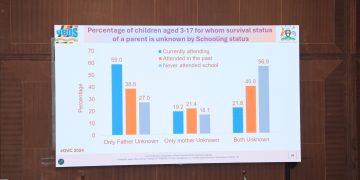
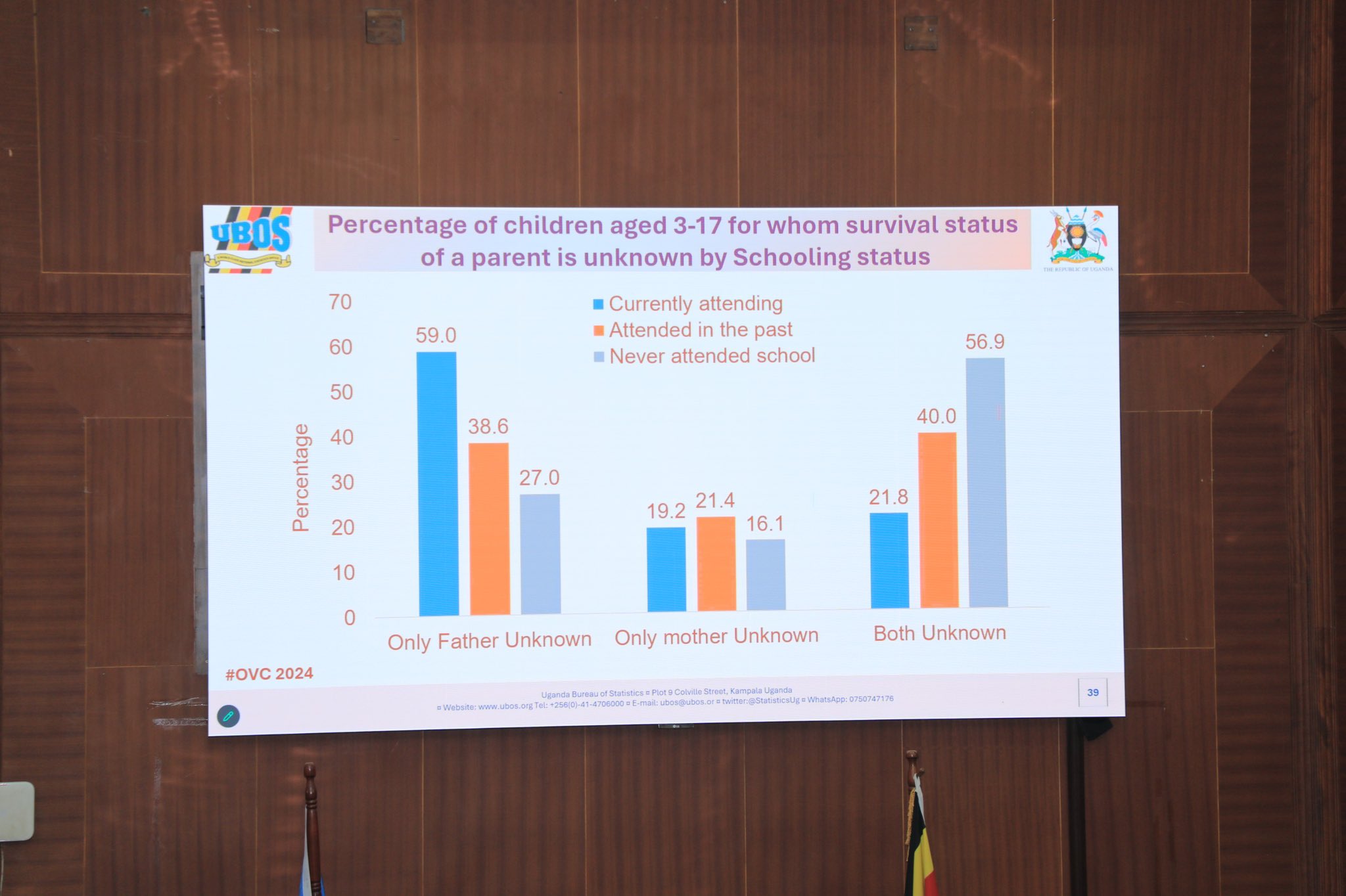
Children without parents are being left behind. Among those aged 3 to 5 years, 47 percent of non-orphans are in early childhood education, compared to just 29 percent of orphans. The gap continues among children aged 6 to 17, where 72 percent of non-orphans are in school, but only 54 percent of orphans are attending.
Breaking it down further, only 28 percent of orphaned children aged 3 to 5 are currently in school, compared to 46 percent of their non-orphan peers.
Even among older children aged 6 to 17, 71 percent of non-orphan boys and 72 percent of non-orphan girls are attending school, while only 54 percent of orphaned boys and girls remain in class.
For many, education is replaced by survival.
Children aged 10 and above were asked if they had worked for pay or profit in the previous seven days—even for just one hour. The results reveal a troubling trend.
Among children in the official working age groups, 21 percent of orphans are already working, compared to 19 percent of non-orphans. When narrowed to ages 14 to 17, 20 percent of orphans are working, compared to 18 percent of non-orphans.
The message is clear: orphanhood is pushing children into labor earlier than expected.
Girls are especially affected, with higher participation in work compared to boys among both orphans and non-orphans. The burden of survival is falling heavily on young shoulders.
Behind every statistic is a child navigating life without parents—forced to grow up too fast, to work too early, and to fight for opportunities others take for granted.
As Sharon Owamahoronfite concluded her presentation, one question echoed louder than all the numbers.
What is happening to Uganda’s families?
From rising orphanhood in rural villages to alarming regional disparities, from classrooms losing children to workplaces gaining them too early, the data has spoken. Now, the country must answer. (For comments on this story, get back to us on 0705579994 [WhatsApp line], 0779411734 & 041 4674611 or email us at mulengeranews@gmail.com).