







By Ben Musanje
Uganda recorded a 6.8 percent decline in reported human trafficking cases in 2025, with children continuing to account for the majority of victims, according to the National Report on Countering Trafficking in Persons.
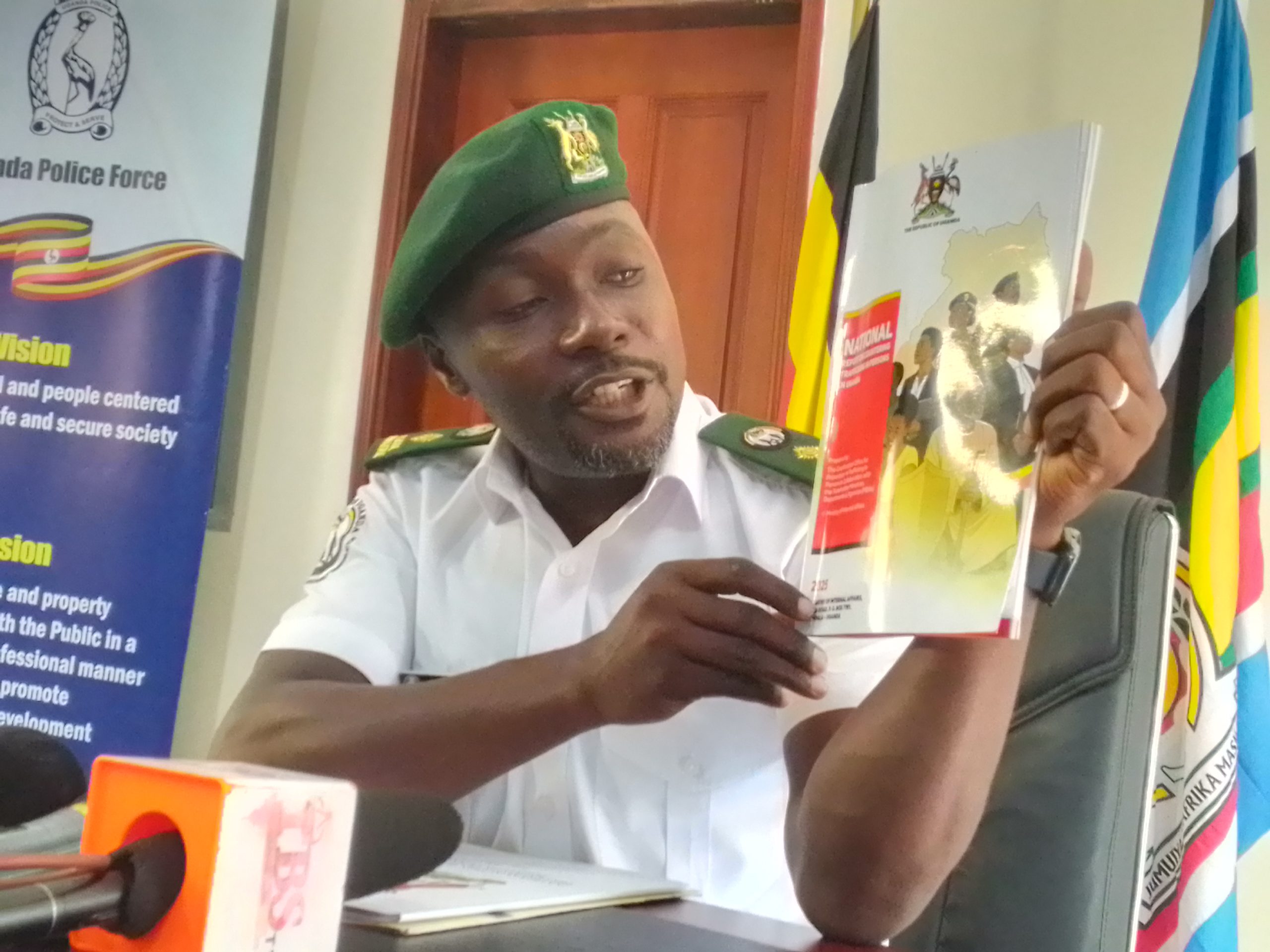
Presenting the report during the weekly security press conference at Police Headquarters in Naguru on Monday, the Deputy National Coordinator for Counter-Trafficking in Persons at the Ministry of Internal Affairs, Derek Basalirwa Kigenyi, said 1,002 trafficking cases were reported to the Uganda Police in 2025, down from 1,068 cases recorded in 2024.
Kigenyi described the decline as a significant milestone in the country’s efforts to combat trafficking in persons, saying every reduction represents lives protected through the combined efforts of investigators, prosecutors, law enforcement agencies, civil society organizations and development partners.
He made the remarks while outlining Uganda’s new National Action Plan on Counter-Trafficking in Persons for 2026–2031, which he described as the country’s guiding framework for preventing trafficking, protecting victims and coordinating interventions among government institutions and partners.

Despite the reduction in reported cases, Kigenyi said child trafficking remains a major concern. Of the 1,002 cases registered in 2025, 555 involved children, compared to 447 involving adults.

He warned that trafficking exposes children to long-term physical, psychological and emotional harm, with many victims struggling to recover from trauma, torture and other forms of exploitation long after they have been rescued.
The report also shows that trafficking in Uganda is overwhelmingly a domestic crime. Of the total cases recorded during the year, 1,019, representing 97.79 percent, involved trafficking within the country, while only 23 cases were linked to transnational trafficking.
According to the report, trafficking affected a total of 1,272 people during the reporting period. The figure includes direct victims as well as relatives and dependants whose lives were disrupted by trafficking incidents, including families that lost breadwinners.

Women and girls remained the most affected. The report recorded 479 juvenile female victims and 310 adult female victims, compared to 139 juvenile males and 344 adult males.
Regionally, Elgon registered the highest number of trafficking incidents with 79 cases, followed by Rwizi Region with 72, KMP North with 55 and KMP South with 54. Busia District recorded the highest number of cases among districts at 41.
Kigenyi said the concentration of cases in border areas such as Busia, Malaba and Suam underscores the need to strengthen surveillance and enforcement along Uganda’s border with Kenya.
The report further indicates that the Directorate of Citizenship and Immigration Control rescued and repatriated 87 foreign nationals who had fallen victim to trafficking in Uganda. They included 36 Kenyans, 25 South Sudanese, 16 Burundians, four Ethiopians, four Somalis, one Eritrean and one Malawian.
Immigration authorities also intercepted 431 Ugandans at various exit and entry points, including Entebbe International Airport, Busia, Malaba and Katuna, after identifying indicators associated with human trafficking.
Kigenyi said many of those intercepted had little or no information about their intended employers or destinations abroad and lacked the necessary travel clearances, circumstances that authorities commonly associate with trafficking schemes.
He said the National Action Plan for 2026–2031 will guide Uganda’s efforts to strengthen prevention, improve coordination among stakeholders and enhance protection for victims as the country seeks to further reduce human trafficking.