







By Eng. Asiimwe Jonard (princeasiimwe12@gmail.com)
“The person who eats the grain before the harvest will always be a slave to the one who owns the granary.” This ancient African proverb serves as a haunting mirror to the economic history of our continent. For over a century, Africa has been the world’s most generous donor not through charity, but through the hemorrhage of its raw potential.
Uganda now stands at a definitive crossroads, poised between the inertia of extractive economics and the dawn of industrial sovereignty. For decades, we have exported our wealth in its crudest, most vulnerable form; minerals unrefined, agricultural produce unprocessed, and human potential unrealized only to buy back finished goods at punitive, inflated costs. It is a paradox of “poverty amidst plenty”: abundance without prosperity, resources without transformation.
Yet, the tide turned decisively in 2015. In that watershed year, President Yoweri Museveni issued a presidential ban on the export of unprocessed iron ore, gold, uranium and other raw minerals, a move that was initially met with skepticism by international neoliberal pundits but was grounded in a profound Pan-African logic. This was not merely an administrative directive; it was an act of economic decolonization. The President recognized that exporting raw materials is, in effect, exporting jobs, taxes, and the future of our youth. By insisting that our minerals must be “born again” as finished products on Ugandan soil, he sought to dismantle the “colonial pact” that had for too long relegated Africa to a mere pit of raw materials and a graveyard for expensive imports.

The logic was simple but profound: a country that exports its minerals in raw form exports its jobs, its tax base, its technological learning curve, and ultimately its sovereignty. Uganda was, at the time, losing hundreds of millions of dollars annually through the export of low-value raw minerals while simultaneously importing high-value finished products. The President’s intervention sought to arrest this hemorrhage and redirect the economy toward domestic beneficiation ensuring that value addition occurs within Uganda’s borders. This was a direct challenge to the long-standing global economic structure described by the Prebisch-Singer hypothesis, which demonstrates that over time, countries exporting raw materials experience declining terms of trade relative to those exporting manufactured goods.

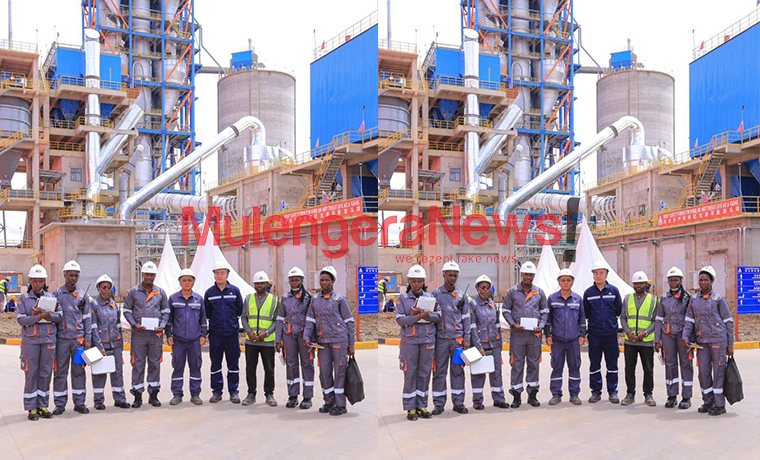
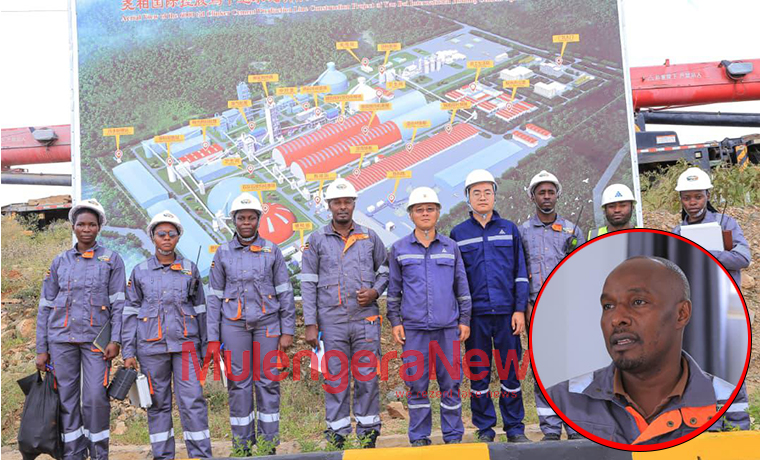
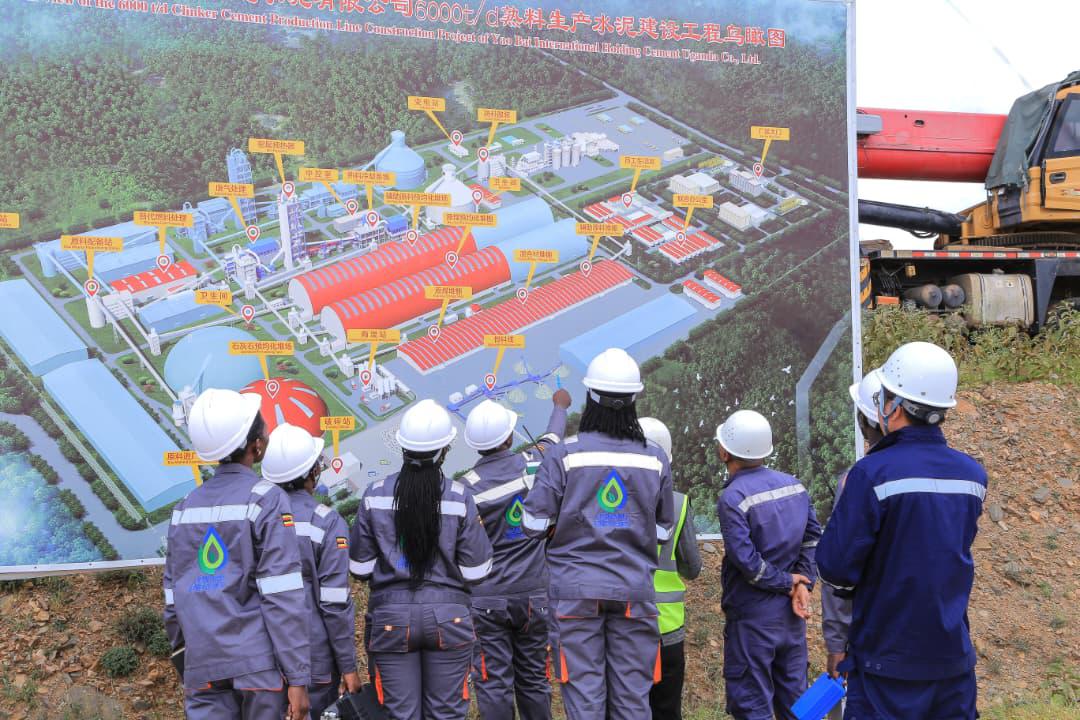
Fast forward to April 24th, 2026, and that vision is no longer theoretical; it is material, operational, and transformative. As the President commissions the Yaobiai clinker and cement factory in Moroto, Uganda is not merely inaugurating an industrial plant; it is activating a new phase in its economic evolution. This $300 million facility, with a projected production capacity of 12,000 tonnes of clinker per day, translating to approximately 4.3 million tonnes annually, stands as the largest clinker production plant in East Africa. It represents a strategic correction in Uganda’s industrial value chain.
To appreciate the magnitude of this development, one must understand the centrality of clinker in the cement ecosystem. Clinker is the critical intermediate product formed through the high-temperature synthesis of limestone, clay, iron ore, and gypsum at temperatures approaching 1,450°C. It is the backbone of cement production. For years, Uganda’s cement industry operated in a structurally incomplete loop importing clinker from countries such as Egypt, Turkey, and the UAE. This dependency cost the country an estimated $250 million to $300 million annually in foreign exchange outflows, while simultaneously exposing the construction sector to global supply chain disruptions and currency volatility.
By localizing clinker production, the Moroto plant effectively closes this loop. The economic implications are immediate and far-reaching. First, the elimination of clinker imports is expected to reduce cement production costs by $30 to $50 per tonne, translating into significantly lower construction costs across the economy. In a country where infrastructure development is central to economic growth, roads, dams, housing, industrial parks; this cost reduction is transformative. Second, Uganda’s balance of payments will improve as import substitution takes effect, conserving scarce foreign exchange and strengthening macroeconomic stability.

Beyond domestic benefits, the plant positions Uganda as a regional exporter of clinker and cement. East Africa’s cement demand is projected to exceed 100 million tonnes annually by 2030, driven by rapid urbanization rates of approximately 4.5% to 5% per annum and expansive infrastructure projects. With its strategic location in Karamoja and proximity to regional markets such as South Sudan, eastern DRC, Rwanda, and Kenya, Uganda is now poised to become a net exporter rather than an importer of this critical industrial input.
Yet, the significance of this moment transcends economics. It represents a philosophical and scientific reorientation from an extractive economy to a productive, knowledge-based one. Industrialization, at its core, is the application of human intellect to the transformation of natural resources. It is where chemistry meets engineering, where physics meets production, and where innovation meets discipline. The kilns of Moroto are not merely processing limestone; they are symbols of a nation applying science to reclaim its destiny.
This transformation is firmly embedded in Uganda’s policy and legal framework. The National Development Plan III (NDP III) identifies industrialization and value addition as central pillars of economic growth. The Mining and Minerals Act of 2022 further entrenches this vision, particularly through provisions that tie mineral licensing to beneficiation requirements. Investors are no longer permitted to extract and export; they must process, add value, and integrate into the domestic economy. This is a deliberate shift from a linear extractive model to a circular, value-driven industrial model.
Equally critical is the alignment with continental frameworks such as the African Continental Free Trade Area (AfCFTA), which creates a single market of 1.3 billion people with a combined GDP of over $3.4 trillion. In this context, Uganda’s industrialization is not inward-looking; it is strategically positioned to serve a vast regional market. The Moroto plant is therefore not just a national asset; it is a continental gateway.
Central to this entire transformation is the role of science, technology, innovation, and creativity. The Fourth Industrial Revolution characterized by automation, artificial intelligence, advanced materials, and data-driven manufacturing demands a new kind of workforce. President Museveni’s consistent emphasis on STEM education is therefore not incidental; it is foundational. The factories of the future will not be powered by manual labour alone, but by engineers, data scientists, industrial chemists, and technologists who can optimize processes, reduce waste, and enhance productivity.
The Moroto facility itself is a living laboratory of this new industrial paradigm. It requires precision engineering, advanced thermal systems, automated control mechanisms, and complex supply chain logistics. It is a training ground for Ugandan youth, a place where theoretical knowledge meets practical application. This is where the next generation of industrial leaders will be forged.
However, industrialization must not be pursued in isolation from social and environmental responsibility. The communities of Karamoja, who have historically been marginalized despite sitting atop immense mineral wealth, must be integrated into this new economy. This means jobs, local procurement opportunities, infrastructure development, and social services such as schools and health facilities. It also demands rigorous environmental safeguards dust suppression systems, carbon management technologies, and sustainable mining practices to ensure that industrial progress does not come at the expense of ecological integrity.
The commissioning of the Yaobiai plant is therefore both a culmination and a beginning. It is the culmination of a vision set in motion in 2015, a vision that dared to challenge entrenched economic orthodoxy and redefine Uganda’s place in the global economy. But it is also the beginning of a new chapter, one that demands discipline, innovation, and unwavering commitment to value addition.
As the President presides over this historic moment in Moroto, he is not merely commissioning a factory; he is affirming a doctrine that Africa’s wealth must be processed in Africa, by Africans, for the benefit of Africans. This is the essence of economic sovereignty.
The furnace in Moroto is lit. It must not flicker; it must blaze. For in its fire lies the transformation of raw stone into national prosperity, of latent potential into realized greatness, and of a once-extractive economy into a fully awakened industrial nation.
The writer is the National Vice Chairperson NRM Western Region and CEO Jonard Conglomerate Investments Ltd. (For comments on this story, get back to us on 0705579994 [WhatsApp line], 0779411734 & 041 4674611 or email us at mulengeranews@gmail.com).