






By Ben Musanje
Drama erupted in Parliament after Mityana South MP Richard Lumu suddenly withdrew his controversial Administration of Parliament (Amendment) Bill, 2024. The bill had caused a political storm because it proposed that all opposition MPs directly elect the Leader of the Opposition and the Chief Opposition Whip, instead of leaving the choice to the largest opposition party.
Richard Lumu argued that the current system silences smaller opposition parties and forces them to accept leaders they did not choose. He pointed out that parties like the Democratic Party, Forum for Democratic Change, Uganda People’s Congress, Justice Forum, and People’s Progressive Party all have MPs in Parliament but cannot vote for the opposition leadership. Speaking during a sitting in Gulu, he stressed that democracy should allow every opposition MP to have a voice.
The bill was seconded by Entebbe Municipality MP Mbwatekamwa Kakembo and directly challenged the practice where the National Unity Platform, which holds the most opposition seats, appoints the Leader of the Opposition. In the 11th Parliament, the party has already appointed two Leaders of the Opposition: Joel Ssenyonyi replaced Mathias Mpuuga in January 2024, while the Forum for Democratic Change had appointed five LOPs since 2006.

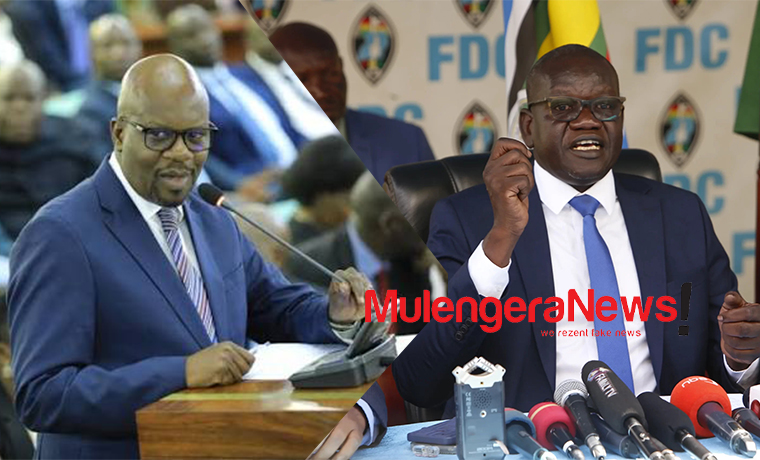
The Forum for Democratic Change (FDC) immediately pushed back, warning that the bill could weaken opposition unity and allow the ruling National Resistance Movement (NRM) to interfere in opposition leadership.

FDC leaders, led by President Patrick Amuriat Oboi, argued that opposition leadership should follow election results, and changing this system would be undemocratic. They also expressed concern that the bill could be used to impeach strong opposition leaders and suppress dissent.
FDC criticized the fast-tracking of the bill by the Committee on Legal and Parliamentary Affairs while other private members’ bills remain stalled. They warned that forcing multiple opposition parties to approve the shadow cabinet would create disagreements, slow decision-making, and blur the identity of the main opposition party.
Speaker Anita Annet Among acknowledged Richard Lumu’s concerns and emphasized that MPs could debate and reject the bill during its second reading. She reminded Parliament that laws are not made for one individual and urged calm during the discussions.
Despite the heated debate and the political storm it caused, Richard Lumu eventually withdrew the bill, leaving opposition parties deeply divided and Parliament buzzing with tension over who should control the leadership of the opposition. (For comments on this story, get back to us on 0705579994 [WhatsApp line], 0779411734 & 041 4674611 or email us at mulengeranews@gmail.com).