






By Guest Writer
“It is a shame to extradite our national to the U.S. when the U.S. can never extradite an American to Uganda. Doing so is a clear sign of modern master-slave neo-colonial relations.”
— Rtd. Gen. David Ssejusa (Tinyefuza), former Coordinator of Intelligence Agencies
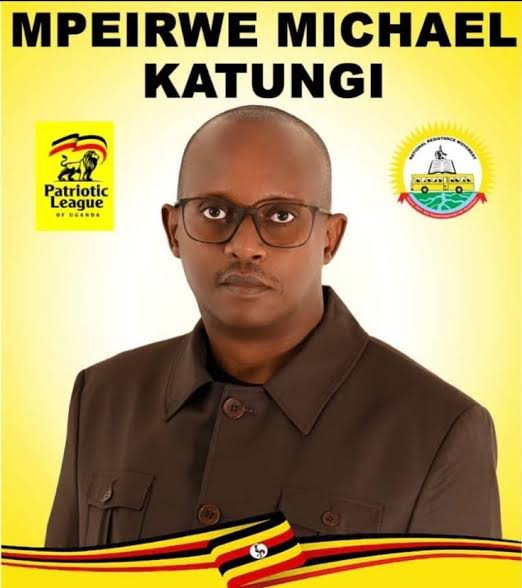
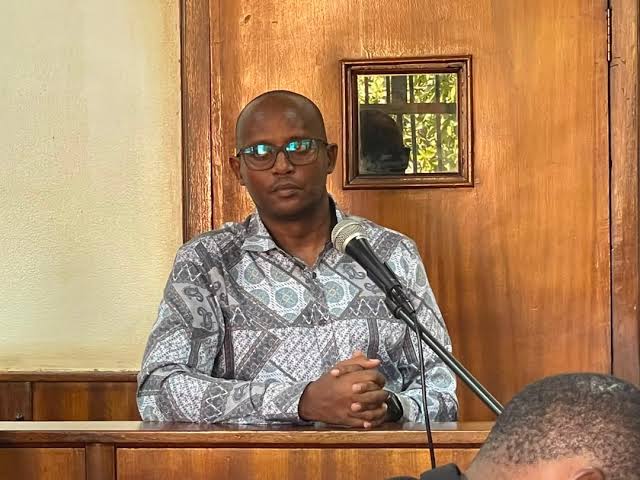
On the morning of June 28, 2026, Lt. Michael Katungi Mpeirwe — a former Uganda People’s Defence Forces (UPDF) officer, former African Union policy adviser, and commissioner in the Patriotic League of Uganda — was walked into Buganda Road Chief Magistrate’s Court and subsequently remanded to Luzira Prison. He had been arrested over the weekend, not for any crime proven in a Ugandan court, not on the strength of any evidence tabled before a Ugandan judge — but on the strength of a warrant issued at the request of the United States government to commence extradition proceedings. [^1]
Before the ink of these proceedings had dried, a chorus of principled voices — retired Gen. David Ssejusa (Tinyefuza), city businessman and rancher Mr. Barnabas Taremwa Bwaniaga, and Pan-Africanist Dan Nkusi — had already raised their voices in protest. This article stands with them.

What Is Uganda Being Asked to Do?

The United States prosecutors allege that Lt. Katungi participated in a conspiracy to traffic cocaine, supply military-grade weapons, and provide material support to a designated foreign terrorist organisation — specifically Mexico’s Cartel de Jalisco Nueva Generación (CJNG). These are extraordinarily serious charges. No reasonable person dismisses them as trivial.[2][3]
But here is the critical word: alleged. These are allegations. They are pending proof in a United States criminal trial — a trial to be conducted in a foreign land, under foreign law, far from the reach of Ugandan courts, Ugandan oversight, and the constitutional protections that every Ugandan citizen is entitled to by birth.[^1]
Uganda is being asked not merely to cooperate with an investigation. Uganda is being asked to physically hand over a son of this soil — based on an indictment filed on April 10, 2025, in the U.S. District Court for the Eastern District of Virginia — to face punishment in a country that has produced no evidence before any Ugandan tribunal to substantiate these claims.[2][1]

There Is No Bilateral Extradition Treaty Between Uganda and the USA
Let this be stated plainly: Uganda and the United States of America have no bilateral extradition treaty in force. Not one. This is not a minor technical footnote — it is the foundation upon which the entire legitimacy of this process must be questioned.[^1]
In the absence of a bilateral treaty, the Ugandan state attorney and the DPP have anchored the extradition request on the 1988 United Nations Convention Against Illicit Traffic in Narcotic Drugs and Psychotropic Substances, and Uganda’s Extradition Act, Cap. 124. The argument is that Uganda, as a signatory to the 1988 UN Convention, is obligated to consider the request.[2][1]
Consider — yes. Automatically surrender — no.
The word “consider” is doing enormous legal and moral work here. Article 6 of the 1988 Convention does not strip nations of sovereign discretion. It does not compel extradition as an absolute duty. It provides a framework for cooperation. There is a vital difference between being invited to a table and being shackled to a chair at that table.
Gen. Ssejusa’s Challenge: The Reciprocity Test
Retired Gen. David Ssejusa (Tinyefuza) — a man who has spent a lifetime at the intersection of power and principle — put the question with surgical precision: “Uganda has agreed to extradite its national, Michael Katungi, to the U.S. to be tried for crimes he allegedly committed there. Can the U.S. extradite its national to Uganda to be tried? The answer is never.”[^4]
He is right. The United States is conspicuously not a party to the International Criminal Court protocol. American citizens are constitutionally and statutorily shielded from foreign prosecutions. Civil law nations — France, Germany, Russia, Japan — have strict prohibitions against surrendering their nationals to foreign jurisdictions. The principle is ancient and universal: a state must protect its citizens.[^4]
When this shield is denied to Ugandans, while Americans enjoy it absolutely, we are not participating in international law — we are submitting to international hierarchy. We are enacting, with our own hands, what Gen. Ssejusa rightly calls “modern master-slave neo-colonial relations.”[^4]
In 2003, Uganda and the United States signed an agreement — one that specifically protects American citizens from being surrendered to foreign jurisdictions without U.S. consent. Uganda signed its own nationals out of equivalent protection in the same breath. The irony is breathtaking.[^5]
Uganda Has Just Passed a Sovereignty Law — What Does It Say?
In what must rank as one of the most jarring contradictions in recent Ugandan legislative history, President Yoweri Kaguta Museveni assented to the Protection of Sovereignty Act, 2026 on May 17, 2026 — just weeks before the government approved the extradition of Katungi.[6][7]
Parliament passed the Protection of Sovereignty Bill on May 5, 2026, with the stated purpose of protecting “the sovereignty of the people of Uganda” and ensuring that Uganda’s governance, foreign policy, and national security decisions remain anchored in the national interest. The law criminalises the promotion of foreign interests against Ugandan interests and carries penalties of up to ten years in prison.[8][9][^10]
The question writes itself: if Uganda has just erected a legal fortress to protect its sovereignty from foreign interference — if Parliament and the President have proclaimed, in ink and in law, that Uganda will not allow foreign interests to override national ones — then how does surrendering a Ugandan citizen to a foreign power on the basis of a foreign indictment, with no bilateral treaty, and no evidence tested in a Ugandan court, square with that declared commitment?
The Protection of Sovereignty Act, 2026 affirms in its very first principle: “The people of the Republic of Uganda shall have sovereignty over the social, economic and political policies” of the country. Sovereignty over policies must surely include sovereignty over persons — specifically, over whether and how a Ugandan citizen faces justice.[^11]
The Active Personality Principle: A Path With Honour
Gen. Ssejusa offered a wise and legally sound alternative. Uganda should invoke the Active Personality Principle — the well-established doctrine of international law that permits a sovereign state to prosecute its own nationals for offences allegedly committed on foreign soil.[^4]
Under this principle, Uganda can — and arguably should — conduct its own investigation and, if warranted by evidence, subject Lt. Katungi to trial here, in Ugandan courts, under Ugandan law, with Ugandan judges and full constitutional protections. This is not an evasion of justice. It is justice. It is Uganda saying: we take serious allegations seriously — but we try our own people in our own courts.[^4]
This path serves both sovereignty and accountability. It demonstrates that Uganda is not a safe harbour for criminality, while refusing to become a processing station for American prosecutorial ambitions. Nations do not surrender sovereignty in the name of fighting crime — they exercise sovereignty to fight crime on their own terms.
The Maduro Parallel and the Pattern of Coercion
Pan-Africanist Dan Nkusi drew a sharp comparison in his public statement — comparing the circumstances of Katungi’s extradition process to the fashion in which Venezuelan President Nicolás Maduro was reportedly taken to the United States to face similar drug trafficking charges. The comparison deserves reflection.
The use of drug trafficking charges, terrorism designations, and international legal instruments as tools of geopolitical coercion by powerful Western states is a documented pattern — not a fringe conspiracy theory. The CJNG was designated a Foreign Terrorist Organisation by the United States on February 20, 2025. That designation, made unilaterally by Washington, immediately transformed an alleged arms deal conspiracy into a terrorism-related offence under American law — dramatically escalating both the charges and the pressure on countries like Uganda to cooperate.[^1]
Uganda did not participate in that designation decision. Uganda was not consulted. Yet Uganda is now expected to carry its consequences — including surrendering a citizen to face charges shaped by that designation.
Due Process: At the Very Minimum
Defence lawyers Samuel Kakande, Ramadhan Akatwijuka, and Musa Nsamba have raised fundamental procedural objections that deserve full judicial attention. Neither Lt. Katungi nor his legal team had been supplied with the documents the state intends to rely upon. A formal extradition application had not been filed at the time of his remand. The process has the appearance — at crucial points — of a predetermined conclusion seeking retroactive legal dressing.[^1]
The Buganda Road Chief Magistrate has adjourned proceedings to July 10, 2026 for hearing of the full extradition application. Before any further steps are taken toward surrender, Ugandan courts must conduct rigorous judicial review. They must examine:[2][1]
- Whether the 1988 UN Convention can legally substitute for a bilateral extradition treaty under Uganda’s Extradition Act Cap. 124
- Whether the evidence presented meets the standard for a prima facie case under Ugandan law
- Whether the rights of Lt. Katungi — to disclosure, to preparation of his defence, and to bail — have been respected
- Whether extradition to a jurisdiction with no reciprocal obligations constitutes a violation of equal protection under the Constitution of Uganda
If these questions are answered honestly and rigorously, the courts will be doing their job. Anything less is capitulation dressed as process.
A Word on History
The Europeans and Americans have much to answer for in African courts. From the transatlantic slave trade to colonial extraction, from Cold War proxy wars to structural adjustment programmes that hollowed out African sovereignty — the ledger of grievances is long and the accounts remain unsettled. The powerful do not submit themselves to the jurisdictions of the less powerful. They never have.
This is not an argument for impunity. It is an argument for parity. If the international legal order is to command genuine respect in Africa, it must apply with equal weight in all directions. An extradition framework that flows only from weak states to powerful ones is not law — it is tribute.
Uganda is a member of the community of nations. It cooperates, it contributes, it meets its obligations. But membership in that community does not require the abandonment of sovereignty. It does not require Uganda to become an extension of the U.S. Department of Justice.
Conclusion: Let Justice Be Done — But Let It Be Ugandan Justice
Nobody writing these words is asking for impunity. If Lt. Michael Katungi has committed crimes — serious crimes — let that be proven. Let there be accountability. But let it be accountability that respects the sovereignty of Uganda, the constitutional rights of a Ugandan citizen, and the principle that justice must be seen to be done in a system where the accused has a fair chance.
Uganda has courts. Uganda has judges. Uganda has laws against narcotics trafficking, arms dealing, and terrorism. If the United States has evidence — real, tested, admissible evidence — let them share it with Ugandan prosecutors and let Uganda prosecute. That is cooperation. That is sovereign partnership. What is happening now is something different.
Gen. Ssejusa (Tinyefuza) said it. Businessman Barnabas Taremwa Bwaniaga said it. Pan-Africanist Dan Nkusi said it. And now this voice joins theirs:
Uganda must not surrender Lt. Michael Katungi Mpeirwe to the United States. Not without a bilateral treaty. Not without evidence tested in Ugandan courts. Not in contradiction of the very Sovereignty Act we just enacted. Not on these terms.
The Buganda Road Court will sit on July 10. The judiciary of Uganda — fiercely independent, constitutionally mandated, and answerable only to the people of this country — has an opportunity to write a chapter that history will remember with pride.[2][1]
Let our courts rise to the moment.
This article reflects the views of its author and is published in the tradition of open democratic debate. The author acknowledges the gravity of the charges against Lt. Katungi and advocates not for acquittal but for the right to a fair, sovereign process.
References
- US seeks extradition of ex-PLU commissioner Katungi over Shs … – Former African Union policy adviser Michael Katungi Mpeirwe has been remanded to Luzira Prison follo…
- Govt approves extradition of Katungi to US to face cri – New Vision – “On April 7, 2026, the DPP received approval from the AG chambers to extradite Katungi, a Ugandan na…
- Michael Katungi arrested, faces U.S. extradition over $58m arms trafficking scandal – Former Uganda People’s Defence Forces officer Uganda People’s Defence Forces Michael Katungi Mpeirwe…
- Don’t hand over Michael Katungi to the US, Gen Sejusa tells gov’t – The former Coordinator of Intelligence Agencies, retired Gen David Sejusa, has called on the Ugandan…
- Uganda, US Sign Non-Extradition Pact – UGANDA has finally signed the contentious Article 98 treaty shielding US citizens against prosecutio…
- President Museveni Assents To Protection Of Sovereignty … – President Yoweri Kaguta Museveni has this evening assented to the Protection of Sovereignty Bill, 20…
- THE PROTECTION OF SOVEREIGNTY ACT, 2026 – THE PROTECTION OF SOVEREIGNTY ACT, 2026
- Ugandan lawmakers pass scaled-back sovereignty law after central bank warning – Uganda’s parliament passed legislation to curb alleged foreign influence after scaling back propose…
- Uganda’s president signs contentious law meant to curb … – His office announced late on Sunday that he had signed the “Protection of Sovereignty” bill, which …
- Parliament passes Sovereignty Bill – Parliament on Tuesday, 05 May 2026 passed the Protection of Sovereignty Bill, 2026 adopting amendmen…
[PDF] 1 THE PROTECTION OF SOVEREIGNTY ACT, 2026 … – ULII – (1) In accordance with Article 1 of the Constitution, the people of the Republic of Uganda shall hav. (For comments on this story, get back to us on 0705579994 [WhatsApp line], 0779411734 & 041 4674611 or email us at mulengeranews@gmail.com).