







By Ben Musanje
The government has launched a new drive to curb the consumption of high-sugar, high-salt and high-fat processed foods as Uganda grapples with a growing burden of non-communicable diseases (NCDs).
The Ministry of Health says the initiative will introduce clearer nutritional standards and front-of-pack warning labels to help consumers identify unhealthy processed and ultra-processed foods and make informed choices.
Dr Grace Prospero Ocheng, Principal Nutritionist at the Ministry of Health, said the move follows growing evidence that unhealthy diets are contributing to hypertension, diabetes, obesity and other NCDs in Uganda.

“Unhealthy diets have been shown to be contributors of NCDs worldwide, not only in Uganda,” Ocheng said during the commemoration of World Breastfeeding Week at Mulago Nursing School.
The initiative is anchored on the Nutrient Profile Model (NPM), a tool developed by the Ministry to set thresholds for nutrients considered harmful when consumed in excessive amounts.
The model will focus on processed and ultra-processed foods, including sweetened beverages, crisps and other packaged products, rather than natural foods such as fresh fruits and vegetables.
Rising NCD burden

Ocheng said Uganda is already seeing the consequences of unhealthy diets, with NCDs increasingly affecting people at younger ages.
She cited Ministry of Health data showing that 26 percent of adults in Uganda are hypertensive, while overweight and obesity have increased from about 19 percent to 26.4 percent.
She also cited a WHO estimate that every Ugandan faces a 22 percent risk of dying from a diet-related NCD.
“We are starting to expose them to this at a very early age,” Ocheng said, warning that children can accumulate dietary risks from excessive sugar, salt and unhealthy fats before reaching their teenage and adult years.
Survey exposes unhealthy food levels
The government’s push follows a 2024 landscape survey conducted by the Ministry of Health with support from development partners across 14 districts.
The survey examined processed foods sold in different parts of Uganda, including border areas, central Uganda, northern Uganda, West Nile and southern Uganda.
The findings raised concern over the nutritional composition of products on the market.
According to Ocheng, 38 percent of the processed foods surveyed had high total fat, 46 percent exceeded saturated fat thresholds and 48 percent contained excessive free sugar.
Salt was identified as the nutrient of concern most frequently exceeding recommended thresholds.
The survey also found concerns around trans fats, which Ocheng linked to the repeated reuse of cooking oil for foods such as chips, doughnuts and mandazi.
Warning labels coming
The Nutrient Profile Model will establish maximum thresholds for nutrients such as sugar, sodium, saturated fats, trans fats and total fats.
The next stage will be the development of front-of-pack warning labels designed to alert consumers when products contain excessive levels of particular nutrients.
For example, a product could carry warnings indicating that it is high in sugar, sodium, saturated fat or trans fat.
Ocheng said consumers will be encouraged to read nutritional information before buying processed foods.
“When I’m going into a shop or a supermarket, probably I want to buy a processed fruit juice. Please take time to read the label,” she said.
The proposed system is also expected to influence food manufacturers by encouraging them to reformulate products to reduce unhealthy ingredients.
“Manufacturers will be motivated to produce what is on demand by the consumers,” Ocheng said.
Government targets food environment
The Ministry says the initiative is not intended to target natural or minimally processed foods, but rather products whose nutritional composition can contribute to unhealthy diets when consumed excessively.
Officials are also concerned about the marketing of unhealthy foods to children.
Ocheng pointed to advertisements for sweetened beverages and fast food placed near schools and in public spaces, arguing that such marketing can influence children’s food choices from an early age.
She said government and partners have already begun removing some advertisements promoting high-risk foods from public spaces.
Nutrition fight starts with mothers and children
The new food policy push was announced alongside a broader call to strengthen breastfeeding and maternal and child nutrition.
Dr Richard Mugahi, Commissioner for Reproductive and Child Health at the Ministry of Health while representing the Minister, said poor nutrition among mothers can have serious consequences for both women and their babies.
He linked maternal malnutrition to anaemia, preterm births and complications during childbirth.
Mugahi said Uganda should strengthen breastfeeding, noting that about 90 percent of mothers are able to breastfeed within the first hour after birth, but the country should aim for universal coverage.
He also urged stronger support for breastfeeding through workplaces, communities and health facilities.
The Ministry is expanding initiatives including Baby-Friendly Hospitals, human milk banks, breastfeeding corners and multiple micronutrient supplementation for pregnant women.
Three new tools launched
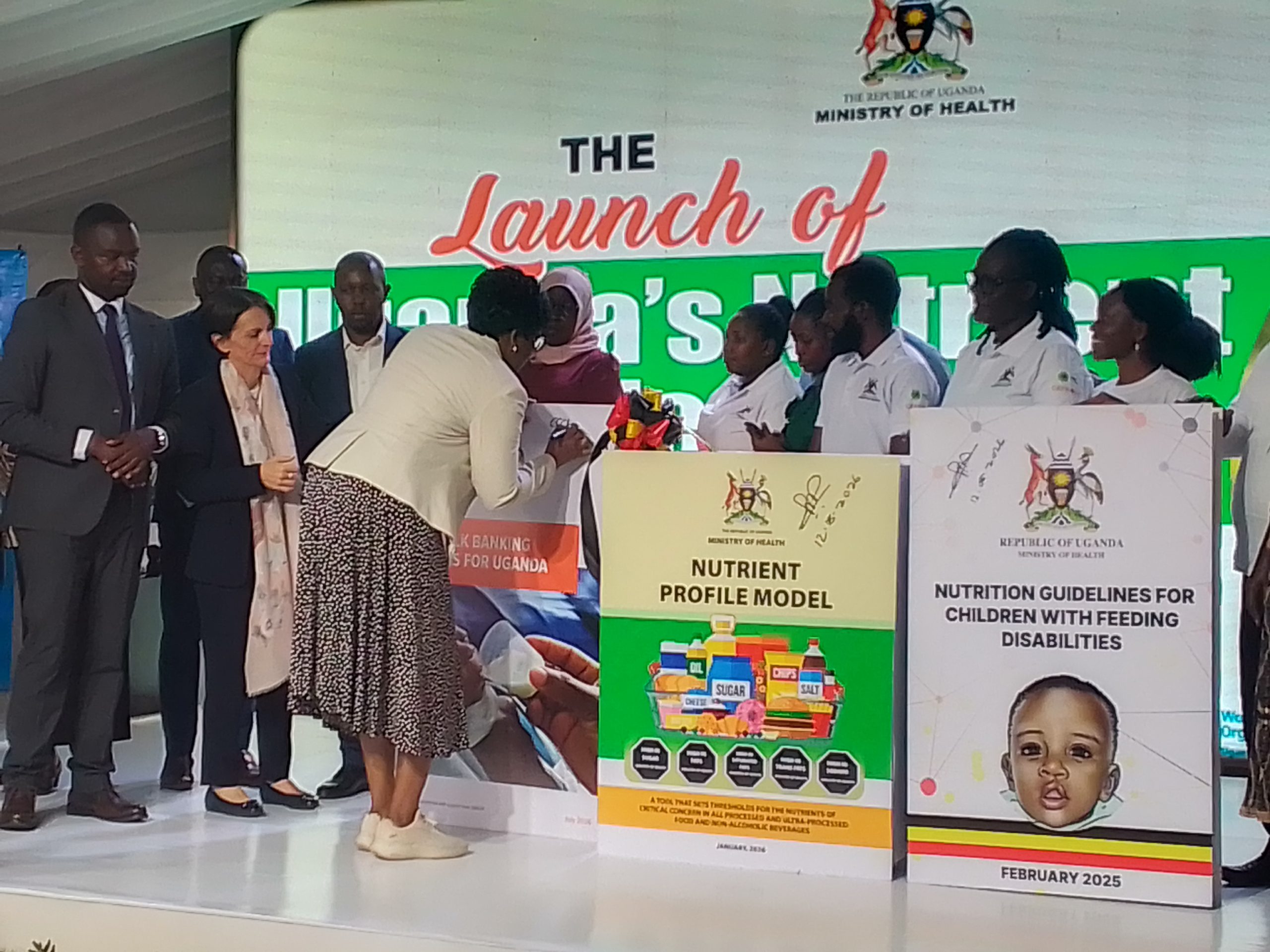
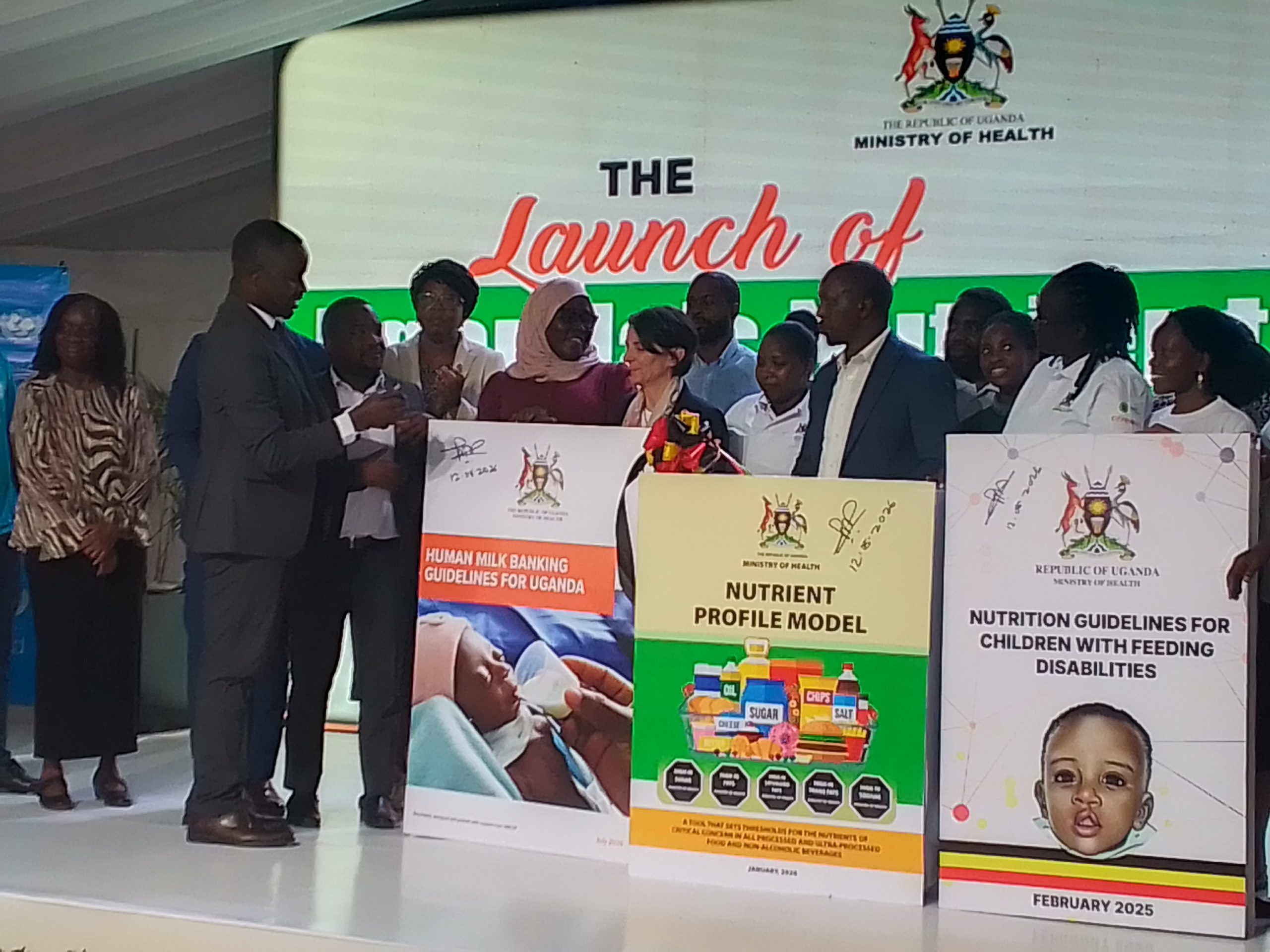
The World Breastfeeding Week commemoration also saw the launch of three national instruments: the National Human Milk Bank Guidelines, Nutrition and Disability Guidelines, and the Nutrient Profile Model.
Mugahi said the instruments should move beyond policy documents and be implemented across the country.
He called on ministries, local governments, health facilities, employers, private companies, development partners and communities to support the new measures.
For the Ministry of Health, the goal is to tackle Uganda’s nutrition challenges on both fronts—protecting mothers and children from undernutrition while reducing exposure to unhealthy foods that are contributing to the country’s growing NCD burden. (For comments on this story, get back to us on 0705579994 [WhatsApp line], 0779411734 & 041 4674611 or email us at mulengeranews@gmail.com).