









By Aggrey Baba
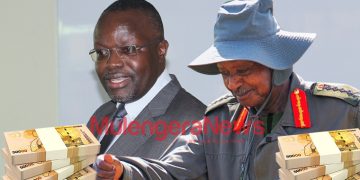
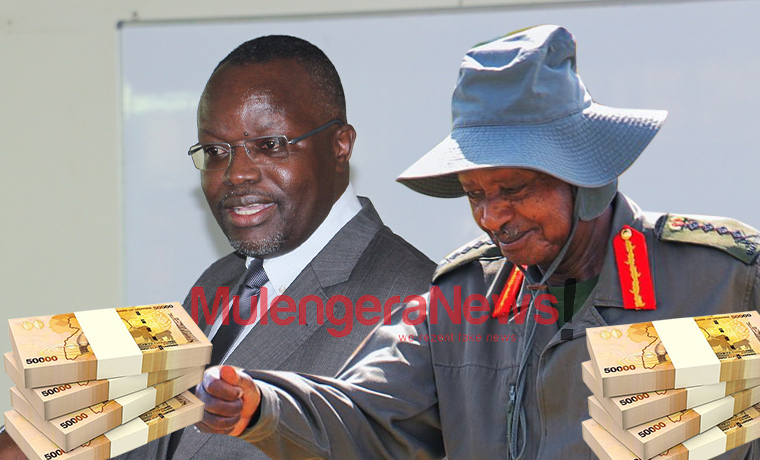
As the debate continues over President Yoweri Museveni’s UGX 100 million cash handout to NRM MPs-elect after the Kyankwanzi retreat, former chancellor for presidential candidate Prof. Venansius Baryamureeba has offered a striking interpretation, suggesting the move could eventually backfire on the very system it is meant to protect and strengthen.
Prof. Baryamureeba, a respected Ugandan academic and politician, is no stranger to national debate. A mathematician and computer scientist by training, he previously served as Vice Chancellor of Makerere University and later founded Uganda Technology and Management University (UTAMU).


He also contested in the 2016 presidential elections under the People’s Progressive Party (PPP), positioning himself as a reform-minded leader.
Now weighing in on the latest political developments in a strongly worded post on X (formerly Twitter), Baryamureeba describes the UGX 100 million payout as a calculated political strategy by the president, one he says is designed to influence the election of the next Speaker and Deputy Speaker of Parliament.

In his analysis, Barya argues that the structure of the payment points to a phased system of control, rather than simple facilitation. He outlines a roadmap, suggesting the money could be released in three instalments (UGX 30 million, UGX 30 million, and UGX 40 million) each tied to key political stages, including expression of interest, NRM caucus decisions, and the final parliamentary vote.
According to him, such an arrangement would effectively guide MPs on whom to support at each stage, with the risk of losing subsequent payments if they fail to comply.
He further points to the President’s reported remarks describing the UGX 100 million as small money, interpreting this as a signal that more financial rewards could follow for those who align, while those who do not may be sidelined.
But it is Baryamureeba’s final argument that has drawn the most attention. He suggests that Uganda may be witnessing a political cycle where the same taxpayer money used to build loyalty among yellow MPs could now be used to dismantle it. In what he describes as a “tooth for tooth” situation, he argues that MPs (once empowered) could turn around and use their votes to remove the very leadership that has influenced them.
“Someone has been using taxpayers’ money to buy support of new MPs, and the same taxpayers’ money will be used to get that same person voted out by the same MPs,” he wrote, adding a new angle to the ongoing discussion, shifting focus from whether the payout is legal, to its possible long-term political consequences. (For comments on this story, get back to us on 0705579994 [WhatsApp line], 0779411734 & 041 4674611 or email us at mulengeranews@gmail.com).