










By Ben Musanje
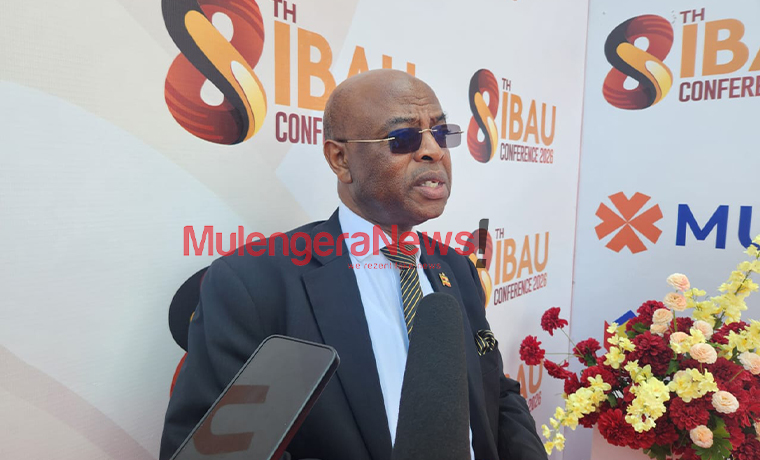
The Deputy Governor of the Bank of Uganda (BOU), Prof Augustus Nuwagaba, has raised concern over the country’s low insurance uptake, warning that the sector remains far below its potential despite Uganda’s growing economy. At the same time, the Insurance Regulatory Authority (IRA) Chief Executive Officer, Alhaj Ibrahim Lubega Kaddunabbi, highlighted steady growth in insurance premiums and called for deeper reforms to improve inclusivity and trust.
The two officials made their remarks on Thursday during the 8th Annual Conference of the Insurance Brokers Association of Uganda (IBAU), held in Mbarara City under the theme “Trust Reimagined, Delivering the Promise.”
Low insurance penetration worries Bank of Uganda

Speaking at the conference, Prof Nuwagaba said Uganda’s insurance penetration remains critically low at just 0.86% of GDP, a figure he described as insufficient for a country with a GDP estimated at $69 billion.

“Our insurance uptake is not at the level we would have wanted. It is still at 0.86% of GDP,” he said. “This means that people who are using insurance and paying premiums are still less than 1% of the economy.”
He warned that the low uptake reflects a major gap in financial protection for households and businesses, exposing them to avoidable risks such as business collapse, loss of property, and financial shocks.
According to him, insurance should serve as a key tool for risk management, safeguarding businesses and ensuring continuity in times of crisis. However, he noted that many Ugandans still do not understand how insurance works or its benefits.

Cultural barriers and awareness gap
Prof Nuwagaba attributed part of the low uptake to cultural reliance on extended family networks for financial support.
“Many Ugandans believe that when they have a problem, their relatives will solve it,” he said. “This is not sustainable in a modern economy. We need people to take responsibility and manage risk properly.”
He urged insurance companies to expand beyond urban centres and actively engage communities through education and outreach programmes.
He also stressed the importance of simplifying insurance products and improving affordability. He proposed flexible payment models where premiums are paid in instalments rather than lump sums.
“For example, instead of paying 15 million shillings at once for motor insurance, divide it monthly. It becomes more manageable,” he said.
IRA highlights growth in premiums and broker contribution
In contrast to concerns about low penetration, IRA CEO Kaddunabbi presented encouraging data showing growth in the sector.
He revealed that Uganda’s total insurance premiums had surpassed UGX 2.02 trillion, up from UGX 1.76 trillion the previous year. In the fourth quarter of 2025 alone, premiums rose to UGX 567.58 billion compared to UGX 545.6 billion in 2024.
He noted that insurance brokers contributed significantly to this growth, accounting for about 38% of total industry premiums.
“This reflects a strong upward trajectory,” Kaddunabbi said, adding that brokers play a critical role in expanding market reach and improving customer access to insurance services.
However, he also acknowledged persistent challenges, including low insurance awareness, product mismatch, and limited trust among potential clients.
Trust remains central challenge
Kaddunabbi emphasized that trust is the foundation of the insurance industry, warning that delays in claims settlement and poor customer experience continue to damage confidence.
“Trust is honored when actions meet words,” he said. “It is earned, not bought.”
He cautioned that broken trust is difficult to repair, comparing it to a structural crack in a building that cannot simply be patched.
To strengthen trust, he called for faster claims processing, better customer service, and improved transparency from insurance providers.
Brokers urged to bridge gap
The IRA boss also underscored the importance of insurance brokers as intermediaries between insurers and clients. He said brokers are essential in explaining complex policies, negotiating coverage, and ensuring clients receive appropriate protection.
“In Uganda, brokers are the human face of the industry,” he said. “They bridge the gap between insurers and customers.”
He added that brokers currently contribute over a quarter of total premiums and should increase their market share to at least 40%, in line with global trends where brokers play a dominant role.
Call for inclusive and simplified insurance
Kaddunabbi further urged the industry to design products that target underserved groups such as small businesses, farmers, and informal workers.
He also advocated for simplified insurance language, saying many potential clients are discouraged by complex policy terms.
“Insurance must be easy to understand and easy to access,” he said.
He encouraged adoption of digital platforms and mobile-based insurance solutions to expand reach and reduce costs.
Industry stakeholders echo concerns
IBAU Chairman Paul Muhame said the conference theme was timely, noting that the industry still faces challenges including low awareness, slow claims processing, and trust deficits.
“Our responsibility is clear—to ensure the promise of insurance is delivered,” he said.
Mirai General Insurance CEO Joseph Nsubuga, one of the event sponsors, echoed the need for stronger broker-client relationships, saying brokers remain critical in connecting insurers to underserved communities.
Outlook
Despite the challenges, stakeholders expressed optimism that Uganda’s insurance sector is on a growth path. However, both BOU and IRA leaders agreed that expanding penetration, building trust, and improving affordability will be essential to transforming insurance into a meaningful contributor to Uganda’s economic development. (For comments on this story, get back to us on 0705579994 [WhatsApp line], 0779411734 & 041 4674611 or email us at mulengeranews@gmail.com).