






By Guest Writer
Lawmakers get a picture of unequal access to health care, district services and protection for minority groups
The Speaker of Parliament has directed that the Equal Opportunities Commission’s 13th Annual Report be laid before the House next Tuesday. The Speaker said its findings should guide how Parliament handles the national budget.
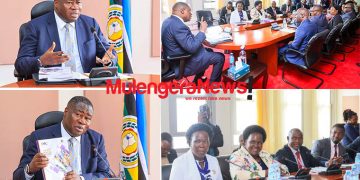
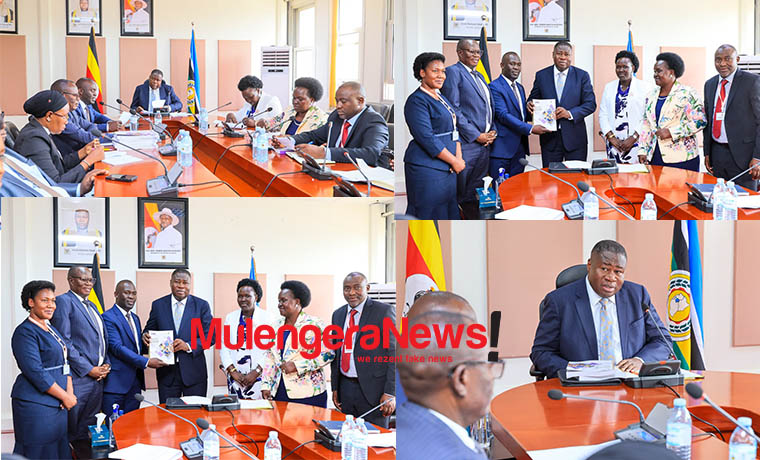
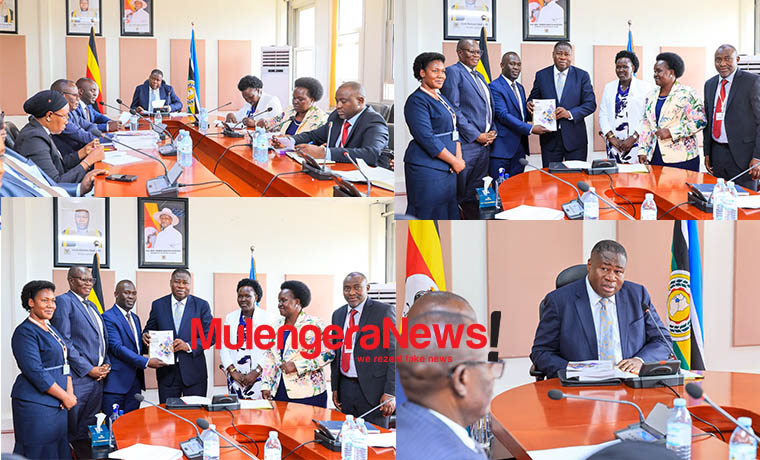
The Speaker received the report, themed “Bridging Inequalities: Leaving No One Behind,” from Commission members at Parliament on Wednesday afternoon.

It was a clear instruction to parliamentary staff.
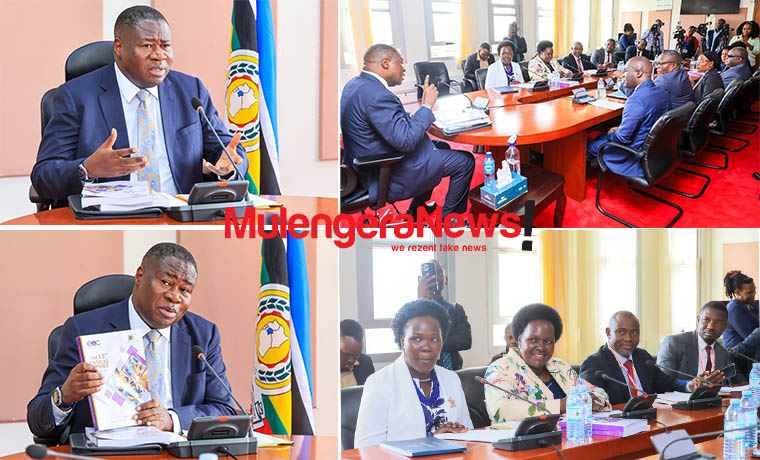
“I need this to be laid on Tuesday. That will refer to the committees and then work begins,” the Speaker said. The Speaker added that the report “has come at the right time when we’re doing budgeting.”
“We are saying evidence-based budgeting, evidence-based debate,” the Speaker told the delegation. “They have done their part. They have extracted the findings. This should now form how Parliament handles some issues.”
After it is tabled, the report will go to the Committee on Equal Opportunities for scrutiny and follow-up with the institutions responsible.
“Somebody could be us”
The Speaker spoke most strongly about local government financing. According to the report, local governments received only 9.7 per cent of the national budget in FY 2026/27. That is less than half of the 20.1 per cent benchmark in the National Development Plan, and only 15.6 per cent of their funding went to development.
“Instead, we are declining from 9.9 to 9.7, and then we cry about service delivery,” the Speaker said. “Seems like somebody is not doing his job. And that somebody could be us. We don’t want to be part of that.”
Medical bills of up to ten years’ income
The Commission said the cost of treating serious illness is beyond the means of most Ugandans. A medical bill of Shs30 million equals nearly ten years of earnings for a person on the national median income of Shs260,000 a month. Treating fractures from accidents in private hospitals costs between Shs7.9 million and Shs54.3 million.
Public health care is free, but patients still pay out of pocket because medicines, diagnostic services and supplies often run out. Specialised care is concentrated in Kampala, so patients from other regions also pay for transport and accommodation. To pay for treatment, families are using up their savings, borrowing and selling productive assets.
The Commission warned that “access to life-saving health care is increasingly being determined by one’s ability to pay rather than medical need.” It urged Parliament to fast-track a National Health Insurance Scheme with subsidised contributions for poor households. It also called for health spending to rise towards the 15 per cent Abuja Declaration target.
New districts, same gaps
The Commission assessed 16 new districts and found that they lack infrastructure and staff. It found that 124 parishes have no government primary school and 69 sub-counties have no government secondary school. About 46 per cent of approved district jobs are vacant. In one district, a single agricultural extension worker serves about 2,500 farmers, against a national standard of 500.
In the districts assessed, administration cost Shs86.5 billion in FY 2025/26, compared with Shs52 billion allocated to development. Revenue raised locally made up only 1.8 per cent of their budgets. “Bringing administration closer to the people should not be mistaken for bringing services closer to the people,” the Commission said. It recommended keeping the suspension on creating new districts.
Refugees, youth and children
Uganda hosted about 2.06 million refugees by October 2026, while humanitarian funding fell short. Only 663,000 refugees receive food aid, and more than 642,000 people in settlements face crisis-level food insecurity or worse. Only 10 per cent of refugees are enrolled in secondary school.
Youth unemployment stands at 17.9 per cent, and 21 per cent among young women. About 5.25 million young people, or 50.9 per cent, are not in employment, education or training.
For Uganda’s 22.7 million children, the report found that nearly one in four girls aged 15 to 19 has been affected by teenage pregnancy, which costs the country about Shs645 billion a year. One in three women aged 20 to 24 was married before 18. The Commission asked Parliament to reconsider dissolving the National Children’s Authority.
Communities “washed away”
The findings that drew the most attention were about indigenous ethnic minorities. Uganda’s population grew by 32.5 per cent between 2014 and 2024. Over the same period, 14 indigenous minority groups shrank by a combined 36,461 people. The Mvuba fell by 86.7 per cent and the Vonoma by 74 per cent, and the Batwa population dropped by 37.8 per cent. If these trends continue, the Mvuba could number fewer than 100 people by 2031.
The Speaker joked about first thinking that “Mifumba” meant second-hand clothes, then turned serious. “My father’s household alone, without the clan, we are more than 100,” the Speaker said. “There are people who are in danger of being wished away or washed away.”
The Commission is seeking an Indigenous Ethnic Minority Groups Act, a national council and a national policy for these communities.
The Speaker promised that Parliament would keep working with the Commission. The Commission closed with a challenge: “The true measure of Uganda’s development should not only be how far the country has progressed, but how many of its people have been able to progress with it.” (For comments on this story, get back to us on 0705579994 [WhatsApp line], 0779411734 & 041 4674611 or email us at mulengeranews@gmail.com).