






By Aggrey Baba
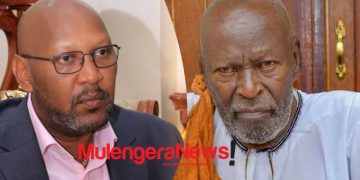
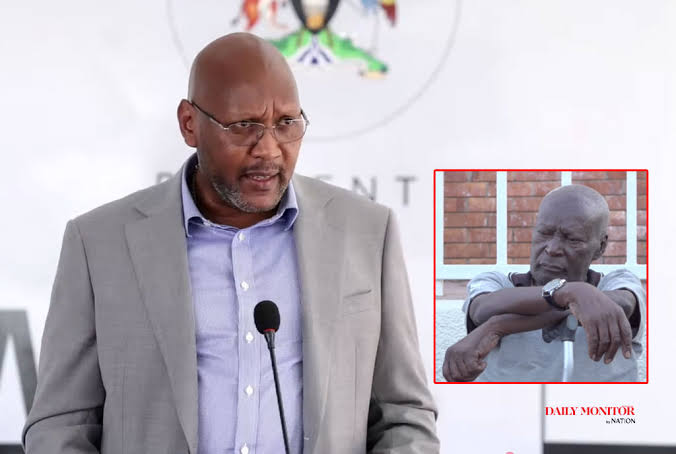
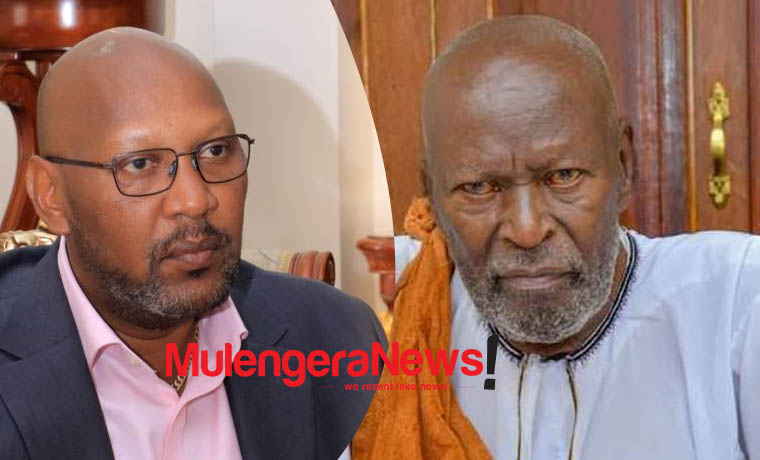
The head of the Babiito royal clan and Chief Prince of Tooro, Omujwera Musuuga Charles Kamurasi, has launched a renewed attack on former Tooro Kingdom Prime Minister Calvin Armstrong Rwomiire Akiiki, accusing him of betraying the kingdom by concealing the late Omukama Oyo Nyimba Kabamba Iguru Rukidi IV’s critical health condition from traditional leaders and subjects.
In a video circulating on social media, Kamurasi questions Rwomiire’s suitability to serve as Omuhikirwa (Prime Minister), arguing that no genuine and selfless kingdom premier would allow a reigning king to die outside his kingdom without ensuring that the traditional leadership was adequately informed and involved.
Speaking in Luganda, the Musuuga describes Rwomiire as Katikiro ow’ebikyupuli (a fake Katikiro) accusing him of putting personal interests ahead of his responsibility to protect the institution of the monarchy and the welfare of the Batooro.
Kamurasi specifically took issue with the former premier’s handling of information about King Oyo’s illness, saying Rwomiire deliberately misled kingdom elders, religious leaders and subjects at a time when the king was receiving treatment in U.S.A in critical condition.

He recounts that when reports emerged that Oyo was seriously ill outside Uganda, Rwomiire went to church and addressed the Bishop, other senior Tooro leaders and the congregation, assuring them that the Omukama was doing well, was abroad for further studies and continued to execute his royal responsibilities.

The Musuuga, known for being a man who never minces his words, says such assurances were misleading and deprived the kingdom of an opportunity to appreciate the gravity of the situation and collectively respond to the king’s illness.
He argues that had Rwomiire disclosed the truth about Oyo’s condition in time, the Batooro would have immediately mobilized prayers across the kingdom, with religious leaders, elders and ordinary subjects joining hands to pray for the recovery of their lovely king.
In his view, the kingdom might have had a different outcome if its people had been given an opportunity to seek divine intervention while the King was still alive.
Kamurasi further argues that Tooro’s cultural traditions and customs require a reigning Omukama to die within his kingdom or, at the very least, within Uganda, saying the circumstances surrounding Oyo’s death denied the institution an opportunity to observe important traditional practices.
He says the Prime Minister should have recognized the cultural implications of allowing the King’s condition to remain a closely guarded secret, particularly when the Omukama was thousands of miles away receiving treatment.
According to the Musuuga, had the elders been informed, they would have convened and advised on the appropriate traditional and cultural steps to take, including how to handle the King’s illness and the possibility of his death.
His latest remarks reopen a controversy that emerged immediately after King Oyo’s death on August 27, 2026, in America, where he had been receiving treatment for cancer.
The controversy followed revelations that Tooro kingdom had continued assuring subjects that the King was abroad for studies and was in good health, even as his condition had reportedly deteriorated.
On September 3, Rwomiire defended the decision, saying the information communicated to the public was in accordance with the late King’s express wishes and direction.
He maintained that Oyo did not want his illness to cause unnecessary anxiety among his subjects and remained hopeful of recovering and returning home for his 31st Empango celebrations.
The former Prime Minister insisted that he had acted faithfully in protecting the monarch’s privacy, an explanation that did little to settle questions from sections of the royal family and traditional leadership over why senior cultural figures were not adequately informed.
The dispute also exposed a deeper breakdown in relations between the kingdom’s political-administrative leadership and the Babiito royal clan, whose traditional responsibilities include matters concerning the monarchy and royal succession.
Kamurasi’s latest outburst comes at a very sensitive moment for Tooro, following Rwomiire’s resignation on November 21, 2026, after serving under both the late King Oyo and his successor, Omukama Edward Rukiidi Nyabongo I.
Rwomiire had initially been appointed Prime Minister by King Oyo on February 14, 2025, replacing Stephen Kiyingi. Following Oyo’s death and the subsequent coronation of Edward Nyabongo I on September 29, 2026, he was retained to oversee the kingdom’s administration during the transition.
However, his continued stay in office did not end the disagreements that had developed around the succession, the authority of the new monarch and the administration of kingdom affairs.
In his resignation announcement, Rwomiire said he had made the decision after considerable reflection, citing growing polarization within Tooro kingdom and the need to allow the kingdom to heal, reconcile and move forward.
He said internal disagreements were diverting attention from the kingdom’s responsibility to serve its people, adding that unity and institutional stability should take precedence over individual positions and ambitions.
His departure also followed complaints about his working environment, including alleged interference in his office, humiliation and a lack of institutional support, issues he had reportedly detailed in a separate communication to the new King.
The resignation, however, has not erased the controversies surrounding his handling of King Oyo’s final days, with Kamurasi’s latest remarks likely to revive questions about the former premier’s conduct and accountability during one of the most sensitive periods in Tooro’s history.
The kingdom has been grappling with divisions that began shortly after the death of Oyo, particularly over who had the legitimate claim to succeed him.
The dispute emerged after the royal clan’s succession committee announced Prince Edward Rukidi Kijanangoma, a cousin of the late King, as the new king, a decision that was immediately rejected by sections of Oyo’s immediate family.
The late King’s sister, Princess Ruth Komuntale, and Queen Mother Best Kemigisa maintained that Oyo had left behind a son and a written will, reportedly prepared in 2022, identifying the child as his preferred successor.
According to the family, the late monarch had provided for his son to inherit the throne, with alternative arrangements in the event that the boy was unable to assume the responsibilities of the monarchy.
The clan representatives, however, questioned whether the existence of an alleged son and the contents of a will were sufficient to determine succession, insisting that the Babiito clan’s established customs and procedures had to be followed.
They argued that the child had not been formally presented to the royal clan in accordance with the traditions governing the identification and recognition of potential heirs.
The disagreement consequently developed into a wider contest over whether the late King’s personal wishes, as reportedly expressed in the will, could override the customary authority of the Babiito royal clan in selecting the next Omukama.
The two positions exposed divisions within the royal family, among clan elders and sections of the kingdom’s leadership, with questions also emerging over the role of the Queen Mother, the authority of the succession committee and the administration of the royal palace.
The controversy eventually culminated in the installation of Edward Rukiidi Nyabongo I, but the underlying disagreements continued to cast a shadow over the new reign.
It is against this background that Kamurasi’s renewed criticism of Rwomiire carries additional significance, particularly as the Musuuga appears to be questioning not only the former premier’s handling of the late King’s illness but also the leadership failures that contributed to the kingdom’s difficult transition.
Rwomiire has previously maintained that he acted on King Oyo’s instructions regarding the communication of his health condition. It remains unclear whether he will respond to the latest accusations by Kamurasi. (For comments on this story, get back to us on 0705579994 [WhatsApp line], 0779411734 & 041 4674611 or email us at mulengeranews@gmail.com).